Undercurrent: Please Don't Tell The Terrific Ending

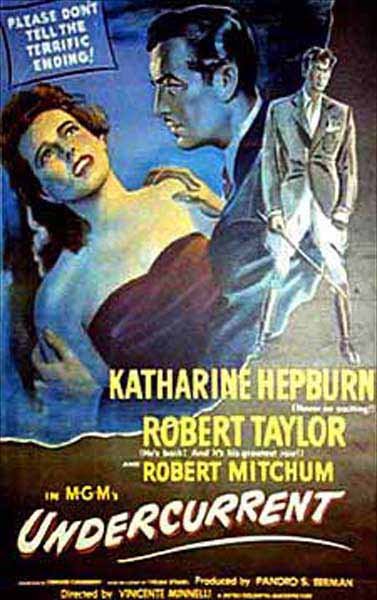
FIPRESCI, the international federation of film critics, has just launched Undercurrent a new magazine "for reflection on films, on the cinema and on film criticism".
The first issue has an interview with sound designer Leslie Shatz, a bizzare attempt at critical restoration for Cameron Crowe's insipid, botched Elizabethtown and the transcript of a very interesting discussion group at the Brisbane Film Festival about how critics work.
Very interesting, for me, at least. They also have an open call for essays and articles.

Undersea Life

For a jaded critic, blinking from the onslaught of dismemberment fantasies and twee children's animations clogging the arteries of the nation's multiplexes, Noah Baumbach's scorching semi-autobiographical divorce comedy/drama The Squid and the Whale offers immediate relief, a cinematic balm that provides both excitement and gratification in equal doses. Of all the many good reasons to turn off your computer right now and go see it, the best is the central performance of Jeff Daniels as a self-absorbed, full-of-it, middle-aged father. I’m not sure which beast he represents but Bernard (pronounced in the American fashion with a flat, nasal A) is such a fantastic movie character and Daniels gives such a faultless acting display that the only proper response has to be; who knew he had it in him? So long relegated to second string anonymity and being confused, in my mind at least, with Jeff Bridges, this is Daniel’s finest hour since The Purple Rose of Cairo twenty years ago. I might have put Dumb & Dumber (which was only ten years ago) because there too Daniels is outstanding but more because in his head, Bernard thinks he is Woody Allen’s suave matinee idol, Tom Baxter. But in reality this man is a slightly better read, more opinionated version of the Farrelly Brother's heavy-lipped simpleton, Harry Dunne. A failed novelist who hasn’t published anything for years, Bernaaaard is unhappily married to Joan (Laura Linney), his second wife and a woman of enormous patience, not least on the tennis court. They have two teenage sons, a well-appointed house and a cat and are busy living the 1980s Reaganomic dream of nikes and volvos, tennis and neighbourhoods, self-absorbtion and self-interest.

Bernard is closely based on the directors own father, the novelist and teacher Jonathan Baumbach. I would love to know if he has seen the film, and what he thinks of it, because his son sees him as a relentless attention whore, constantly seeking affirmation and consolation and bewildered by the turns his life has taken. He is consumed by this need for control, so much so that he cannot see anything else; his failing career and its various improprieties, his remote, fractured wife and children. He can’t hear his own droning voice or read his hackneyed writing. It’s more than a writer’s vanity; it’s a complete oblivion, a selfish retreat into the mind and the minor glories of a long-gone past. The only thing that shakes him out of his stupor is the threat to his standing in the family and his rampant ego that Joan’s new career as a writer represents. In one glorious incident, the great teacher asks if she had followed his advice on some notes on a piece of her prose. She tells him she didn’t make the changes and liked it better her way and he visibly winces, for her benefit, in sympathy. We get to see precisely how patronising Bernard has become (because she wouldn't have married him if he was always like this), is highlighted when he drives, with his eager son and his starry-eyed girlfriend to give a reading to a half-empty hall in a small college, from a book printed before most of the audience were born. Soon after, Joan's story is published in the New Yorker.

With the balance of power shifted, and the ground gone from beneath his feet, Bernard’s response is total collapse. He moves from the family home to a crumbling shack, starts an awkward affair with one of his students (a spot-on Anna Paquin) who writes lengthy short stories about her vagina and causes consternation over the timetable the new, doubled-up households bring about. While Try and make the divorce as hard as is possible on everybody. Like I said at the outset, he’s a brilliant movie character, annoyingly dense and boorish but charming and funny too. The family split, it falls on the two sons to try and salvage their lives from the wreckage the adults leave behind. The older of the two, Walt (Jesse Eisenberg), sides initially with the father, spouting his tired old opinions and affecting his scholarly air of detachment. The younger, Frank, takes to drinking beer and acting out. As Bernard letches over his nubile Lolita, Joan starts an equally inappropriate affair with the boy’s tennis coach (played by William Baldwin) and everything starts to unravel.

Baumbach is publicly cleaning out some old closets here, but with tremendous charm and honesty, he doesn't stop his caustic eye from falling over his own teenage self. His character, Walt, is a loathsome, mouthy creep; anxious and uncomfortable, pretentious and ill-informed. Your typical teenager, maybe but he claims Pink Floyd lyrics as his own and worse, treats everybody terribly, exactly as his father has repeatedly shown him to do. There is no doubt that Baumbach has seen the error of his ways, and knows just what a monster he was. Making the process of telling an autobiographical coming-of-age story itself part of the process of growing up and learning to deal with it all is, casting aside, his master stroke. In the end, Baumbach is merciless. Everyone gets caught out and everything is forensically exposed; Bernard as a fool and a bastard, Joan as an adultress and a flake, Walt as a plagiarist and a bastard-in-training. The compulsive onanist Frank’s fate is more delicate, but they are all, in Baumbach's hilarious, probing way, gently cleft open.

From the roots of inadequacy sown by a man losing his potency and flailing to recover it, The Squid & The Whale makes a compelling, hilarious and ocassionally poigniant case for a cold, hard truth, people are awful, especially when they love each other. The image of the two tangled beasts, which closes the film, is taken from the NY Museum of Natural History’s famous, atrium-filling exhibition, but the taxidermy frozen in three dimensions to represent a struggle to the death is a stiffer, starker, and ultimately more straightforward thing than the nuanced, occasionally hilarious emotional battle that we have just witnessed. It obviously struck a chord with Baumbach, whatever its deeper emotional significance. We should be very glad it did.

Squatters Rights

First off, full disclosure. I despise musicals in every form and if it weren’t for their occasional return to popular cinema, would never watch one. It’s not the sudden segues into song or the way whole streets of passers-by burst into well-choreographed jazz-hands that gets me. It’s the overwhelming fakeness and insincerity of the genre that I cannot abide; all the Up With People! plastic smiles, the cheesy show tunes and the cardboard backdrops. That ingrained antipathy is not entirely this movies fault, but I can't remember being so unhappy when watching a film (and so desperate to leave) so Chris Columbus’ will-sapping, fairy-story song and dance effort has to shoulder some of the blame.

Directed as if it were on stage, but without the live audience that adds frisson to all that prancing about, Columbus brings the Broadway hit about dodging landlords to the big screen, without ever offering any reason for his having done so. Rent aspires to be an up-tempo movie about AIDS, heroin addiction, sex-workers, drugs, transvestism and bisexuality, bravely tackling such difficult themes by surgically removing any lingering trace of authenticity, danger or truth in order to keep everybody smiling through all the tears.

Inspired, it says here, by Puccini's La Boheme, the film follows a year in the life of the dues-dodging roommates Roger and Mark, a filmmaker (glasses, 16mm camera) and a struggling musician (big Bon Jovi hair, shouts everything) who along with their close-knit group of squatter friends, including Rosario Dawson as Mimi the hooker with the heart of gold, struggle to cope with the difficult life outlined above by fighting authority and remaining true to their bohemian selves. Roger and Mark did have a third roommate, Benjamin (Taye Diggs), but he married a millionaire’s daughter and has now become a property developer and their landlord.

Sound contrived? You bet it does. The soap-opera Rent is clad in rags it tore up itself. In keeping with the early-90s AIDS theme, there’s a lyric about a low T-cell count. I defy you to listen to it without your face scrunching into a wince of agony, your fingernails gripping the cinema seat in a spasm of pure torture. Do you think people dying of AIDS look this pretty, sing and dance this sweetly, hope for the future this blindly? Think on.

Manfully struggling to put my own critical prejudices to one side, I still ended up hating every single frame of this misbegotten film. The songs are awful, the acting performances likewise. The dialogue is laughable, mere shreds of chat stitching the songs together. The staging looks exactly that, staged, flat and bare and empty. When the freezing roommates make a fire with their abandoned screenplays and art brut, for a moment I dreamt that the reels of celluloid had followed them into the flames. I awoke again and the film was still playing and the rent was still due and my stomach was a hot knot of nausea, as if I had been force-fed candyfloss spun from broken bottles.

The Last of the Flock

Dying fathers battle distraught daughters in Rebecca Miller’s artfully composed and emotionally rich film about the inevitable effects of change, the passage of time and the limits of human love and idealism. More immediately, The Ballad of Jack & Rose showcases the astonishing screen acting talents of her husband, Daniel Day-Lewis and newcomer Camilla Belle in a double-act of rare power and immediacy.

He plays a Scots engineer named Jack, a straggly old hippy, who lives with his sheltered 16 year old daughter Rose (Belle) on a small island off the American east coast that was once the location of a thriving commune of proto-Greens. Bunked up in a ramshackle house, they live more or less alone, save the occasional visitor. Rose, whose unstructured home-schooling involves classes in cloud-appreciation and tree-house building, is nevertheless growing up quickly and, worryingly, is beginning to show signs of a personality disorder.

As is typical of Day-Lewis, we know from the look of him that he’s not well, long before we see him popping a few pills for his ailing heart and he shares the information that he is indeed dying and is worried about his daughter and the life he will leave behind for her. Devoted to the wetlands of the island, Jack is also fighting a losing battle with the materialistic property magnate Marty Rance (Beau Bridges) who threatens the ecosystem with a development of holiday homes. Into their intimate world, Jack invites his new girlfriend Kathleen (Catherine Keener) and her two teenage sons Rodney (Ryan McDonald), an overweight trainee-hairdresser and Thaddius, their spelling, a listless sneak (played by Paul Dano). The free-wheeling Rose feels betrayed and acts out, coming between Jack and Kathleen and manipulating the two teenage boys into risky situations that can only lead to disaster.

The film is beautifully photographed by Ellen Kuras, cutting from the narrative to quick shots taken from nature, a sky full of lightning, a swelling sea, black sap oozing from a tree branch. Later these flashes form into Jack’s memories of the way life used to be in commune, before his wife and everyone else moved away. This slow pulling into focus culminates in Rose projecting old 16mm family films for her new friends on the walls of their dusty ‘acid-pad’. It also brings forth a brooding row and a separation and a whole load of other drama, but because of Miller’s poetic touch in the telling and sensitively, sparsely scripted story, the film can explore the tumultuous emergence into womanhood of a remote, damaged girl with grace and sensitivity.

She also touches off themes of repressed violence and abandoned responsibility, culminating in suggestions of an incestuous relationship when it becomes clear that the closeness between Jack & Rose has become obsessive and dangerous. Her devotion to her father leads her to repeatedly declare her intention to kill herself when he dies, a promise that hangs over the film like a threatening cloud. Its heady stuff; composed primarily of contrasts and colours, with Miller showing her focus and empathy in her story of dreams turned sour and a dying light.

One potential drawback is the 1960s rock soundtrack, clearly designed to underline the waves of emotion falling from the screen through repeating the same song, “I Put A Spell On You”, as interpreted by different musicians. This kind of flourish, if it is a flourish, is entirely to your own taste but I found, as I almost always do when a pop soundtrack is used as a device, that it was something Miller should have trusted her talented cast to be able to express for themselves. It’s not intrusive, like Cameron Crowe’s jukebox, but it is unnecessarily emphatic, even for a film called The Ballad of…

The performances are all terrific. Fans of modern cinema acting will want to see it for Day-Lewis alone and they won’t be disappointed. He is brilliant as the cantankerous oddball, the loner who resorts to his chequebook when called upon to deal with people, the dreamer who comes to realise that the time has passed. With his gaunt face, he fills Miller’s close-up camera with rage and pain and an overwhelming tiredness but then there’s the flash of a cunning smile or a burst of energy and his character turns to show another contrasting facet. Opposite him, the young Camilla Belle more than holds her own, playing a difficult role with restrain and constancy, occasionally muted, typically fiery, all the way to a gut-wrenching finale that left me feeling drained and exhilarated at the same time.

White Emulsion

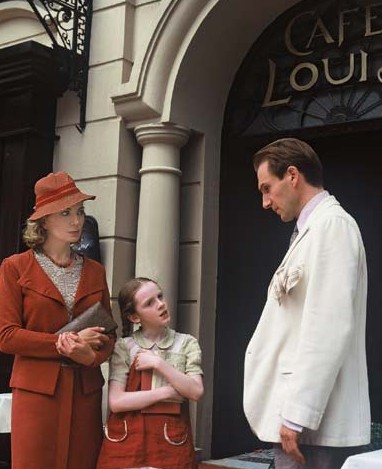
Following the death of producer Ismail Merchant, the last of the idiosyncratic films he made with James Ivory is a disappointing end to a long-stranding cinematic partnership that had become synonymous with modern melodrama. As with the best of their long list of films, The White Countess is peopled with rich characters in the midst of complicated relationships, romantic, social and political. The world they inhabit, 1930s Shanghai during the Sino-Japanese War in this case, is handsomely presented and evocative. The men won’t talk and the women won’t stop and someone will play tennis. Disappointments and misunderstandings battle yearnings and repressions. Unfortunately, as with more than a few of their thirty-odd collaborations, attention to detail is everywhere but in the story.

Currently drawing huge crowds to The Gate theatre in Dublin, Ralph Fiennes plays a retired American diplomat named Todd Jackson who left the government service when his family were killed in a house fire that left him blind. Having taken to shuffling through the shebeens of Shanghai, drinking his cares away, he befriends Mr. Matsuda (Hiroyuki Sanada), a mysterious Japanese man who warns him that a war is coming. One night, Jackson overhears a conversation in a bar involving the Countess Sofia Belinsky (Natasha Richardson), once a Russian royal who supports her exiled family by working as an escort girl. Later, he asks her to come on board as the hostess in his new bar, which he calls The White Countess in her honour. The club is a huge success, full every night of jazz-loving revellers and trendy revolutionaries. But Jackson finds himself romantically drawn to the Countess, and knows that he cannot act on his emotions. As a woman who no longer has to sell herself for money thanks to his attention, she’s just about ga-ga over him but likewise torn by some awful emotional trauma that just too terrible to even think about but probably involves her nasty family.

With a screenplay by Remains of the Day writer, novelist Kazuo Ishiguro, photography from ace cinematographer Christopher Doyle and an excellent cast including Richardson’s mother and aunt, Vanessa and Lynn Redgrave, the film had lots of potential, sadly never realised. The story drags, meandering around in flashback while waiting for something to happen. The ruminations of the characters become annoying and the monotony of the soap-opera formula becomes overwhelming. Fragments of story are picked up, turned over and dropped again in a careful manner, like slow-motion fidgeting.

Early on in the process of thinking up his dream, making it happen and losing it all again, Jackson says he wants the titular nightclub to be a place of elegance and charm that strikes the perfect note, “somewhere between the erotic and the tragic, like a woman.” In my scribbled notes there are four exclamation marks of emphasis alongside this transcribed snippet of dialogue, the full stop at the bottom of the last one breaking the paper. This thigh-endangering chatter is notable not only for it’s ponderous, novelised nothingness, but for being the last reaction, positive or negative, this monumentally boring film evoked. There was plenty more wandering inanity, lots of it heavily accented and awfully important-sounding but somewhere between the lovely animated insert and the peculiarly bloodless rain of Japanese bombs, I found myself having tuned out. I spent the last twenty five minutes thinking about lunch and the last fifteen eating it.

Too Much Time


Want to know what going to happen in the year 2411, you know, in the movies? That's when Aeon Flux frees the people of Bregna from the deranged Dr Trevor Goodchild.

Ok, bad example.

The Movie Timeline is a comprehensive, and I mean comprehensive, catalogue of events during the passage of cinematic time from 4,000,000 BC (2001: A Space Odyssey) to 865,427,810 AD (The Time Machine).

Direwall

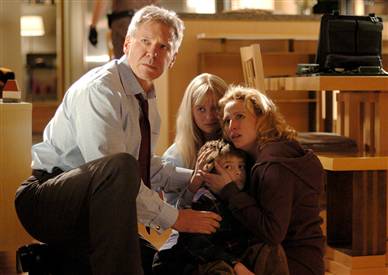
In his stupid new techno-thriller Firewall, Harrison Ford’s slightly sweaty character jogs through the main door at the airport and jumps into a waiting car. A cop car, responding to an alarm from a bank inside the building, rolls gently to a stop as Ford squeals away. The cops don’t give chase. It’s the awesome power of the anonymous guy in a suit, someone Ford has played so many times that all he needs is a two-piece and someone to chase down and the rest just falls neatly onto the screen, the same as it did the last time. Even his characters name, Jack Stanfield, could have been plucked from any of his films from the last ten years. It’s a safe name, reassuring and righteous. It gets results, damn it.

Jack has an idyllic life, with a pretty architect wife (Virginia Madsen), who designed their lavish hilltop home, and two doe-eyed children (Carly Schroeder and Jimmy Bennett). But someone has been digging around in their bins, and Jack’s identity has been stolen and used on an internet gambling site. The garbage-sorter turns out to be Bill Cox (Paul Bettany), a techno-savvy robber with a gang of heavily armed geeks who plan to kidnap Jack’s family and hold them hostage as Jack lifts $100 million from his own bank and transfer it to an offshore account. And while Jack’s instinct is to try and foil the scheme, Cox has surveillance equipment to counteract his every move.

Luckily Ford’s grim-faced hero is also a quick-thinking technical whiz, so the game of cat and mouse (and dog) can begin. Nimble Jack can manipulate i-Pods to hold vast amounts of banking information, bamboozle television screens with electronic feedback and adapt fax machines and mobile phones, McGyver-like, with gaffer tape and chewing gum, into improvised technical patches or deadly weapons. This is far less fun than it sounds, even for nerds. The rest of the paint-by-numbers plot requires little by way of explanation. You have already seen it before, many times, with nothing added here but the contemporising razzle-dazzle that the new generation of consumer electronics can provide. This very basic version of the Ford movie exists simply in order to unfold, each step along the way leading inexorably to a predetermined outcome as familiar by now as his nostril-breathing fury, his righteous vengeance. Or his grey suit.

For a super-villain who knows, for example, that his target has a pizza delivered every Wednesday night at around 7, Bettany’s character doesn’t have the same level of knowledge about the running of the bank, some of whose systems were frustratingly “changed last week”, owing to the arrival of a hostile takeover’s advance Work & Motion team, the week before that you’d have to suppose. That flint-eyed squad of cage-rattlers is led by Robert Patrick, who suffers the indignities of the dialogue well enough, but never recovers from having Ford, almost twenty years his senior, tuck him in for the night with a single punch. He was standing in Ford’s way, something nobody can do in a movie since he shot that guy with the swords in the marketplace in Raiders of the Lost Ark. Given the same sticky end more than a few of his opponents meet at Ford’s hands here, Patrick should consider himself very lucky he got to duck out when he did. Ford’s knees might be sixty odd, but his fists are still frisky.

When not dishing out meaty vigilante justice, Ford looks alternately bored or uncomfortable. Bettany provides a little contrast as the British bad guy, suitably clipped and coldly polite, but the film drags along the ground when it has to stop to explain his convoluted plan. Madsen is entirely wasted as the good wife, as are Robert Forster as a security colleague and Alan Arkin as the bank manager. The kids remain anonymous. Director Richard Loncairne, who made a similar hames of the romantic tennis comedy Wimbledon, attempts to blend armfuls of familiar plot elements, a perfect family in mortal danger, a good man forced to do bad things to protect them, a complicated heist and a battle-of-wits between a smart thief and a smarter hero, but with little or anything new to say. Into this soupy mix of the familiar and the mundane comes plenty of ‘yeah, right’ to go with all the ‘so what?’ The third act’s descent into outright silliness had the small crowd I saw it with laughing heartily as what was an upgraded version of Desperate Hours took a sudden, fatal leap into Lassie Come Home. After this unintentionally hilarious and highly dubious plot swerve the film could never recover, with the remainder of the running time given over to the stuntmen who provide a tepid car chase and a lengthy, shaky fight scene at a remote abandoned farmhouse. The film doesn’t end, it stops.

Ford is hacking his way through something in Firewall, but it isn’t a high-tech computer system, it’s the simple goodwill of his unnaturally devoted audience. They have provided him with a long tenure at the top in Hollywood, an A-list status that is in serious danger of coming to an abrupt end if he doesn’t start producing the box-office. Hollywood movies are made exclusively for profit, and with his pricetag at around $20 million a picture, Ford needs to start selecting his projects with far more care if he is ever to see one again.

The Altering Eye


The other day I was thinking about how, almost every time I open a book about movies, I learn something totally new. I know this is true of all books, but because movies are what I specialise in, a new name or a new title opens up a whole new avenue of exploration. You know, if it proves interesting beyond the first googling or a shufty through imdb. It doesn't always.

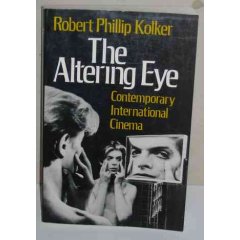
Today my copy of The Film Snob's Dictionary arrived from amazon and the first page I opened was about The Altering Eye, a fabled book about post-war European and Latin American cinema, written by Robert Kolker in 1983. Short version - we reacted to the influx of American cinema by using it's standards and themes to tell our own stories.

I had heard about it, but never read it. The dictionary called it a 'must-read snob book', so naturally I googled it. Glory be, although it's out of print for years, it's available online, unabridged, legitimately and free of charge here.

Fool Proof

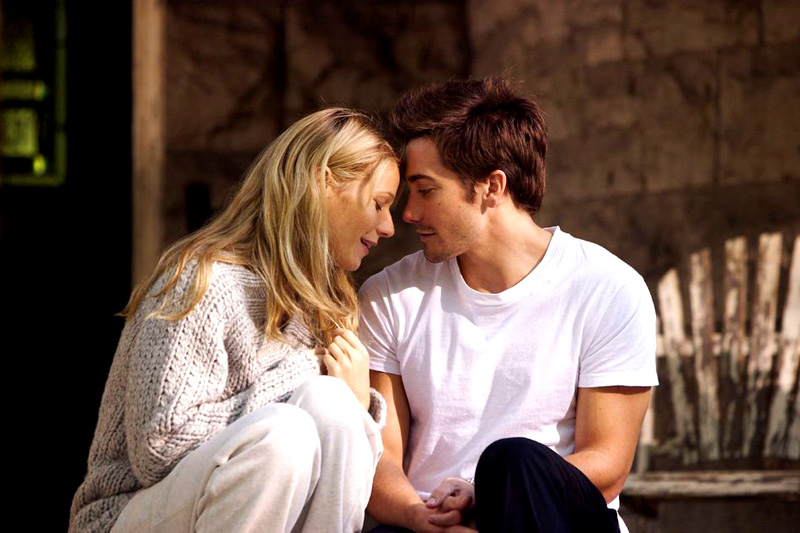
A dreary Gwyneth Paltrow leads the small ensemble director her Shakespeare in Love director John Madden has gathered to bring David Auburn’s acclaimed stage play about the mathematics of disintegration to the big screen. Pulling the longest faces this side of the Grand National, in Proof Paltrow plays Catherine, the remote, damaged daughter of a brilliant but mentally ill mathematician (Anthony Hopkins) who fears she has inherited his insanity along with his facility with numbers. As the film opens Hopkins has just died although he continues to haunt his daughter, symbolising her descent into madness as he tries to help her out of it. Complications arrive in the person of Hal (Jake Gyllenhaal), one of her father's ex-students who wants to catalogue his deranged mathematical papers and Catherine’s estranged sister Claire, who arrives in a whirlwind of checklists to help settle their father’s affairs.

As Catherine mopes through her fractured flashbacks and her grim, unhappy present, Hal uncovers a lost notebook among her father’s garbled papers that might be an important mathematical proof. This news shakes Catherine out of her mood for long enough to sleep with him. With Claire looking for Catherine to leave Chicago and live in New York and questions arising about the authorship of the notebook, Madden marches along the familiar path between genius and insanity while skirting the equally tricky fine line between outright tedium and passable entertainment.

Ultimately falling somewhere between the sappy untruths of A Beautiful Mind and the hardcore tech-speak of Pi, Proof is a lacklustre, overwrought drama that lacks a sustaining tone or any element of surprise. Although artfully constructed in flashback, Proof just doesn’t add up. It’s too pretty and emotional for a geeky science movie, and too clever and humourless for a family drama. Hopkins does his modulated rant. Paltrow refuses to convince as the bereaved prodigy, staring off into space and mumbling, despite having the majority of the screen time. Gyllenhaal likewise is dull and stilted in a scattered, underwritten part. Hope Davis (who, through some freak of scheduling, appears in three movies currently in cinemas) does do better as the busy, uptight sister, providing some energy and bustle, but again this is a role written and played, appropriately enough, entirely by the numbers.

Web of Intrigue: Clooney on Syriana

You hear him coming long before he arrives, laughing with the PR girl in the corridor, making plans for his dinner, requesting tea with sugar and braying like a donkey at whatever unheard responses she gives. She might just be the most beautiful woman I have ever seen in my life but he doesn’t seem to notice. She’s gazing up at him, eyes dancing, as he tilts his head down attentively, nodding and clapping his hands. Then the heavy door closes and, with a big grin, he bounds across the room. His handshake is firm and warm, political almost, but there’s a friendly pat on the shoulder to make you feel at ease. “Hi, I’m George”, he says, somewhat unnecessarily. Then, with a wrinkle of polite concern on his face, he asks me if I want anything. “Tea? Cuppa coffee? Too early for a drink, isn’t it? You Irish? I’m Irish.” This is old-school charm, you see, not to be confused with smarm, sincere and easy and altogether 100% Kentucky proof. A regular guy just making sure everything is comfortable and happy before getting down to business. He looks sharp, fit as a flea, groomed to perfection and smiling away, not to himself and not because there’s anything particularly amusing, but to make you smile too. It works, how could it not? It worked on the girl in the corridor. It works on everybody. I should be writing this down, I’m thinking, as moments later I have a big beam on my face and a lukewarm cup of Dorchester tea in my hand. I’m also wondering how, in the few minutes we have, George Clooney is going to explain both himself and his new movie Syriana to me.

They say actors have two profiles, the good ones, anyway. They can turn their heads to the left or to the right and, depending on the light and the skill of the photographer, a totally different face will appear in the lens. There are, likewise, two George Clooney’s. One is the celebrity bachelor playboy; the 40-something prince of Hollywood’s new Rat Pack, a fixture in the tabloids and co-owner of a swanky Las Vegas casino. That Clooney makes disposable fluff like Ocean’s 12 and smirks at the paparazzi as he falls out of nightclubs. The other Clooney, the new Clooney, today’s Clooney, is a political philosopher agitated about the state of America, fluent in his anger and seeking to combine, somehow, the business of entertainment with a commitment to tackling social issues. The two personas appear to be diametrically opposed. So I ask him, which one is he? My reference to Las Vegas gets a grunt and a wave of his hand. He likes the other one better. “Can I be that one? The Philosopher Prince? And hey, why can’t I be both?” I tell him that, unfortunately, he needs to be pigeonholed. “I can see that”, he says, “well, first of all, the one thing I will never ever do, and you can mark my words here, is enter into politics. That is not an interesting world to me. But I do have an interest in political issues. My dad was a newsman. My mother was mayor of our home town in Kentucky. I grew up in that world and it’s been part of my whole life. But to answer your question, you can’t just come out and say ‘hey, everybody, listen to me, I’m an intellectual. I’m really smart’. Because the more you say that, the dumber you sound. So, I can’t define how people think of me. What you try to do is function as you always have and let the chips fall as they may.”

With Syriana and his own McCarthy-era broadcast journalism film Good Night, and Good Luck, Clooney has, nevertheless, positioned himself as Hollywood’s pre-eminent liberal agitator, pricking America’s conscience through his choice of films and then, wherever possible, opening up the media attention the film attracts into a discourse about the state of his country. In short, he’s worried about it. In Syriana, written and directed by Stephen Gaghan, a meandering sprawl of five separate storylines come together in a dense film that highlights America’s desperate greed for oil and the political corruption that enables that economy. Having gained 30 pounds (“ridiculously easily”) a lumbering, bearded Clooney slouches his way through the movie playing Bob Barnes, a tired and unhappy CIA agent, inspired by Bob Behr and based on his memoirs as an ‘operative’ working undercover in the Middle East, See No Evil. After assassinating two gunrunners, Barnes finds himself tasked by his superiors with killing a prominent Saudi prince who has granted gas-drilling rights to a Chinese company. Having failed in the attempt, Barnes returns to Washington where he is cut loose by his agency. Once back in Beirut, because he has nowhere else to go, the now-rogue Barnes is kidnapped and tortured. Left for dead, with no hope of return, he tries to prevent the CIA from ambushing the prince with an unmanned drone bomb. Under the advertising tag line “Everything Is Connected”, Gaghan, who penned Steven Soderbergh’s similarly wide-reaching narco-epic Traffic, tries to show us the various points of connection, a tangled, global network of corruption and greed. A businessman (played by Matt Damon) has gained influence with the ruling family of an oil-rich Gulf state and, on the other side, a US Government lawyer (played by Jeffrey Wright) becomes involved in the corruption investigation against a powerful Texan oil company over a drilling contract. In Saudi Arabia, an unemployed young Pakistani immigrant and his friend join a mosque which preaches a seductive form of jihad against the West, while deep in the background on both sides, dark forces exert their influence. It’s a thinker.

Even though Syriana has snagged a couple of Oscar nominations (for Clooney’s performance and writer/director Stephen Gaghan’s script), which should help sell it abroad, Clooney is honest about the tepid audience reaction to the film in America. “They didn’t really get it”, he says, with no apparent bitterness. “They thought it was too complicated. That’s the word I heard everywhere. Complicated. But you know what, the situation is confusing and it is complicated and as filmmakers, we can’t be afraid of that”. Clooney is certainly grateful for the stronger response in Europe, saying that we at least made an effort to understand the film. “But then”, he says, “It’s always different over here. Usually your questions have a bit of substance to them. In the US they are obsessed with the celebrity aspect of storytelling as opposed to the story itself, so its more ‘who are you dating now?’ or ‘what’s Brad Pitt really like?’ Both of which I’ll answer for you later…” There’s the booming laugh again. Sadly, I suppose, we never get back to either topic because I don’t get to ask an awful lot of questions but more because this George is interested in society, not celebrity. He wants to open people’s minds, not have them open People.

Was there a concerted effort to deal with these issues in these two films now, in particular? “I wasn’t trying to put these films together as an overall political message but at the same time, I’m not trying to separate them for you now”, he says. “The time was always right to make them and the truth is it’s totally coincidental that the two have come out so close together. Although I do think that there’s a social change going on the US where people are more interested in politics and issues again. Films naturally reflect that, but there was no conscious plan to hit the public with a one-two combination or anything”. More tea arrives. Clooney sips and is quiet for a moment. He nods his head, like he’s affirming what he’s going to say to himself before he says it. “Going back to what you said there about a change in direction for me, if you think about it, we did Three Kings back in 1998. That had a lot to say about the situation, and it was honest and forthright. Then, in 2002, in the lead up to the Second Gulf War, [the director] David O. Russell and myself tried to get it re-released in cinemas and we were told most firmly by the studio there was just no possibility of it happening. Something had changed. Now, we couldn’t make that film again, with the dialogue we had and the events we showed. We wouldn’t be allowed. My point is, it’s not just me, it’s an interesting time for filmmakers now in general and opinions are starting to get accepted again, like back in the 1970s, you know, when movies had something to say and it was OK for them to say it”.

What not acceptable, it appears, is raising debate in today’s America, especially if you’re one of the most famous celebrities on the planet. Clooney got roasted by the right-wing media when, in 2002, he criticised George W Bush and the war in Iraq. “Americans have a duty to ask questions of their government”, was his widely distributed quote. It’s a mild sentiment, more a reminder that the basis for democracy is openness and discussion than a call to arms. Nevertheless, he was branded a traitor by the neo-conservative political commentators and vilified for his work for the Democratic Party in supporting John Kerry in the last US election. Now he’s back, banging the same drum again. Didn’t he learn anything from that bad experience? “Well, first of all, it couldn’t get any worse than it was at the time in the lead-up to this war, where anyone who asked questions publicly was called unpatriotic and a traitor. I don’t fear that anymore, because it got pretty much as bad as it could get for me. I didn’t think there was any great risk to me personally, in the career sense, because our country was founded on questioning authority, although we don’t do it much anymore”. His comment lingers on the air for a moment. It seems to me like a glib generalisation, and this must have been a troubling time, so I ask him if there’s anything different about the way his message will be received today. “Well, I think the climate changed after Hurricane Katrina. The press in America for the first time took this President to task for his shortcomings”. “For the first time”, he repeats, emphasising his incredulity with a raised finger. The twinkle is gone for now. “There are a lot of moments from the years of this administration that appear laughable in retrospect. Like the Mission Accomplished photo shoot in the flight-suit on the aircraft carrier. Mission Accomplished? I mean, come on. Before then, Bush had gotten a pass because it’s perceived as being unpatriotic to go after a President during a time of war. But every other President in the history of the country had been held accountable for their mistakes and he had not. Katrina changed all that”.

Does he worry that presenting this side to the public, the boring old politics and the thinly-veiled moral lectures might be a turn-off for moviegoers, a bit of a drag? Especially when his message is filtered through the same media that Clooney is calling lazy and complicit? “No”, he says, emphatically. “The elements in the media that existed in 2003 in the lead up to the war were much more toxic than they are now. I’ve been very careful not to say ‘this is what you should believe’, but ‘this is what you should be allowed to ask’. I did it from the very beginning, and then Bill O’ Reilly [a rabid right-wing US political pundit] devotes a whole show to me, where he says my career is over because of my political views. Which, by the way, he doesn’t agree with. OK, fair enough. I can’t demand carte blanche and tell the press not to say bad things about me. I’ve got to take my hits. I’m a grown-up and I know what I’m getting myself into. But, as far as the American public goes, I’m not afraid at all because ultimately we are a pretty good country at fixing our mistakes. As I see it, we make mistakes when we attack civil liberties, when we fear talking freely and we are afraid to question authority. You go back to the beginning of our history as a country and the lesson you learn is that authority, unchecked, will be corrupt. That’s why you do it, to stave off the decay”.

This isn’t a rant. Clooney is no tub-thumper; even if he speaks very quickly, his voice is never raised and he remains perfectly composed. There’s no reason to stop him in mid-flow, so I don’t. “See, in America, we don’t know anything about foreign cultures, because we don’t have to. Before 9/11, if you asked 9 out of 10 Americans to distinguish between an Israeli and a Palestinian and, you know, point out those countries on a map, they couldn’t do it. They’d say ‘that’s all those angry guys over there in the Middle East’. Things have changed now and it’s become important for Americans to fill themselves in on the news”. But movies aren’t the news, I say. They’re movies. “Yes, but the good thing we do is to open up those regions and their stories to the public debate. The bad thing is that this sometimes leads to characterisations. It’s not my duty to speak for these nations, but it is my responsibility as a storyteller to portray people in the right way. I don’t want to do movies where the bad guys are all Arabs in headscarves brandishing AK47s. It’s a tricky situation. That’s part of the process of communicating a story to an audience. But the truth of the matter is we are saying ‘this is how the world works and these are the people that work it’. For me, our objective in the film, more than telling Bob Behr’s story, more than the oil corruption story, more than the politics, is that if you are going to have a war on terrorism, which is an idea, not a country that you can bomb, then you have to come to understand why those people do what they do. In our film we have these two young men who are attracted to the radical mosque, and at the end of the day they do something horrible. I think that watching these two young men is a step towards that understanding and the real issues behind the war. That’s the story I was interested in, much more so than the other issues, in making Syriana”.

Fuck, I say. That’s a lot of information to digest. “Yeah, well, take your time”, he says with a laugh and a grin and a twinkle and a clap on the back and you get it by now. Charm offensive maybe, but his punches are landing. “It is complicated. But I’ll say this, every time you underestimate an audience, you’ll be proved wrong. When we did the pilot for ER, years ago now, the two NBC executives there stood up and said ‘What the hell did you morons do with our three million dollars? No one understands what a ventricular arrhythmia is, why would they want to watch this?’ But my argument is that you get an impression, you get a visceral thing you can take away with you and consider later. Not everyone is going to get every twist and turn on the road here, but they’ll get it eventually”. God forbid, I say, that you might watch something unfamiliar that you might have to ask a few questions about later. “That’s the point”, he says. “That’s it exactly.” I ask him if he thinks President Bush would appreciate Syriana. “Bush? Maybe we’d have to use smaller words and lose the subtitles, but yeah, sure, he’d understand it. I don’t think necessarily that Bush is evil, by the way. I think he has a very fundamental religious belief and that he thinks he has a religious imperative to do the things that he wants to do. And that to me is dangerous in America, where we like to separate Church and State”.

We’re coming to the end of our time, and to be honest, I’m not much clearer on what Syriana is about, exactly, but to quote Roger Ebert, I’m a lot clearer on how it is about it. I’ve enjoyed talking with Clooney, he is genuinely genuine and likeable with it. He believes what he’s saying and appears at least, fearless in the face of his opponents. I’m wondering if he meant what he said about never going into politics, so I ask him if he is optimistic about the future of America? “I’m always optimistic because I believe that everything is cyclical. Going back to GN&GL, if I was around in 1954, when you had to whisper your thoughts, I would have thought that situation was an unbearably dark hole that we would never climb out of. But we did and we have since and we continue to do it constantly. When we get scared as Americans, we tend to do the stupid things that people do when they’re scared. But we pull out of it. The red witch-hunts passed, Bush will pass. We fix things and we evolve. Now the fear is that if you stick your neck out, you’ll have it cut off. I’ve had that treatment, and I survived it. Look at the times right now, where the administration says ‘we can spy on people whenever we like’, you can’t stop us and we don’t even have to tell anyone what we’re doing. Well, what’s the point of America then, what’s the union that we are protecting? You’ve got to be optimistic when you’re faced with that”.
Ole Ole Ole Ole

An on-form Pierce Brosnan comprehensively sheds his suave James Bond image and restores some faith in his career after a run of post-007 duds, with his comic turn as a watery-eyed hit-man on the verge of a nervous breakdown in The Matador. Brosnan plays Julian Noble, an alcoholic, wholly unreliable international assassin who is beginning to lose the run of himself.

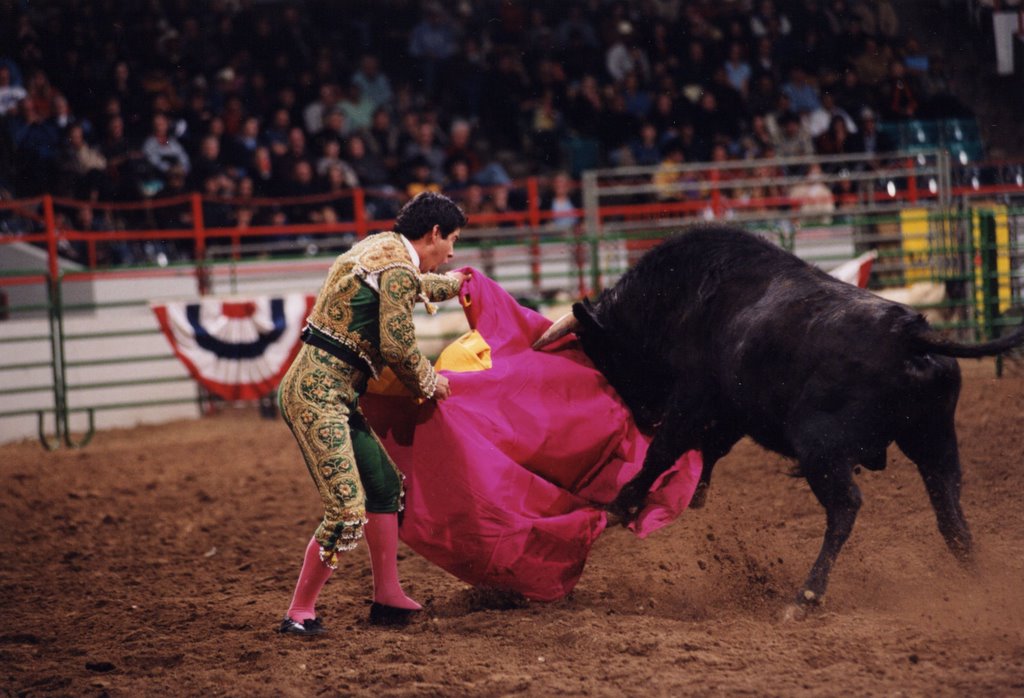
While completing a mission in Mexico City he meets Danny (Greg Kinnear); a straight-laced, mildly successful businessman and suburbanite with a loving wife (Hope Davis), an SUV and even a white picket fence. They share a drink and a late-night conversation at a hotel bar. The next day, while at the bull fights, the lonely but charismatic Julian tells Danny what he does, and how he does it. Rather than freak out and run, Danny listens and talks to his desperate new friend, a lonely man who confesses, “I don't live anywhere” and has lost whatever social skills he once possessed. If Julian needs a friend, Danny needs some distraction from an equally grim financial situation. He is in Mexico to sign a last-ditch deal to save his fledgling company.

Six months later, back in Denver, the doorbell goes. Danny and his wife Bean (Hope Davis) have a visitor, the hitman, still falling to bits and telling the surprised businessman, something that most likely the truth, “You are my only friend in the world”. Having moved in, charmed Bean with flashes of his deadly charm and allowed himself to be cared for, Julian and Danny together attempt to fix his overwhelming problems, not least of which is that his former employers might be trying to eliminate him.

Brosnan is terrific, and it's hard for me to say that. I've seen Evelyn, Laws of Attraction and After The Sunset. I know exactly how bad a bad actor he can be. Here, though, he's brilliant, carrying the whole movie with deliciously ambiguous turn as the dangerous, unpredictable Julian. Witty and brave, with a scraggy beard and a vulpine smile, it’s a performance as surprising as it is entertaining. Kinnear and Davis as the married couple share a fun chemistry and a wholly believable relationship, thankfully never threatened by Julian’s unexpected arrival.

A delicate character study that manages to incorporate a buddy comedy, a clichéd thriller plot, elements of black comedy, exotic location shooting and slick action sequences, The Matador is clearly trying to do everything. In attempting the impossible, debutant director Richard Sheperd unsurprisingly misses some of his targets. Nevertheless, with interesting, offbeat characters spouting lively, original dialogue and a complicated but slow-burning plot, The Matador economically creates more than a few resonant moments and some fine jokes.

Cold Front

Success really can’t bring happiness in The Weather Man, a painstakingly developed and craftily poised character study that chronicles the mid-life crisis of a man whose personal life is in a shambles just as his professional life gains a new momentum.

Nicholas Cage, doing his downbeat everyman, plays Dave Spritz, a Chicago television weather man going through a mid-life crisis. His exasperated ex-wife (Hope Davis) has moved on with her life after their divorce and is in a relationship with a man that Dave can’t stand. Their two children are troubled. His overweight daughter (Gemmenne de la Pena) urgently needs social guidance and his teenage son (Nicolas Hoult from About a Boy) is remote and troubled. He’s also getting far too close to his creepy student counsellor (Gil Bellows). Most painfully, his father (Michael Caine), Robert Spritz, an acclaimed writer, has been diagnosed with terminal cancer. David does not value himself, much less his profession. Maybe people discern that from his permanently smiling face, which is why they throw fast food at him from passing cars. They can tell that he’s a self-loathing loser, a miserable failure and the object of his own contempt.

Some of Dave’s inadequacy can be traced to his father Robert (Michael Caine), a Pulitzer Prize winning novelist, the toast of the Chicago literary set, who cannot hide his disappointment in his only son. It’s not that Dave is on TV discussing the weather, it’s that he’s just reading out the information. He’s not a qualified meteorologist and has no ambition to become one. For his part, Robert is coming to terms with his sad news and is desperate to teach his floundering son some life lessons. “Do you know,” he asks, “that the harder thing to do and the right thing to do are usually the same thing?” With his life in a shambles and his spirits sinking lower than the November barometer, Dave leans something nobody on television should ever learn, that he is artificial. The knowledge almost kills him.

The film was directed by Gore Verbinski, who previously made The Pirates of the Caribbean and The Ring, and like Cage, isn’t someone you’d pick for the material. He does well, setting a suitably frosty mood through some inspired photography and some delicately emotional scenes. He also makes room for a little levity, through some funny wordplay and tellingly suburban comedy of embarrassment, but only a little. The atmosphere otherwise is gloomy and contemplative. The scenes between Cage and Caine are by far the films most effective, Cage’s existential uncertainty playing beautifully against Caine’s icy, bourgeoisie self-control. As a character essay about inadequacy and the emasculation of the modern man, The Weather Man predicts a chilly forecast, with too little sunshine to fully recommend.

Slevin Blides Flor Slevin Blothers

Rivalling Plan 9 From Outer Space or The Sisterhood of the Travelling Pants for “Stupidest Title For A Movie”, Lucky Number Slevin isn’t the sloppily-spelled biopic of former Republic of Ireland midfielder Bernie Slavin, but a sub-Tarantino mistaken-identity crime caper from Scottish director Paul McGuigan (Wicker Park) that is ocassionally as violent and funny as you’d expect from this tired old genre, but isn’t half as clever as it thinks it is.

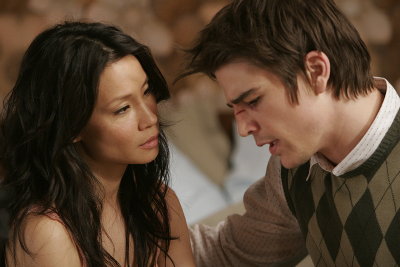
Opening with a series on non-linear vignettes that flit between a man losing his shirt at a racetrack in 1979, a man in a wheelchair telling a stranger a story at an airport and an unseen assassin killing a gangster outside a hotel, the film finally settles down long enough to concentrate on the arrival in New York of a young man named Slevin (Josh Hartnett). Arriving at the apartment, he gets mistaken for his absent friend Nick and dragged before a multi-millionaire gang leader called, simply, The Boss (Morgan Freeman). The Boss likes to talk about a 1950’s cartoon character called The Schmoo, who could change into anything that was required, and play chess. He is involved in an escalating war of attrition with his fellow gangster, neighbour and former friend The Rabbi (Ben Kingsley, here billed as Sir Ben Kingsley). The Boss wants Slevin to pay off a gambling debt by killing the Rabbi's son, the Fairy. Meanwhile, an almost-silent hit-man named Mr. Goodkat (Bruce Willis) turns up around the fringes, stepping out of shadows at opportune moments, as does a narrow-eyed cop (Stanley Tucci), who has both crime lords under constant surveillance. Lucy Liu is perky neighbour Lindsay, who plays at being an amateur detective while developing a cute crush on the battered Slevin.

Although the movie does keep you guessing, and reasonably entertained up to a point, there’s a sense that no matter how many hip pop references or slick touches are applied to it, the thing couldn't ever pay off in the way McGuigan so desperately wants it to. It’s just not there in the writing, which delights in its own complication and self-reference, but is unmistakably shallow and underdeveloped. Liu's spicy turn aside, there's nothing in the way of distraction from the not unobvious central story. McGuigan has been studying his Coppola and his Scorsese, but his results are more an homage to Guy Ritchie, himself a slavering thief, with every flavour of camera movement and jump cut employed to give much-needed pep to the criminal goings-on. What energy and fizz created in the telling doesn’t entirely make up for the film’s abrupt swerve in direction in the last act, where the smirking jokes and fluent smart-mouth are gradually revealed to disguise a sloppy lecture about complicity, revenge, wronged men and honour amongst thieves.

Sympathy For The Devil

Acclaimed Korean director Park Chan-wook completes his trilogy of operatic revenge films on a high note with the dreamlike Lady Vengeance. If your dreams feature dismemberment and coffee cake, that is. Following the themes of redemption and justice established in Sympathy for Mr. Vengeance and OldBoy, this time the story revolves around a young woman named Geum-ja (played by Lee Young-ae), recently released from prison having served 13 years for a notorious crime, the kidnap and murder of a young boy. The timid, religious girl that went in is a very different woman now, having spent the 13 cramped years festering in spite and plotting a complex plan. Once on the outside, she shuns her family, the rabid media attention and the creepy Christian group that helped her get parole. Using her prison contacts and keen sense of cunning, she constructs her suitably elaborate and vicious revenge, focused on one man, the evil schoolteacher Mr. Baek (Choi Min-shik from OldBoy). Reunited with her own teenage daughter, fostered in Australia, and armed with a mysterious, custom-made revolver, Geum-ja sets about her task with relish..

Stylish and eclectic, Park has an idiosyncratic, wholly successful visual sense and uses his camera flamboyantly, giving Lady Vengeance a brilliantly crunchy texture. We get swooping, impossible camera movements, vibrant special effects and the occasional moment of wild surrealism, like a man’s head on a dog’s body. It is all beautiful, even the violence, which has been toned down from the baroque excesses of OldBoy, but not by much. Displaying every trick in his virtuoso hand, Park uses dense flashbacks, and whimsical sub-plots to give his characters sometimes conflicting depth and background in his bizarre world. The ensemble cast, many making return appearances in the series, are all on top form. Funny, creepy and enjoyably dark-hearted, Lady Vengeance isn't quite the mind-blowing experience that OldBoy provided, but is a fitting end to a masterpiece trilogy.

Flux That

Hard-won reputations take a serious kicking in Aeon Flux, with Charlize Theron following fellow Best Actress Oscar winner, Catwoman Halle Berry into the career-threatening high-wire genre of the female action superhero with similarly disastrous results.

Sometime soon, all bar five million or so of the world’s population is wiped out by a deadly virus. 400 years later, those few survivors live in a seemingly utopian society called Bregna run by Trevor Goodchild (Marton Csokas), a scientific genius who created the vaccine that saved humanity, and his brother Oren (Johnny Lee Miller). They keep a tight grip on the population via a combination of Big Brother surveillance and heavy-handed military force. The architecture all looks very high-tech, and the fashions are suitably evolved, but there is trouble in paradise and people are starting to disappear. The deadly assassin Aeon Flux (Theron) is part of a rebel group named the Monicans, led by The Handler (Frances McDormand), who have secret meetings in a courtroom inside their brains. Aeon has a sidekick, Sithandra (Sophie Okonedo), who has hands instead of feet. Hang on, I’m nearly finished. When Aeon and Sithandra are sent on a mission to kill Trevor (Trevor?), they must dodge killer grass and beehives that shoot arrows before, not unexpectedly, uncovering a vast government conspiracy and an earth-shattering secret.

The future really is grim. Grim and stupid. Sometimes what works in animation, just like what satisfies about other two dimensional art forms like graphic novels and video games, just doesn’t translate into film. This is one of those times, and far from the only one. Theron looks great in the costume, but man alive, when she’s called upon to speak the lines. She’s not alone; it is sobering to see how such a talented cast can be so spectacularly wasted. Worse is how howlingly bad they are individually, each more uncomfortable and stilted and confused looking than the last. The unadventurous direction, from Girlfight’s Karyn Kusama is either ponderous or frantic but altogether bewilderingly shoddy and half-hearted. The original Aeon Flux was visceral and visually arresting, but as usual, all the juice has been sucked out of the property for the big-screen, big-money gamble and what remains is the bitter rind. That loss might not be all Kusama’s fault, but without soul or energy, her film collapses into a spectacularly muddled assembly of nasty special effects, witless plot twists and Power Ranger’s-outtakes standard action sequences. Chasing the all-important young teenage male demographic, Theron does cartwheels in tight black leather for ninety minutes. She even climbs a few ladders. They won’t want to miss that. For anyone else, you will.

A Warning From History

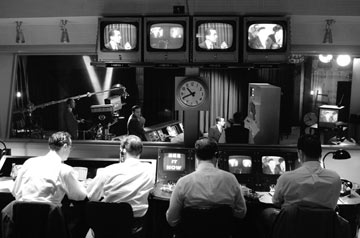
George Clooney's second picture as a director, the succinct and unpretentious Good Night, and Good Luck, is a modest movie, in scale, cost and running-time, but a huge film in terms of its message and relevance to today’s news media. It tells the story of a key chapter in American political life, the Communist witch hunt conducted by the paranoid, power-hungry Senator Joseph McCarthy in the 1950s and the efforts of television journalist Edward R. Murrow, played by David Strathrain, and his team of news producers, including Clooney as Fred Friendly, to expose him as a liar and a fraud. Murrow’s sense of decency and justice is offended by McCarthy and his cronies and in saying as much, he threatened his own position and that of his company, CBS. He is vilified by McCarthy’s supporters, his own management and by sponsors, who abandon the station as soon as the controversy breaks.

In framing the meat of his story between two snippets of a brilliant cautionary speech about the importance of an independent media that Murrow delivered at a dinner in his honour, Clooney presents his key episode as an almost surgical procedure – a group of right minded people in a position to do something who fight the tide of popular opinion and commercial pressure and fear of exposure to remove a malignant presence from the body politic.

Strathrain, a renowned theatre actor and veteran of almost 80 films but still a relatively unfamiliar face, is excellent as Murrow, suave and cool on the exterior but burning with a righteous fire of indignation underneath. Clooney plays Murrow’s dedicated producer Fred Friendly, with Frank Langella, Robert Downey Jr. and Patricia Clarkson making the strongest impressions from the remainder of the large ensemble cast. The other central character is McCarthy himself, and Clooney masterstroke is having the sweaty, charmless Senator play himself, using actual archive footage to damning effect. That the movie is entirely about 50 year old politics and the early days of the American television news business might discourage Irish audiences from seeking it out. But the movie is not really about the McCarthy and his pernicious influence, rather the rightminded way in which Murrow and his team eventually engineered his downfall. Far from a bitter polemic, the film is a morality play, as relevant and important to today’s international politics and the business of reporting the truth as it is a lovingly-crafted period drama.

McCarthy's flickering presence aside, Clooney does some interesting things as a director. In shooting in glorious black & white and expending considerable energy in getting his atmosphere and production design just right, Clooney is refusing to colourise the 1950s. This isn’t ironic homage, a Technicolour trip down memory lane, its straight reportage related with a dispassionate eye and attention to detail.

The story, about tough, principled men forced by a shift in politics to make a stand, to do the hard thing in an uncertain situation, is as much a call to arms for today’s society as an opportunity to revisit the past for guidance. Clooney keeps his camera tight to create intimacy and immediacy, and his script pared down to avoid confusion. He skilfully creates an attentive calm around his key moments, provoking the audience into joining the dots between what happened 50 years ago and what is happening today in terms of press freedom and civil liberties. The film’s message is crystal clear, bullies must be stopped and liars exposed.

Heavy Jelly

A skinny black man dresses up as a fat, googley-eyed black grandmother, does a series of dirty-minded Uncle Tom skits that would have Hattie McDaniel choking on her popcorn and calls it a kid’s movie. So what? In the world of comedy, political correctness means nothing. You should be able to laugh at anybody and everybody. Anybody except Martin Lawrence.

Big Momma’s House 2 is an awful film, but it’s not because of the depressingly derivative story and bargain-basement production values. It’s not even the pitiful performances from the cast and clueless directing. And it’s not because Big Momma reinforces racial stereotypes that were embarrassing when presented in Tom & Jerry cartoons in the 1940s. None of that would matter a damn if Lawrence himself was funny. Let there be no confusion, he’s not. Not one bit. If anything, for this desperate sequel, he’s twice as unfunny.

Six years on from the character's first outing, Lawrence’s FBI agent Malcolm finds himself working undercover as a nanny for a family caught up in a murder case, an international spy-ring and a cheerleading competition. Uptight Mommy (Emily Procter) is overprotective and regimented. Absent Daddy (Mark Moses) is a boffin who’s a threat to National Security. I could try to relate the rest of the plot, but like an eye-witness to a road accident, my testimony might not make much sense after the fact. I remember there were lots of colours and loud noises. There was a dog that got drunk and one cute kid that fell down a lot and a chase scene at the beach. Big Momma shouts all the time you see, and it’s hard to stop yourself from wincing, so I might have missed a few things.

In short, entirely as you’d expect from this genre of former star relegated to ‘family’ slapsticks, the results are blatantly contrived, astonishingly vulgar and designed only to serve the Lawks-A-Mercy antics of the gurning lead. The bar doesn’t go any lower. At the risk of sounding hysterical, Big Momma’s House 2 is final proof that God is dead and that the world He leaves behind is monstrous beyond comprehension.

The Irish Blog Awards

Confessions is one of fourteen blogs up for nomination at the Irish Blog Awards on the 11th of March under the heading Best Arts & Culture. I'm as surprised as you are.

Cast a vote for me, and visit some other Irish blogs in a load of different categories at the awards website. You can go back and vote for them later...

And it burns, burns, burns

Based on Johnny Cash’s own autobiography and developed with considerable input from himself and his wife June up until their deaths in 2003, James Mangold (Girl, Interrupted) tells the first part of the story of a legendary life in music with astonishing power and sensitivity. Superficially, Walk the Line follows the same, tried and tested tracks of other musical biopics, but perhaps because many musicians have the same story to tell; hard times, the struggle for success and recognition, drugs, alcohol, rehab and redemption, their stories can’t help but resemble each other.

Although JR Cash’s poor childhood in rural Arkansas is quickly told, Mangold does manage to establish three key elements of his subject’s troubled personality. We discover the impact the tragic death of his beloved older brother had on his life, that his alcoholism was likely hereditary and that his father's lifelong animosity towards him scarred him deeply. “The Devil did this,” Ray Cash (played with devastating meanness by the excellent Robert Patrick) shouts. “He took the wrong son.” And you wonder why he wore black? After a tour of duty with the Army in Germany, Cash returned to the US to marry his sweetheart Vivian (Ginnifer Goodwin), and raise their daughter. It’s just as Cash is unhappy with the direction his life has taken, and struggling to establish himself as a musician, that the film kicks into life, in an altogether rattling scene that sustains the momentum through to the finale in Fulsom Prison.

When a combination of luck and desperate persistence gets Johnny Cash and his part-time back-up band an audition at Sam Phillips (Dallas Roberts) legendary Sun Records in Memphis, things don’t go according to plan. The trio pick out an uncomfortable, altogether amateur version of an old gospel standard with Cash yodelling away like coyote. Phillips, unimpressed, asks them if they have anything original for him. With the other two following his lead, and with a nervous cough, Cash sings Folsom Prison Blues, a plaintive country song he’d written when stationed in Germany as a GI. It’s in the process of delivering this sad song about regret, with his dreams of a musical career disappearing over the horizon and an angry wife at home, that Phoenix undergoes a stunning metamorphosis. He shifts his stance a little, addresses the microphone with a jutting chin and grips his guitar with a new fervour. It’s like he hates it, and himself for playing it. The young Cash’s desire to perform and to touch people with music has embarrassed him again, but maybe for the last time. Phoenix starts the song as JR, a broke door-to-door salesman and ends it as Johnny Cash. An immortal.

After signing with Sun, Johnny and the boys set off on a seemingly endless town to town tour of the American south, along with Elvis Presley and Jerry Lee Lewis, driving a caravan of cars filled with amplifiers from town to town, popping amphetamine pills to keep going. Also on the tour is June Carter, one of a famous family of country singers, with she and the intense Cash quickly sparking a mutual attraction. But Johnny is married, and June is recently divorced and unwilling to get involved. Despite his frequent declarations of love, June keeps him at arms-length for years. At its heart, Walk the Line is a love story, as sizzling and passionate on screen as it was in real life. Perhaps his story ends in 1968 because the two stayed devoted to each other for the remaining 35 years of their lives, but Mangold draws out this tangled relationship beautifully, without ever becoming mawkish or sentimental.

Despite being an outstanding musician, Cash was also an adulterer and an addict. To the film’s enormous credit, Mangold doesn’t pull his punches for the sake of audience sympathy. This is entirely fitting for Cash, a man who sang about his troubles and the trouble he caused so directly and so eloquently and so simply. In his autobiography, Chronicles, Bob Dylan paid homage to Johnny Cash and his music, saying that the Man in Black’s throaty growl “was so big, it made the world grow small.” In taking on that voice, and approximating the man who held it, Joaquin Phoenix delivers a startlingly good performance that never once turns into an imitation. He is note-perfect, but the film’s energy and heart come from Reese Witherspoon as June Carter Cash. She positively lights up the screen with every scene, matching Phoenix’s furrowed fervour snarl for snarl. The chemistry between them is palpable, which Mangold uses to fashion an immensely believable and compelling story. Like that startling instant, when Johnny Cash finds his voice, (“steady like a train, sharp like a razor,” as June later described it), this is a film full of riveting thumbnails; a bass guitar with the chords written on the fretboard, the first time Phoenix slings his guitar back on his shoulder, Jerry Lee Lewis’ leopard-skin collars.
Two scenes are particularly memorable, sketching the time and place with a keen eye and heart. An encounter the twice-divorced June has in a rural shop with a sharp-tongued bigot is powerfully written and brilliantly performed. Later,
Cash wakes up on a tour bus and in stumbling past his sleeping guitarist Luther Perkins, plucks a cigarette out of his mouth. In real life, just months later, Perkins died in a fire in his Tennessee home, having done the same thing again.

Famously, both Phoenix and Witherspoon sang all the songs and played their own instruments, with the supporting cast playing legendary rock and rollers likewise performing their own music. Mangold employed the talented music producer T-Bone Burnett (who worked on O Brother, Where Art Thou?) to record these performances, uncannily capturing the growling voice and wild mood without ever feeling like karaoke. Although the songs (including Ring of Fire) have gone on to become familiar country standards, Burnett and the cast give them a revitalising new snap and tremendous naturalism, with Witherspoon in particular coming to life when she takes the stage. Phoenix is hugely impressive as Cash, a man often called inimitable, and Mangold stages the many musical performances with energy and meaning. Although the story itself occasionally walks the line between audience-pleasing convention and damn-them-all rebellion, in the end it is the combination of great music and phenomenal performances from both leads that makes it unmissable. It is a fitting tribute to the life and music of an immensely talented, but all too human, cultural icon.

Brave New World


Idyllic images of swimmers coursing through sparking waters open American director Terence Malick’s new film, The New World, only his fourth in a career spanning thirty years, but a beautiful and wholly individual take on the familiar Thanksgiving legends that surround the establishment of Jamestown in Virginia in 1607, the first stage of what became America. That the music accompanying the swimmers is Wagner's ‘Das Rheingold’, German chamber music, will indicate to attentive viewers (and you have to pay attention to Malick) that the director is laying the ground for the head-spinning clash of cultures the exploring English encountered and exploring the way those two worlds collided until, as we now know, one engulfed and destroyed the other.

Malick frames his point in a triangular love story, with the pivot being the Native American princess Pocahontas (although she's never referred to by that name), played by the astonishing teenage newcomer Q'orianka Kilcher, and the two very different settlers she loves. On one side is the bedraggled Captain John Smith (Colin Farrell), among the first arrivals and a proto-Renaissance man who quickly learns to respect and admire the “naturals”. Politics and society however, conspire to separate the two, just as their relationship offers hope of peace and mutual assistance between the starving settlers and the suspicious native people. With Smith otherwise occupied, by order of the King, Malick introduces John Rolfe, played with tremendous delicacy by Christian Bale, a wealthy tobacco plantation owner, who Rachel, as she is now known, marries and bears a son by. Various fleeting subplots surround the central story, represented by crazed priests, politicians and starving settlers. As with The Thin Red Line, the ensemble of actors pop up here and there, some barely registering in their couple of scenes while others disappear altogether into the background. Nothing is explored in too much depth, because the thing would be three days long if they were. Better to use short scenes and moments of metaphysical poetry to communicate the chaos on both sides.

Splitting the worlds, and the heart of the cast, is the ethereal Kilcher; a tremendous, wide-eyed presence, brimming with heart and youth, and soul when required. When lathered in Disney's anti-bacterial soap, Pocahontas became little more than a cute metaphor for an unspoiled land, a kind of Earth Mother totem pole; but Malick, a philosopher as much as a filmmaker, allows Kilcher to deliver a remarkably assured and natural performance as a real person, not only reclaimed but re-animated from the popular cartoon. For her more seasoned co-stars, this cannot have been an easy film to make, but Farrell and Bale both provide sterling support, with the Dubliner delivering his most natural and compelling performance since his debut turn in Tigerland. Around them nature, light and sound, is as much a character, with the physical landscape literally breathing before us through a beautifully judged ambient soundtrack.

Although some story elements are entirely fiction, Malick has gone to tremendous efforts to ensure his film is absolutely as it was 400 years ago in every other regard. He filmed along the Chickahominy River, very close to the original Jamestown settlement. His rough-hewn, hand-built sets, realistic costumes and armoury help to ground the carefully constructed atmosphere and dreamlike mood. Visually, Malick and his ace cinematographer Emmanuel Lubezki present a deluge of arresting and original images, brought to the screen without the aid of electric lighting. The results might not have the same heavenly glow of his other pictures, but it was a brave move, totally in keeping with his requirement for realism. Malick can make a kennel look like a cathedral, and his film is a masterclass in crafting a story from little more than light and magic.

Maybe it’s just as well its beautiful and absorbing, because there is very little spoken dialogue. I didn’t mind the silences (not least because there are very few real silences - there's a gentle ambient sound track throughout). I found it oddly dreamlike, as I expected, but entirely involving, which I didn't. As he does, Malick also fills his gaps with murmured voiceovers; snatches of thoughts or diaries that might not tell us much more about the story, but drag you into the characters head, adding a rich complexity to what we do know.

The film builds to a fascinating last act, with Rachel and Rolfe summoned back to England to meet the King. This development provides the film’s emotional heart, with Rachel wandering through a finely realised London, it’s wet, grey streets and heaving crowds with the lush forests. Those who know the story know what happened next, with Malick choosing devastatingly effective shots of a freshly made, empty bed and a still, darkened Native face to represent his conclusion, a moment that sings off the screen with heart and wisdom and genuine emotion.

As in the similarly themed WWII morality tale Thin Red Line, where humans fight a vicious war against the backdrop of a shrugging natural world, Malick is telling a traditional American cinema story in his own, decidedly non-traditional way. In allowing the camera to linger unhurriedly, occasionally for longer than the viewers gaze can hold, or in cutting to a random scene of brutality or madness, Malick is making his film exactly as he wants to. Bitching about its exorbitant running time and narrative longueurs is to miss the whole point. If it was any different, it’d be another man’s film. Something else altogether, and a lesser thing at that.

The way commercial movies are constructed now, the unfamiliar attention a film like The New World (and Micheal Haneke's Caché) requires can split an audience right down the middle. Impatient viewers might baulk at another shot of distant birds flying in formation across a huge, bruised sky or a series of composed visual haikus on the way water falls on rocks or how leaves fracture sunlight into rainbows. Malick’s approach might strike you as either totally immersive and rewarding or maddeningly dense and boring. Or somewhere in between. Personally, I loved it, but seeing as it might be another five years or more before we see anything like it again, I'm prepared to debate it for the sake of argument.