Lady Muck

Manhattan socialite and PR Ashley (Lindsay Lohan) is blessed with supernatural good fortune. Every scratch-card is a winner, it stops raining when she leaves her penthouse and she can always get a taxi. Everything is going great until one night she goes to a masquerade ball and meets Jake (Chris Pine), a penniless janitor at a bowling alley who moonlights as a manager, and is desperate to get a CD from his up-and-coming band into the hands of a music mogul. Ashley winds up kissing Jake, leading to her good luck being swapped with his bad, along with the spit. Immediately, she breaks a heel on her swanky stilletoes then she almost gets killed and winds up in jail. Worst of all, she loses her job and the platinum company credit card, although it is a mystery what exactly that job entailed beyond batting her eyelashes. Even to the world of eyelash-batting, this is no great loss. Nevertheless, Ashley must restore her mojo so sets about finding and kissing every dancer employed at the ball - like Cinderella with a chapstick. She must also stay alive, so takes Jakes old job in the bowling alley, cleaning toilets and deodorising shoes.

Just My Luck has been mercilessly targeted by its six screenwriters to tick off every possible item on the tweenie checklist. Ashley has a cool job, lots of money, wardrobes full of designer clothes and about 100 pairs of shoes. She's super-skinny but still has a rack. She actually lives in the same actual building as the actual Sarah-Jessica Actual Parker. She has two supportive, not-too-pretty, not-too-rich friends, who take her in when things get bad.

In fact, the only thing Ashley does not posess is a golden palomino pony, but then she does live forty floors up in New York and I suppose there must be some tattered scrap of reality remaining if this cynical romance is going to work. But I wish they had found room for the horse. My kingdom for the horse, if only for its (hopefully talkative, wisecracking) appearance to let all but the most impressionable members of the young audience in on the joke. That this leaden, clumsy romance is a fantasy and not a guide to life, that ‘unlucky’ and ‘poor’ are different things altogether, that behaving like an uppity Anglo Saxon epithet for ninety minutes ultimately requires, demands, comeuppance.

You ask a homeless person why they’re sleeping on the street and they won’t tell you it’s because they broke a mirror or walked under a ladder. They’ll tell you a story you probably don’t really want to hear, much like Lohan and her producers who blithely float through the routines here without so much as a nod towards humanity. Much fun is made of Jake fishing a dog-turd covered five dollar bill out of a park dustbin, the same bill that a rich man just used to wipe his dogs arse, with the scene concluding with the young dreamer being confused with a rapist because he looks a bit shabby and is out of breath. Ashley meanwhile is learning that manual work is just so much fun! There are so many things to break, it's unreal! Aren't bowling balls heavy! Wow. I know. Aren’t regular people funny, with their saggy clothes and cheap shoes and dull jobs and limited vocabulary? Don’t ‘the other half’ live like pigs? Someone should say something. Gawd!

Lohan, who isn’t all bad in general, is all bad here. She stumbles unconvincingly through the film on cheerful, toothy autopilot but it comes across as distracted and stiff. Pine gets less to do and does less with it. The direction, from Donald Petrie, is flat and unadventurous. The fact that his film also contains long sequences involving the real-life boy band McFly doesn't help. They look, and sound, like the bus home after a special-needs day-trip to the trainee hairdressers.

Later, for their big performance, the band’s name is transformed to resemble the logo of a well-known burger restaurant (same red and yellow colouring), but this incidence of product placement is notable only for its conniving subtlety in a film where coveted brands are blatantly promoted. Forget the ads before the trailers, the main feature is riddled with commercial breaks. There is never any doubt about which lifestyle Ashley preferred, rich or poor, army surplus or Dolce & Gabbana, despite her last-gasp homily about ' maybe going home to her parents to think things through'.

Even more uncomfortably, for a film rated PG and made for twelve year old girls, there's a lot of unnecessary use of the word shit, which surprised me in the context, and lots more of the same old scatological nonsense involving actual piles of faeces; the imagery fast replacing Monument Valley or the Manhattan skyline in the panoply of American cinema. Perhaps they are trying to tell us something.

Lasseter Come Home


Loathe and all as I am to link to CNN, there is a fascinating article with Pixar's head honcho John Lasseter on their financial pages where he talks about his personal filmmaking history, the origins of digital animation and the rise of Pixar, the recent big-money merger with Disney and Cars, their new one.

Revelations include the fact that he started out sweeping the floors in Disneyland and learned everything he knows about comic timing from operating one of the rides there. You can find it here, it's a must read.

Gael Force

There has been so much written about Ken Loaches Palme d’Or winning Wind That Shakes The Barley it is almost impossible to separate the film itself from the entity that has taken shape in the media here and in Britain over the past couple of weeks. Yes, it is a masterfully drawn story of patriotism and rebellion, absolutely righteous in its commitment to exposing the barbaric colonial oppression of the British and precise in defining the timeline that lead to the treaty of 1921 and the start of the Civil War and the formation of the Free State. It is not however, a paean to the IRA as we knew them until recently, or a call to arms for modern-day republicans. Here, it is important to distinguish the on-the-runs and the flying columns of the 1920s from the paramilitary army of gangsters that terrorised this country for the past 30 years. Although republicans might flock to see this film, they will not find any comfort here. Loach is fundamentally not interested in what this struggle became, but rather how it came to be.

Taking its emotive title from an old patriot song, Loach and his regular screenwriter Paul Laverty have fashioned a heartbreaking story of sacrifice that tells the story of Ireland’s awful history in microcosm, taking the formation of a flying column of young republican rebels as a springboard for a discussion about colonial oppression, barbaric reprisal and the vacuum created when those who have taken power abandon the people to Civil War, the echoes of which still rattle through the hillsides of Cork and Kerry. A guerrilla war being a local war; the entire film takes place within a few square miles of the unnamed Cork village, with Loach opening his film in 1920 during a spirited hurling match. Afterwards, the players, including student doctor Damien (Cillian Murphy) and his brother Ted (Pádraic Delaney) are detained and assaulted by a squad of snarling Black and Tans, who accuse the hurlers of playing “paddy” games and speaking Irish, both illegal under British rule. One of the lads refuses to give his name in English and is beaten to death for his insolence. This act of casual barbarism is the trigger that politicises Damien, who abandons his plans to practise medicine in London to join his older brother and their firebrand friend Dan (Liam Cunningham) in forming a local IRA flying column and start the fight for independence. Operating in small, hastily-trained groups, they steal the weapons they need from an RIC barracks and, in a typically terse but hugely effective scene in a local bar, start their campaign against the Black & Tans.

Murphy, an ordinary guy who happens to be a brilliant actor, is excellent as the divided young patriot at the heart of the story, absolutely authentic and perfectly credible as a young man who sacrifices everything he has got rather than have it destroyed in front of him. It is his best film yet, perhaps because he is allowed to be himself, or who he would have been if he was born 100 years ago. Opposite him, Pádraic Delaney give a more careful performance, far more shrewd and pragmatic, while Liam Cunningham occasionally suffers under the weight of his impassioned speeches. In a less pivotal but important role, Orla Fitzgerald delivers a heartbreaking representation of suffering and sacrifice that is absolutely draining. Throughout the film, the emotions Loach asks his cast to call up are so emphatic, the dialogue so inflamed, that any weakness or incompatibility would be immediately obvious. Technically the film does wonders with a restricted budget, particularly the luminously earthy photography of Barry Ackroyd and the naturalistic costume design of Eimer Ni Mhaoldomhnaigh.

Stories of their brutal deeds have been told for almost 100 years so you don’t have to be a military historian to know that the Black and Tans were little better than uniformed death-squads. That is exactly how Loach portrays them; supremely aggressive and intimidating, quick to use violence and torture and ruthless in their recriminations. It is a representation that has caused considerable controversy in Britain, currently fighting a doubly patriotic war on the streets of Iraq and the football fields of Germany. Loach depicts terrible violence on both sides, brutal and poetic, but there can be no doubt about where the moral right lies. His film has a strict point of view, and within that he places a couple of distinct lectures about the political history of Ireland in the early part of the last century, framing that struggle against a simply-drawn individually human story of loss and division. Towards the end, the information tends to overshadow the emotion as the personal stories get lost in the political but that is not to deny the fervour and ferocity of either. This is powerful cinema. The prevailing political ideas of the time are presented, with time devoted to discussing the minute details that make al the difference and the difficulties involved in setting up an administration on a local level, but within this wider ideological battlefield, the people Loach and Laverty have selected to tell the story are occasionally pushed to the background, or given more space than required to make heavy-handed Marxist speeches, espousing an ideology that is as dead as disco. What is lost, in these spittle-flecked, over-oratorical discussions, is the film’s initial feeling of optimism and hope and fraternity; devastatingly exposed as a fraud later, when the ground has shifted and the brothers must take opposing sides. It is important to remember that these individuals are fictional, but the events the film portrays are as close to the truth as cinema can be.

In the end, and whether you agree with him or not, Loach’s thinking boils down to the simple fact that a people held captive by a colonial power must use military force to achieve freedom. It will not be handed to you and few escape once the ultimate choice has been made. Blood is spilled on everyone’s hands. The violence makes the film occasionally difficult to watch, but that is as it should be. A squadron of roaring Black and Tans beat a young man to death in a farmyard. They assault a railway guard for refusing them passage on a train. Later, in the films most disturbing scene, they burn out a house they suspect has harboured the rebel fighters and brutally assault the women inside, including Sinead (Orla Fitzgerald), Damien’s gentle, politically passionate girlfriend. Later, a grenade tossed into a truck full of Tans during an ambush explodes causing devastation, but it is an event that is restrained by reality which makes it all the more powerful. Loach’s camera remains dispassionately static; his soldiers die where they drop. These scenes have an unflinching savagery and an immediacy that makes them hugely effective – in depicting the atrocities that engendered a Nationalist consciousness in the people at the time, but also in firmly grounding the film’s grand political ideas with red blood on green grass.

These men and women are ordinary people, not politicians or kings, driven to extremes by centuries of oppression and state-sponsored murder. But this is not a republican film in a uniquely Irish sense, with a capital R and wrapped in a green flag, it is a film about all oppressed people driven to fight for freedom. The film can be successfully read as a straight historical drama, hugely atmospheric and perfectly played, but Loach is a deeper filmmaker than that. In The Wind That Shakes The Barley, the British filmmaker draws a straight line through time and space that connects Bandon and Baghdad, watching history repeating itself in cycles and damning the administrations that have not learned from their mistakes. There is also, for Irish viewers, a more sobering realisation. We can witness the high price that was paid for the freedom we enjoy today, and might reflect on how cheaply we then sold that dream on – to priests, corrupt politicians and property developers.

We Are One


80 posts later, or so, Confessions celebrates it's first year of existence with a cup of strong coffee and a cigarette. Thanks to those who drop by to read the reviews, and a special thank you to those who leave comments. Appreciate it.

Caravan of Hate

It took considerably more effort that is usually required to recall the events of RV, a misbegotten family comedy whose true depths of malignant ineptitude can only be succinctly described in hot, harsh, ineloquent words. Suffice to say that in my house we know him as Robin Fucking Williams.

The untrammelled horror involved in surrendering oneself to his desperate mugging is returned threefold when RV's twinned spectaculars of waste and unfunniness are remembered later. The film does end, thank the good Lord, after about an hour and a half of pointless, poorly-timed pratfalls, but the pain of it endures.


In terms of harrowing, knuckle-whitening cinema RV puts United 93 in the ha’penny place. Like, seriously.

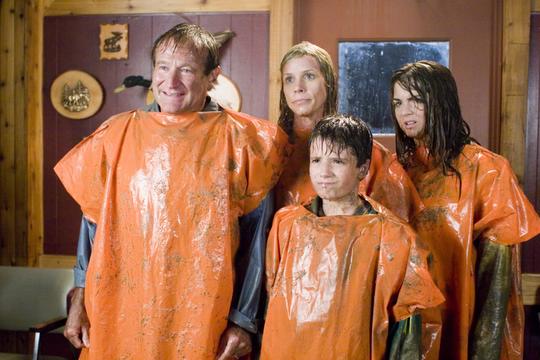
Fizzy drink executive Bob Munro (Williams), his wife Jamie (Cheryl Hines) and their two bratty children (JoJo Levesque and Josh Hutcherson) take a family vacation across America (actually Canada) because his obnoxious boss Todd (Will Arnett from Arrested Development) has ordered him to make a presentation in Boulder, Colorado. For some reason unable to admit he might be called away to attend to his livelihood during the trip, Bob rents a huge recreational vehicle, puts everybody in and starts driving. The van comes with a gigantic photograph of director Barry Sonnenfeld on its side, in a suitably delicate cameo. He is not blushing in the picture, although he should be.

The first night on the road, they meet the over-friendly Gornicke family -- Travis and Mary Jo (Jeff Daniels and Kristin Chenoweth) and their kids. For some reason, they take a liking to the Munros. For some even more unfathomable reason, they are upset when the feelings are not reciprocated. The film then sets a pattern of the Munro’s getting into difficulty (with racoons, faulty brakes, lost computers) and the country & western yodelling Gornicke’s getting them out of it.

Although he has given a decent account of himself as a straight dramatic actor in films like Dead Poets Society and Insomnia, Robin Williams hasn’t made me laugh since 1983. The curious thing is he is never just plain old bad when he is bad (which is most of the time), he has to be apocalyptically bad. There is a bit in RV where Mork does a five minute impression of an African American basketball player talking trash on the court, a breathtakingly embarrassing scene that alone, in a career littered with cringes, would see him in the dock in The Hague if the film critics ruled the world. How is this, presumably semi-improv, rant funny when it smacks of racism and more to the point, how does that comes under the heading of children’s entertainment? Maybe the situations involving the handling of poo, which Williams does often and at length, are supposed to be the fun stuff. Even hepatitis doesn't want him.

Chevy Chase cobbled some semblance of a career from this genre of family vacation comedies and although it burns to admit it, each of the five or so National Lampoons are like Citizen Kane when compared to this frightful misfire, which played out in total silence, save the occasional tut of impatience, at the screening I attended. Nobody laughed, because there was nothing to laugh at.

There are a small few interesting nuggets of character and situation nestled among the detritus that address modern urban living and balancing work and family, but they are drowned out by the roar of William’s murderously frantic capering and comedy as broad as all outdoors. Two thirds of the film is given over to the hairy little gnome running, cycling or driving at a pace calibrated to a degree just below heart failure. Not a single frame of it has any value as comic entertainment, with the rushing about merely bringing the failings of the remainder of the underwritten, unashamedly larcenous screenplay into sharper contrast. Williams’ wide-eyed physical exertions are later replaced with a few dewy eyed sermons about family love and integrity so laden with Hollywood sugar they should come with a warning for diabetics. Message delivered, Sonnenfeld goes back to the diarrhoea gags. It is impossible to gauge which is worse.

Nobody emerges from the wreckage of RV with their dignity intact. Williams can forget about it, and good riddance, but it is sad to see Jeff Daniels reduced to this level with the brilliant Cheryl Hines from Curb Your Enthusiasm wasted completely in role that only requires her to tilt her head sympathetically and smile a big smile. To her credit, she doesn’t appear to be enjoying herself much and you won’t either.

Signs of the Times

Much is made in the new version of The Omen of the 6th day of the 6th month, 2006 being the day that Armageddon will arrive. That’s today, so hopefully there will be someone left alive to read this tomorrow. I’ll look pretty stupid if there isn’t. In any event, that numerical co-incidence, coupled with 9/11, barcodes, the Columbia space shuttle disaster, the Asian tsunami and the appearance of a mysterious comet, convince the scientists at the Vatican Observatory that the end of days is upon us. At the same time, American diplomat Robert Thorn (Liev Schreiber) is switching his stillborn son for a healthy child at a hospital in Rome, without informing his young wife Katherine (Julia Stiles).

The story flashes forward, through judicious use of home video montage, to where the family have moved from Rome to London, where the well-connected Robert is now ambassador. There’s a big garden party to celebrate the fact that the demon child is now five, where his devoted nanny hangs herself off the roof in front of the guests. This horrible act, drawings of which later decorate his bedroom, start an awareness in Damien (newcomer Seamus Davey-Fitzpatrick) that he is different from all the other kids. When a frantic Irish priest Father Brennan (Pete Postlethwaite) and a local photojournalist Keith Jennings (David Thewlis) arrive to tell Ambassador Thorne that his son is the antichrist, he doesn’t believe them at first, even if his wife has her suspicions. Finally convinced he must act to stop the child, he finds the forces of evil, mostly channelled through the benign shape of Nanny Baylock (Mia Farrow) are a far tougher test of his diplomatic abilities.

Schreiber does well in the Gregory Peck role, occasionally mimicking the late actors growling incredulity. Opposite him, Julia Stiles as Katherine is unconvincingly brittle, never giving the impression she hasn’t read the lines from a page before forming the words. She does have a great death scene though and its here that the film shows its merit, coming up with new twists on the classic scenes of Mousetrap-like demonic spite that put paid to more than a few characters in the build-up to the final battle.

Dundalk-born director John Moore overcomes the inevitable familiarity of the shot-for-shot nature of his remake to create a sustained atmosphere of dread through some choice cinematography, especially in the flashy dream sequences, and judicious use of a screeching soundtrack. Although the scripting is far from sharp, there are plenty of well-crafted jumpy moments, familiar to those that know the original film, but tweaked through costlier, gorier special effects to provide the film with a reason for being. Moore, whose last film was a remake of The Flight of the Phoenix, shows again that he can deliver a well executed and handsome film which should allow him to graduate from these uninspired studio jobs towards something more substantial.

United 93

As everybody knows, on the morning of the 11th of September, 2001, four American airplanes were hijacked by al-Qaeda operatives, two of which crashed into the World Trade Centre towers in Manhattan, one into the Pentagon in Washington DC and the other into a field outside Pennsylvania. Paul Greengrass’ harrowing United 93 is the story of what happened to the last plane and is one of the films of the year.

It is a bleak experience, not to be undertaken lightly. Shot with cheap cameras in a documentary style and using the facts of the tragedy as its script, this masterfully balanced and authentic film opens amid the routine of Newark International Airport, where Flight 93 is being prepared for a flight to San Francisco. Five of the passengers are Islamic terrorists, determined to take over the plane and crash it into the White House. The film unfolds in two intertwined strands of story, what happened on the ground and what happened in the air. After establishing the terrorist’s intentions, the first half of the film depicts the gradual awareness in the air traffic control system that something is wrong, and the unpreparedness of the US Air Force chain of command. After a couple of nerve-wracking false starts, once the hijackers wrest control of the plane from the pilots, the film stays on the plane. As the frantic passengers become aware of the situation in Manhattan, a dreadful panic arrives in the film and never leaves. Although they try to take the plane back, improvising weapons and charging the cockpit, we know that this is a death ride and there is no redemption.

Much as he did in 2001’s Bloody Sunday, Greengrass sticks to the facts, allowing the film to unfold in its own horrific way without using any kind of flourish to embellish the story for drama or impact. As he did in Derry, and later in Omagh (which he produced) Greengrass worked closely with the families of the dead to ensure their loved ones were depicted honestly and fairly. The film is absolutely without sensationalism or affectation. Other than an opening fly-by of the Manhattan skyline, there is not a single shot in the film that could not come from the point of view of someone in the scene. No one event is selected as a midpoint of the drama, as modern cinema grammar dictates, and no one hero emerges. We never cut to an exterior shot of the plane falling from the sky, or see it careen from the ground. Events unfold here in real-time, which is exhausting. There is no clipped relief from the editor to bring us in and out of the action. There is no montage to spare us; we have to live it like they did.

The actors were carefully chosen from the ranks of character professionals that populate network cop shows and sit-coms. They look like us, talk like us, re-act like us. They are not drawn as heroes, they are not burdened with dramatic arcs to fulfil. There are no unthinking acts of selfless courage and no wittily scripted banter. Even the line "let's roll", taken up by the media as a banner of heroism in the days following the attacks, is delivered here as an off-camera aside. United 93 is absolutely honest in portraying the people that died on that day as ordinary people in an extraordinary situation, making the passengers gradual realisation of the dire situation facing them as convincing and affecting as if you were facing it yourself. We already know what happens, which makes the passengers desperate attempts to wrest control of the plane back from the terrorists all the more distressing. In these last scenes, Greengrass increases the movement of his cameras and the tempo of the editing to create a dreadful bedlam of noise and colour that contrasts powerfully with his previously meticulous ordering of time and place.

Although the immediate military response to the hijackings is hopelessly muddled and bureaucratic there is no attempt to moralise here. Beyond offering catharsis, Greengrass brave film offers no particular message about terrorism; the evil events speak for themselves. He similarly resists waving a patriotic flag and does not provide either a background to the terrorist’s actions or an explanation as to how the hijackings birthed the war on terror and created the shambles in Iraq.

If the film is anything, it is a memorial, a hewn-granite mausoleum of fear and futility, an eye-witness sketch of the face of death. It offers no comfort and neither should it. It is galvanising in its stark depiction of horror, unnervingly ordinary and arbitrary and empty. It only takes on meaning when viewed dispassionately as a collected sequence of events and the observer bears witness. But I’m warning you, it’s a tough job.

The Final Insult

With original director Bryan Singer jumping ship to make Superman Returns, the once-noble X-Men franchise has been handed to second-tier talent Brett Ratner to ruin, and in The Last Stand, ruin it he most emphatically does. You know you’re watching a Ratner when the transfatty acids in the popcorn franchise outing don't sit well when sprinkled with the hundreds and thousands of the After The Sunset director’s failings.

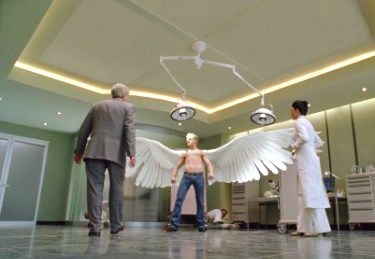
Driven by millionaire industrialist Warren Worthington's (Michael Murphy) desire to 'cure' his own son, Warren Junior (Ben Foster), who has grown a fine pair of angel’s wings, a drug that reverses the X-gene mutation, the source of all the superheroes (and supervillains) powers, is developed. With the President opening clinics to allow mass vaccinations, and plenty of mutants wanting to become ‘normal’, a strained political situation spills over into war.

On one side Magneto (Ian McKellen) gathers a ragtag army of discontent cyberpunk mutants who think that destroying all non-mutants to stop the President enforcing a medical threat to their existence. On the other side, the head of the X-Men school Prof. Charles Xavier (Patrick Stewart), with the help of political animal (literally) Dr. Hank McCoy (Kelsey Grammer) search desperately for a diplomatic solution.

Then there’s the one in the middle that causes all the trouble, resurrected super-vixen Jean Grey (Famke Janssen), who returns as a fire-breathing, omnipotent angel of death, to find the third way, the pyrotechnic realpolitik of blockbuster Armageddon. Her policy of turning those who conspire to tick her off into beautifully rendered dust doesn’t deter the mutton-chopped Wolverine (Hugh Jackman), who is desperate to rekindle his love for her. Or kill her. Or maybe it’s rekindle while killing. He looks as confused about it as anybody. Nevertheless, the battle lines have been drawn more or less, and there’s a hefty chunk of special-effects budget to get through, so it all kicks off.

Ironically there’s a returning character, Rogue (Anna Paquin, just about) who cannot touch people or she’ll suck the life out of them. Ratner should have squeezed into her skin-tight costume himself. His carnival style, flashy and nausea-inducing, pushes character and story way into the background while mechanically executing enormous stunt set-ups that quickly become repetitive. When you’ve seen one magnetically-propelled station-wagon doused with flames, turning it into an impromptu weapon, you’d imagine you’d seen them all. Ratner will repeat the trick thirteen times, regardless. You get to wondering if he hadn’t finished working it all out with Dinkies and a Zippo on the carpet of his Winnebago before the knock on the door came to call him to the set.

This flashy longueur comes at just the wrong point, smack bang in the middle of the ultimate battle; the final stand-off between good and evil mutants that loyal fans have waited three long movies for. The franchise is known for its variety of characters, interlocking stories and grand themes, or rather, it was. Here we have a great start and a muddled middle that has only one place to go. When it gets there, an odd thing happens. The X-Men go out in a unique way, with a very loud, percussive whimper rather than the anticipated bang.

The new characters are given a couple of short scenes to do their various party-pieces. Trailer Park Boys fans will spot Ellen Page as Kitty, the teenager who can walk through walls with the same facility as she can steal boyfriends. Later she battles Vinnie Jones (I know, tsk) as Juggernaut, a strong-man, in a race through a long building inspired by an old Levi’s commercial. At least they get a go. Foster as Angel is anonymous, except in long-shot and mid-flight. Magneto’s new recruits, a porcupine guy and a very quick woman among them, get an introduction and a blurry fight scene and goodnight.

Whole sections of The Last Stand eluded me, being either so thinly sketched as to be subliminal, like Olivia William’s turn as a bespectacled Scottish doctor, or so lumpen that you have to crane your neck to see around them; like the deaths of major characters or the whole ‘Learn To Love The Mutant Inside” thing. The big moments arrive on cue, some more effectively used than others. We are treated to Ratner’s take on the motorway convoy pile-up, following the lead set by the Wakowski Brothers and Michael Bay before him, which is well handled without being extraordinary. Later, the fine idea of shifting the Golden Gate Bridge in San Francisco to form an impromptu passage to Alcatraz and the final battle gets mired in shabby, over-used stunt work and ho-hum special effects. More does not always mean better, but at least they’ve promised there won’t be another one.

Or have they? The studio rep at the screening urged us, the seat-flipping critical press, to wait until after the credits for an extra scene. It’ll be worth it, we were told. After staring diligently at a five minute scrawl of special-effects personnel and stunt-people, there is indeed a 'hidden' scene. It is not an apology from Stan Lee.

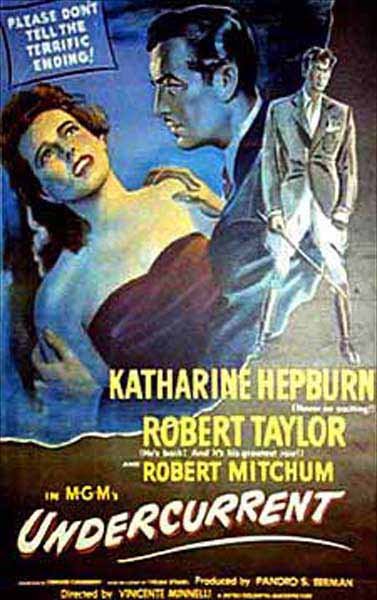
Undercurrent: Please Don't Tell The Terrific Ending

FIPRESCI, the international federation of film critics, has just launched Undercurrent a new magazine "for reflection on films, on the cinema and on film criticism".
The first issue has an interview with sound designer Leslie Shatz, a bizzare attempt at critical restoration for Cameron Crowe's insipid, botched Elizabethtown and the transcript of a very interesting discussion group at the Brisbane Film Festival about how critics work.
Very interesting, for me, at least. They also have an open call for essays and articles.

Undersea Life

For a jaded critic, blinking from the onslaught of dismemberment fantasies and twee children's animations clogging the arteries of the nation's multiplexes, Noah Baumbach's scorching semi-autobiographical divorce comedy/drama The Squid and the Whale offers immediate relief, a cinematic balm that provides both excitement and gratification in equal doses. Of all the many good reasons to turn off your computer right now and go see it, the best is the central performance of Jeff Daniels as a self-absorbed, full-of-it, middle-aged father. I’m not sure which beast he represents but Bernard (pronounced in the American fashion with a flat, nasal A) is such a fantastic movie character and Daniels gives such a faultless acting display that the only proper response has to be; who knew he had it in him? So long relegated to second string anonymity and being confused, in my mind at least, with Jeff Bridges, this is Daniel’s finest hour since The Purple Rose of Cairo twenty years ago. I might have put Dumb & Dumber (which was only ten years ago) because there too Daniels is outstanding but more because in his head, Bernard thinks he is Woody Allen’s suave matinee idol, Tom Baxter. But in reality this man is a slightly better read, more opinionated version of the Farrelly Brother's heavy-lipped simpleton, Harry Dunne. A failed novelist who hasn’t published anything for years, Bernaaaard is unhappily married to Joan (Laura Linney), his second wife and a woman of enormous patience, not least on the tennis court. They have two teenage sons, a well-appointed house and a cat and are busy living the 1980s Reaganomic dream of nikes and volvos, tennis and neighbourhoods, self-absorbtion and self-interest.

Bernard is closely based on the directors own father, the novelist and teacher Jonathan Baumbach. I would love to know if he has seen the film, and what he thinks of it, because his son sees him as a relentless attention whore, constantly seeking affirmation and consolation and bewildered by the turns his life has taken. He is consumed by this need for control, so much so that he cannot see anything else; his failing career and its various improprieties, his remote, fractured wife and children. He can’t hear his own droning voice or read his hackneyed writing. It’s more than a writer’s vanity; it’s a complete oblivion, a selfish retreat into the mind and the minor glories of a long-gone past. The only thing that shakes him out of his stupor is the threat to his standing in the family and his rampant ego that Joan’s new career as a writer represents. In one glorious incident, the great teacher asks if she had followed his advice on some notes on a piece of her prose. She tells him she didn’t make the changes and liked it better her way and he visibly winces, for her benefit, in sympathy. We get to see precisely how patronising Bernard has become (because she wouldn't have married him if he was always like this), is highlighted when he drives, with his eager son and his starry-eyed girlfriend to give a reading to a half-empty hall in a small college, from a book printed before most of the audience were born. Soon after, Joan's story is published in the New Yorker.

With the balance of power shifted, and the ground gone from beneath his feet, Bernard’s response is total collapse. He moves from the family home to a crumbling shack, starts an awkward affair with one of his students (a spot-on Anna Paquin) who writes lengthy short stories about her vagina and causes consternation over the timetable the new, doubled-up households bring about. While Try and make the divorce as hard as is possible on everybody. Like I said at the outset, he’s a brilliant movie character, annoyingly dense and boorish but charming and funny too. The family split, it falls on the two sons to try and salvage their lives from the wreckage the adults leave behind. The older of the two, Walt (Jesse Eisenberg), sides initially with the father, spouting his tired old opinions and affecting his scholarly air of detachment. The younger, Frank, takes to drinking beer and acting out. As Bernard letches over his nubile Lolita, Joan starts an equally inappropriate affair with the boy’s tennis coach (played by William Baldwin) and everything starts to unravel.

Baumbach is publicly cleaning out some old closets here, but with tremendous charm and honesty, he doesn't stop his caustic eye from falling over his own teenage self. His character, Walt, is a loathsome, mouthy creep; anxious and uncomfortable, pretentious and ill-informed. Your typical teenager, maybe but he claims Pink Floyd lyrics as his own and worse, treats everybody terribly, exactly as his father has repeatedly shown him to do. There is no doubt that Baumbach has seen the error of his ways, and knows just what a monster he was. Making the process of telling an autobiographical coming-of-age story itself part of the process of growing up and learning to deal with it all is, casting aside, his master stroke. In the end, Baumbach is merciless. Everyone gets caught out and everything is forensically exposed; Bernard as a fool and a bastard, Joan as an adultress and a flake, Walt as a plagiarist and a bastard-in-training. The compulsive onanist Frank’s fate is more delicate, but they are all, in Baumbach's hilarious, probing way, gently cleft open.

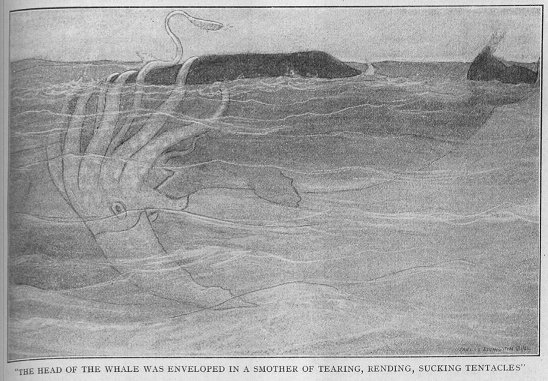
From the roots of inadequacy sown by a man losing his potency and flailing to recover it, The Squid & The Whale makes a compelling, hilarious and ocassionally poigniant case for a cold, hard truth, people are awful, especially when they love each other. The image of the two tangled beasts, which closes the film, is taken from the NY Museum of Natural History’s famous, atrium-filling exhibition, but the taxidermy frozen in three dimensions to represent a struggle to the death is a stiffer, starker, and ultimately more straightforward thing than the nuanced, occasionally hilarious emotional battle that we have just witnessed. It obviously struck a chord with Baumbach, whatever its deeper emotional significance. We should be very glad it did.

Squatters Rights

First off, full disclosure. I despise musicals in every form and if it weren’t for their occasional return to popular cinema, would never watch one. It’s not the sudden segues into song or the way whole streets of passers-by burst into well-choreographed jazz-hands that gets me. It’s the overwhelming fakeness and insincerity of the genre that I cannot abide; all the Up With People! plastic smiles, the cheesy show tunes and the cardboard backdrops. That ingrained antipathy is not entirely this movies fault, but I can't remember being so unhappy when watching a film (and so desperate to leave) so Chris Columbus’ will-sapping, fairy-story song and dance effort has to shoulder some of the blame.

Directed as if it were on stage, but without the live audience that adds frisson to all that prancing about, Columbus brings the Broadway hit about dodging landlords to the big screen, without ever offering any reason for his having done so. Rent aspires to be an up-tempo movie about AIDS, heroin addiction, sex-workers, drugs, transvestism and bisexuality, bravely tackling such difficult themes by surgically removing any lingering trace of authenticity, danger or truth in order to keep everybody smiling through all the tears.

Inspired, it says here, by Puccini's La Boheme, the film follows a year in the life of the dues-dodging roommates Roger and Mark, a filmmaker (glasses, 16mm camera) and a struggling musician (big Bon Jovi hair, shouts everything) who along with their close-knit group of squatter friends, including Rosario Dawson as Mimi the hooker with the heart of gold, struggle to cope with the difficult life outlined above by fighting authority and remaining true to their bohemian selves. Roger and Mark did have a third roommate, Benjamin (Taye Diggs), but he married a millionaire’s daughter and has now become a property developer and their landlord.

Sound contrived? You bet it does. The soap-opera Rent is clad in rags it tore up itself. In keeping with the early-90s AIDS theme, there’s a lyric about a low T-cell count. I defy you to listen to it without your face scrunching into a wince of agony, your fingernails gripping the cinema seat in a spasm of pure torture. Do you think people dying of AIDS look this pretty, sing and dance this sweetly, hope for the future this blindly? Think on.

Manfully struggling to put my own critical prejudices to one side, I still ended up hating every single frame of this misbegotten film. The songs are awful, the acting performances likewise. The dialogue is laughable, mere shreds of chat stitching the songs together. The staging looks exactly that, staged, flat and bare and empty. When the freezing roommates make a fire with their abandoned screenplays and art brut, for a moment I dreamt that the reels of celluloid had followed them into the flames. I awoke again and the film was still playing and the rent was still due and my stomach was a hot knot of nausea, as if I had been force-fed candyfloss spun from broken bottles.

The Last of the Flock

Dying fathers battle distraught daughters in Rebecca Miller’s artfully composed and emotionally rich film about the inevitable effects of change, the passage of time and the limits of human love and idealism. More immediately, The Ballad of Jack & Rose showcases the astonishing screen acting talents of her husband, Daniel Day-Lewis and newcomer Camilla Belle in a double-act of rare power and immediacy.

He plays a Scots engineer named Jack, a straggly old hippy, who lives with his sheltered 16 year old daughter Rose (Belle) on a small island off the American east coast that was once the location of a thriving commune of proto-Greens. Bunked up in a ramshackle house, they live more or less alone, save the occasional visitor. Rose, whose unstructured home-schooling involves classes in cloud-appreciation and tree-house building, is nevertheless growing up quickly and, worryingly, is beginning to show signs of a personality disorder.

As is typical of Day-Lewis, we know from the look of him that he’s not well, long before we see him popping a few pills for his ailing heart and he shares the information that he is indeed dying and is worried about his daughter and the life he will leave behind for her. Devoted to the wetlands of the island, Jack is also fighting a losing battle with the materialistic property magnate Marty Rance (Beau Bridges) who threatens the ecosystem with a development of holiday homes. Into their intimate world, Jack invites his new girlfriend Kathleen (Catherine Keener) and her two teenage sons Rodney (Ryan McDonald), an overweight trainee-hairdresser and Thaddius, their spelling, a listless sneak (played by Paul Dano). The free-wheeling Rose feels betrayed and acts out, coming between Jack and Kathleen and manipulating the two teenage boys into risky situations that can only lead to disaster.

The film is beautifully photographed by Ellen Kuras, cutting from the narrative to quick shots taken from nature, a sky full of lightning, a swelling sea, black sap oozing from a tree branch. Later these flashes form into Jack’s memories of the way life used to be in commune, before his wife and everyone else moved away. This slow pulling into focus culminates in Rose projecting old 16mm family films for her new friends on the walls of their dusty ‘acid-pad’. It also brings forth a brooding row and a separation and a whole load of other drama, but because of Miller’s poetic touch in the telling and sensitively, sparsely scripted story, the film can explore the tumultuous emergence into womanhood of a remote, damaged girl with grace and sensitivity.

She also touches off themes of repressed violence and abandoned responsibility, culminating in suggestions of an incestuous relationship when it becomes clear that the closeness between Jack & Rose has become obsessive and dangerous. Her devotion to her father leads her to repeatedly declare her intention to kill herself when he dies, a promise that hangs over the film like a threatening cloud. Its heady stuff; composed primarily of contrasts and colours, with Miller showing her focus and empathy in her story of dreams turned sour and a dying light.

One potential drawback is the 1960s rock soundtrack, clearly designed to underline the waves of emotion falling from the screen through repeating the same song, “I Put A Spell On You”, as interpreted by different musicians. This kind of flourish, if it is a flourish, is entirely to your own taste but I found, as I almost always do when a pop soundtrack is used as a device, that it was something Miller should have trusted her talented cast to be able to express for themselves. It’s not intrusive, like Cameron Crowe’s jukebox, but it is unnecessarily emphatic, even for a film called The Ballad of…

The performances are all terrific. Fans of modern cinema acting will want to see it for Day-Lewis alone and they won’t be disappointed. He is brilliant as the cantankerous oddball, the loner who resorts to his chequebook when called upon to deal with people, the dreamer who comes to realise that the time has passed. With his gaunt face, he fills Miller’s close-up camera with rage and pain and an overwhelming tiredness but then there’s the flash of a cunning smile or a burst of energy and his character turns to show another contrasting facet. Opposite him, the young Camilla Belle more than holds her own, playing a difficult role with restrain and constancy, occasionally muted, typically fiery, all the way to a gut-wrenching finale that left me feeling drained and exhilarated at the same time.

White Emulsion

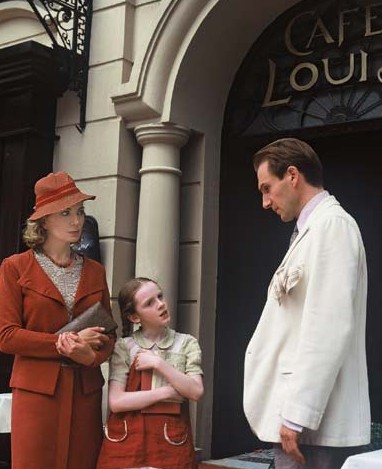
Following the death of producer Ismail Merchant, the last of the idiosyncratic films he made with James Ivory is a disappointing end to a long-stranding cinematic partnership that had become synonymous with modern melodrama. As with the best of their long list of films, The White Countess is peopled with rich characters in the midst of complicated relationships, romantic, social and political. The world they inhabit, 1930s Shanghai during the Sino-Japanese War in this case, is handsomely presented and evocative. The men won’t talk and the women won’t stop and someone will play tennis. Disappointments and misunderstandings battle yearnings and repressions. Unfortunately, as with more than a few of their thirty-odd collaborations, attention to detail is everywhere but in the story.

Currently drawing huge crowds to The Gate theatre in Dublin, Ralph Fiennes plays a retired American diplomat named Todd Jackson who left the government service when his family were killed in a house fire that left him blind. Having taken to shuffling through the shebeens of Shanghai, drinking his cares away, he befriends Mr. Matsuda (Hiroyuki Sanada), a mysterious Japanese man who warns him that a war is coming. One night, Jackson overhears a conversation in a bar involving the Countess Sofia Belinsky (Natasha Richardson), once a Russian royal who supports her exiled family by working as an escort girl. Later, he asks her to come on board as the hostess in his new bar, which he calls The White Countess in her honour. The club is a huge success, full every night of jazz-loving revellers and trendy revolutionaries. But Jackson finds himself romantically drawn to the Countess, and knows that he cannot act on his emotions. As a woman who no longer has to sell herself for money thanks to his attention, she’s just about ga-ga over him but likewise torn by some awful emotional trauma that just too terrible to even think about but probably involves her nasty family.

With a screenplay by Remains of the Day writer, novelist Kazuo Ishiguro, photography from ace cinematographer Christopher Doyle and an excellent cast including Richardson’s mother and aunt, Vanessa and Lynn Redgrave, the film had lots of potential, sadly never realised. The story drags, meandering around in flashback while waiting for something to happen. The ruminations of the characters become annoying and the monotony of the soap-opera formula becomes overwhelming. Fragments of story are picked up, turned over and dropped again in a careful manner, like slow-motion fidgeting.

Early on in the process of thinking up his dream, making it happen and losing it all again, Jackson says he wants the titular nightclub to be a place of elegance and charm that strikes the perfect note, “somewhere between the erotic and the tragic, like a woman.” In my scribbled notes there are four exclamation marks of emphasis alongside this transcribed snippet of dialogue, the full stop at the bottom of the last one breaking the paper. This thigh-endangering chatter is notable not only for it’s ponderous, novelised nothingness, but for being the last reaction, positive or negative, this monumentally boring film evoked. There was plenty more wandering inanity, lots of it heavily accented and awfully important-sounding but somewhere between the lovely animated insert and the peculiarly bloodless rain of Japanese bombs, I found myself having tuned out. I spent the last twenty five minutes thinking about lunch and the last fifteen eating it.

Too Much Time


Want to know what going to happen in the year 2411, you know, in the movies? That's when Aeon Flux frees the people of Bregna from the deranged Dr Trevor Goodchild.

Ok, bad example.

The Movie Timeline is a comprehensive, and I mean comprehensive, catalogue of events during the passage of cinematic time from 4,000,000 BC (2001: A Space Odyssey) to 865,427,810 AD (The Time Machine).

Direwall

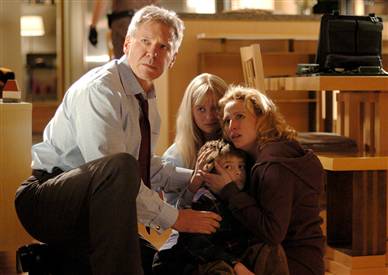
In his stupid new techno-thriller Firewall, Harrison Ford’s slightly sweaty character jogs through the main door at the airport and jumps into a waiting car. A cop car, responding to an alarm from a bank inside the building, rolls gently to a stop as Ford squeals away. The cops don’t give chase. It’s the awesome power of the anonymous guy in a suit, someone Ford has played so many times that all he needs is a two-piece and someone to chase down and the rest just falls neatly onto the screen, the same as it did the last time. Even his characters name, Jack Stanfield, could have been plucked from any of his films from the last ten years. It’s a safe name, reassuring and righteous. It gets results, damn it.

Jack has an idyllic life, with a pretty architect wife (Virginia Madsen), who designed their lavish hilltop home, and two doe-eyed children (Carly Schroeder and Jimmy Bennett). But someone has been digging around in their bins, and Jack’s identity has been stolen and used on an internet gambling site. The garbage-sorter turns out to be Bill Cox (Paul Bettany), a techno-savvy robber with a gang of heavily armed geeks who plan to kidnap Jack’s family and hold them hostage as Jack lifts $100 million from his own bank and transfer it to an offshore account. And while Jack’s instinct is to try and foil the scheme, Cox has surveillance equipment to counteract his every move.

Luckily Ford’s grim-faced hero is also a quick-thinking technical whiz, so the game of cat and mouse (and dog) can begin. Nimble Jack can manipulate i-Pods to hold vast amounts of banking information, bamboozle television screens with electronic feedback and adapt fax machines and mobile phones, McGyver-like, with gaffer tape and chewing gum, into improvised technical patches or deadly weapons. This is far less fun than it sounds, even for nerds. The rest of the paint-by-numbers plot requires little by way of explanation. You have already seen it before, many times, with nothing added here but the contemporising razzle-dazzle that the new generation of consumer electronics can provide. This very basic version of the Ford movie exists simply in order to unfold, each step along the way leading inexorably to a predetermined outcome as familiar by now as his nostril-breathing fury, his righteous vengeance. Or his grey suit.

For a super-villain who knows, for example, that his target has a pizza delivered every Wednesday night at around 7, Bettany’s character doesn’t have the same level of knowledge about the running of the bank, some of whose systems were frustratingly “changed last week”, owing to the arrival of a hostile takeover’s advance Work & Motion team, the week before that you’d have to suppose. That flint-eyed squad of cage-rattlers is led by Robert Patrick, who suffers the indignities of the dialogue well enough, but never recovers from having Ford, almost twenty years his senior, tuck him in for the night with a single punch. He was standing in Ford’s way, something nobody can do in a movie since he shot that guy with the swords in the marketplace in Raiders of the Lost Ark. Given the same sticky end more than a few of his opponents meet at Ford’s hands here, Patrick should consider himself very lucky he got to duck out when he did. Ford’s knees might be sixty odd, but his fists are still frisky.

When not dishing out meaty vigilante justice, Ford looks alternately bored or uncomfortable. Bettany provides a little contrast as the British bad guy, suitably clipped and coldly polite, but the film drags along the ground when it has to stop to explain his convoluted plan. Madsen is entirely wasted as the good wife, as are Robert Forster as a security colleague and Alan Arkin as the bank manager. The kids remain anonymous. Director Richard Loncairne, who made a similar hames of the romantic tennis comedy Wimbledon, attempts to blend armfuls of familiar plot elements, a perfect family in mortal danger, a good man forced to do bad things to protect them, a complicated heist and a battle-of-wits between a smart thief and a smarter hero, but with little or anything new to say. Into this soupy mix of the familiar and the mundane comes plenty of ‘yeah, right’ to go with all the ‘so what?’ The third act’s descent into outright silliness had the small crowd I saw it with laughing heartily as what was an upgraded version of Desperate Hours took a sudden, fatal leap into Lassie Come Home. After this unintentionally hilarious and highly dubious plot swerve the film could never recover, with the remainder of the running time given over to the stuntmen who provide a tepid car chase and a lengthy, shaky fight scene at a remote abandoned farmhouse. The film doesn’t end, it stops.

Ford is hacking his way through something in Firewall, but it isn’t a high-tech computer system, it’s the simple goodwill of his unnaturally devoted audience. They have provided him with a long tenure at the top in Hollywood, an A-list status that is in serious danger of coming to an abrupt end if he doesn’t start producing the box-office. Hollywood movies are made exclusively for profit, and with his pricetag at around $20 million a picture, Ford needs to start selecting his projects with far more care if he is ever to see one again.

The Altering Eye


The other day I was thinking about how, almost every time I open a book about movies, I learn something totally new. I know this is true of all books, but because movies are what I specialise in, a new name or a new title opens up a whole new avenue of exploration. You know, if it proves interesting beyond the first googling or a shufty through imdb. It doesn't always.

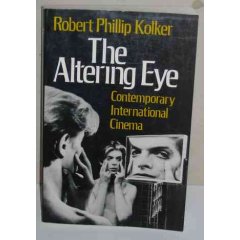
Today my copy of The Film Snob's Dictionary arrived from amazon and the first page I opened was about The Altering Eye, a fabled book about post-war European and Latin American cinema, written by Robert Kolker in 1983. Short version - we reacted to the influx of American cinema by using it's standards and themes to tell our own stories.

I had heard about it, but never read it. The dictionary called it a 'must-read snob book', so naturally I googled it. Glory be, although it's out of print for years, it's available online, unabridged, legitimately and free of charge here.

Fool Proof

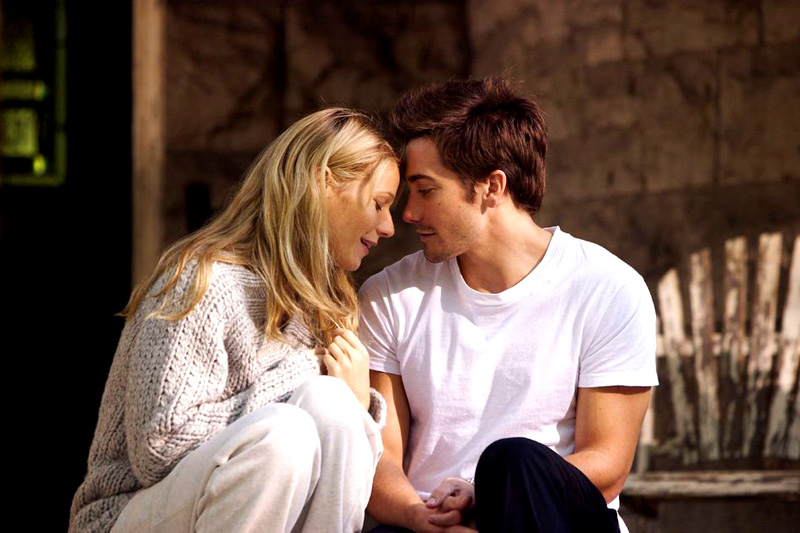
A dreary Gwyneth Paltrow leads the small ensemble director her Shakespeare in Love director John Madden has gathered to bring David Auburn’s acclaimed stage play about the mathematics of disintegration to the big screen. Pulling the longest faces this side of the Grand National, in Proof Paltrow plays Catherine, the remote, damaged daughter of a brilliant but mentally ill mathematician (Anthony Hopkins) who fears she has inherited his insanity along with his facility with numbers. As the film opens Hopkins has just died although he continues to haunt his daughter, symbolising her descent into madness as he tries to help her out of it. Complications arrive in the person of Hal (Jake Gyllenhaal), one of her father's ex-students who wants to catalogue his deranged mathematical papers and Catherine’s estranged sister Claire, who arrives in a whirlwind of checklists to help settle their father’s affairs.

As Catherine mopes through her fractured flashbacks and her grim, unhappy present, Hal uncovers a lost notebook among her father’s garbled papers that might be an important mathematical proof. This news shakes Catherine out of her mood for long enough to sleep with him. With Claire looking for Catherine to leave Chicago and live in New York and questions arising about the authorship of the notebook, Madden marches along the familiar path between genius and insanity while skirting the equally tricky fine line between outright tedium and passable entertainment.

Ultimately falling somewhere between the sappy untruths of A Beautiful Mind and the hardcore tech-speak of Pi, Proof is a lacklustre, overwrought drama that lacks a sustaining tone or any element of surprise. Although artfully constructed in flashback, Proof just doesn’t add up. It’s too pretty and emotional for a geeky science movie, and too clever and humourless for a family drama. Hopkins does his modulated rant. Paltrow refuses to convince as the bereaved prodigy, staring off into space and mumbling, despite having the majority of the screen time. Gyllenhaal likewise is dull and stilted in a scattered, underwritten part. Hope Davis (who, through some freak of scheduling, appears in three movies currently in cinemas) does do better as the busy, uptight sister, providing some energy and bustle, but again this is a role written and played, appropriately enough, entirely by the numbers.

Web of Intrigue: Clooney on Syriana

You hear him coming long before he arrives, laughing with the PR girl in the corridor, making plans for his dinner, requesting tea with sugar and braying like a donkey at whatever unheard responses she gives. She might just be the most beautiful woman I have ever seen in my life but he doesn’t seem to notice. She’s gazing up at him, eyes dancing, as he tilts his head down attentively, nodding and clapping his hands. Then the heavy door closes and, with a big grin, he bounds across the room. His handshake is firm and warm, political almost, but there’s a friendly pat on the shoulder to make you feel at ease. “Hi, I’m George”, he says, somewhat unnecessarily. Then, with a wrinkle of polite concern on his face, he asks me if I want anything. “Tea? Cuppa coffee? Too early for a drink, isn’t it? You Irish? I’m Irish.” This is old-school charm, you see, not to be confused with smarm, sincere and easy and altogether 100% Kentucky proof. A regular guy just making sure everything is comfortable and happy before getting down to business. He looks sharp, fit as a flea, groomed to perfection and smiling away, not to himself and not because there’s anything particularly amusing, but to make you smile too. It works, how could it not? It worked on the girl in the corridor. It works on everybody. I should be writing this down, I’m thinking, as moments later I have a big beam on my face and a lukewarm cup of Dorchester tea in my hand. I’m also wondering how, in the few minutes we have, George Clooney is going to explain both himself and his new movie Syriana to me.

They say actors have two profiles, the good ones, anyway. They can turn their heads to the left or to the right and, depending on the light and the skill of the photographer, a totally different face will appear in the lens. There are, likewise, two George Clooney’s. One is the celebrity bachelor playboy; the 40-something prince of Hollywood’s new Rat Pack, a fixture in the tabloids and co-owner of a swanky Las Vegas casino. That Clooney makes disposable fluff like Ocean’s 12 and smirks at the paparazzi as he falls out of nightclubs. The other Clooney, the new Clooney, today’s Clooney, is a political philosopher agitated about the state of America, fluent in his anger and seeking to combine, somehow, the business of entertainment with a commitment to tackling social issues. The two personas appear to be diametrically opposed. So I ask him, which one is he? My reference to Las Vegas gets a grunt and a wave of his hand. He likes the other one better. “Can I be that one? The Philosopher Prince? And hey, why can’t I be both?” I tell him that, unfortunately, he needs to be pigeonholed. “I can see that”, he says, “well, first of all, the one thing I will never ever do, and you can mark my words here, is enter into politics. That is not an interesting world to me. But I do have an interest in political issues. My dad was a newsman. My mother was mayor of our home town in Kentucky. I grew up in that world and it’s been part of my whole life. But to answer your question, you can’t just come out and say ‘hey, everybody, listen to me, I’m an intellectual. I’m really smart’. Because the more you say that, the dumber you sound. So, I can’t define how people think of me. What you try to do is function as you always have and let the chips fall as they may.”

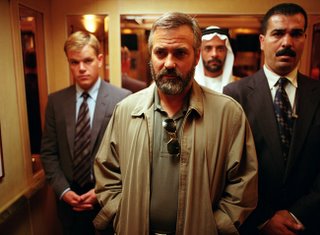
With Syriana and his own McCarthy-era broadcast journalism film Good Night, and Good Luck, Clooney has, nevertheless, positioned himself as Hollywood’s pre-eminent liberal agitator, pricking America’s conscience through his choice of films and then, wherever possible, opening up the media attention the film attracts into a discourse about the state of his country. In short, he’s worried about it. In Syriana, written and directed by Stephen Gaghan, a meandering sprawl of five separate storylines come together in a dense film that highlights America’s desperate greed for oil and the political corruption that enables that economy. Having gained 30 pounds (“ridiculously easily”) a lumbering, bearded Clooney slouches his way through the movie playing Bob Barnes, a tired and unhappy CIA agent, inspired by Bob Behr and based on his memoirs as an ‘operative’ working undercover in the Middle East, See No Evil. After assassinating two gunrunners, Barnes finds himself tasked by his superiors with killing a prominent Saudi prince who has granted gas-drilling rights to a Chinese company. Having failed in the attempt, Barnes returns to Washington where he is cut loose by his agency. Once back in Beirut, because he has nowhere else to go, the now-rogue Barnes is kidnapped and tortured. Left for dead, with no hope of return, he tries to prevent the CIA from ambushing the prince with an unmanned drone bomb. Under the advertising tag line “Everything Is Connected”, Gaghan, who penned Steven Soderbergh’s similarly wide-reaching narco-epic Traffic, tries to show us the various points of connection, a tangled, global network of corruption and greed. A businessman (played by Matt Damon) has gained influence with the ruling family of an oil-rich Gulf state and, on the other side, a US Government lawyer (played by Jeffrey Wright) becomes involved in the corruption investigation against a powerful Texan oil company over a drilling contract. In Saudi Arabia, an unemployed young Pakistani immigrant and his friend join a mosque which preaches a seductive form of jihad against the West, while deep in the background on both sides, dark forces exert their influence. It’s a thinker.

Even though Syriana has snagged a couple of Oscar nominations (for Clooney’s performance and writer/director Stephen Gaghan’s script), which should help sell it abroad, Clooney is honest about the tepid audience reaction to the film in America. “They didn’t really get it”, he says, with no apparent bitterness. “They thought it was too complicated. That’s the word I heard everywhere. Complicated. But you know what, the situation is confusing and it is complicated and as filmmakers, we can’t be afraid of that”. Clooney is certainly grateful for the stronger response in Europe, saying that we at least made an effort to understand the film. “But then”, he says, “It’s always different over here. Usually your questions have a bit of substance to them. In the US they are obsessed with the celebrity aspect of storytelling as opposed to the story itself, so its more ‘who are you dating now?’ or ‘what’s Brad Pitt really like?’ Both of which I’ll answer for you later…” There’s the booming laugh again. Sadly, I suppose, we never get back to either topic because I don’t get to ask an awful lot of questions but more because this George is interested in society, not celebrity. He wants to open people’s minds, not have them open People.

Was there a concerted effort to deal with these issues in these two films now, in particular? “I wasn’t trying to put these films together as an overall political message but at the same time, I’m not trying to separate them for you now”, he says. “The time was always right to make them and the truth is it’s totally coincidental that the two have come out so close together. Although I do think that there’s a social change going on the US where people are more interested in politics and issues again. Films naturally reflect that, but there was no conscious plan to hit the public with a one-two combination or anything”. More tea arrives. Clooney sips and is quiet for a moment. He nods his head, like he’s affirming what he’s going to say to himself before he says it. “Going back to what you said there about a change in direction for me, if you think about it, we did Three Kings back in 1998. That had a lot to say about the situation, and it was honest and forthright. Then, in 2002, in the lead up to the Second Gulf War, [the director] David O. Russell and myself tried to get it re-released in cinemas and we were told most firmly by the studio there was just no possibility of it happening. Something had changed. Now, we couldn’t make that film again, with the dialogue we had and the events we showed. We wouldn’t be allowed. My point is, it’s not just me, it’s an interesting time for filmmakers now in general and opinions are starting to get accepted again, like back in the 1970s, you know, when movies had something to say and it was OK for them to say it”.

What not acceptable, it appears, is raising debate in today’s America, especially if you’re one of the most famous celebrities on the planet. Clooney got roasted by the right-wing media when, in 2002, he criticised George W Bush and the war in Iraq. “Americans have a duty to ask questions of their government”, was his widely distributed quote. It’s a mild sentiment, more a reminder that the basis for democracy is openness and discussion than a call to arms. Nevertheless, he was branded a traitor by the neo-conservative political commentators and vilified for his work for the Democratic Party in supporting John Kerry in the last US election. Now he’s back, banging the same drum again. Didn’t he learn anything from that bad experience? “Well, first of all, it couldn’t get any worse than it was at the time in the lead-up to this war, where anyone who asked questions publicly was called unpatriotic and a traitor. I don’t fear that anymore, because it got pretty much as bad as it could get for me. I didn’t think there was any great risk to me personally, in the career sense, because our country was founded on questioning authority, although we don’t do it much anymore”. His comment lingers on the air for a moment. It seems to me like a glib generalisation, and this must have been a troubling time, so I ask him if there’s anything different about the way his message will be received today. “Well, I think the climate changed after Hurricane Katrina. The press in America for the first time took this President to task for his shortcomings”. “For the first time”, he repeats, emphasising his incredulity with a raised finger. The twinkle is gone for now. “There are a lot of moments from the years of this administration that appear laughable in retrospect. Like the Mission Accomplished photo shoot in the flight-suit on the aircraft carrier. Mission Accomplished? I mean, come on. Before then, Bush had gotten a pass because it’s perceived as being unpatriotic to go after a President during a time of war. But every other President in the history of the country had been held accountable for their mistakes and he had not. Katrina changed all that”.

Does he worry that presenting this side to the public, the boring old politics and the thinly-veiled moral lectures might be a turn-off for moviegoers, a bit of a drag? Especially when his message is filtered through the same media that Clooney is calling lazy and complicit? “No”, he says, emphatically. “The elements in the media that existed in 2003 in the lead up to the war were much more toxic than they are now. I’ve been very careful not to say ‘this is what you should believe’, but ‘this is what you should be allowed to ask’. I did it from the very beginning, and then Bill O’ Reilly [a rabid right-wing US political pundit] devotes a whole show to me, where he says my career is over because of my political views. Which, by the way, he doesn’t agree with. OK, fair enough. I can’t demand carte blanche and tell the press not to say bad things about me. I’ve got to take my hits. I’m a grown-up and I know what I’m getting myself into. But, as far as the American public goes, I’m not afraid at all because ultimately we are a pretty good country at fixing our mistakes. As I see it, we make mistakes when we attack civil liberties, when we fear talking freely and we are afraid to question authority. You go back to the beginning of our history as a country and the lesson you learn is that authority, unchecked, will be corrupt. That’s why you do it, to stave off the decay”.

This isn’t a rant. Clooney is no tub-thumper; even if he speaks very quickly, his voice is never raised and he remains perfectly composed. There’s no reason to stop him in mid-flow, so I don’t. “See, in America, we don’t know anything about foreign cultures, because we don’t have to. Before 9/11, if you asked 9 out of 10 Americans to distinguish between an Israeli and a Palestinian and, you know, point out those countries on a map, they couldn’t do it. They’d say ‘that’s all those angry guys over there in the Middle East’. Things have changed now and it’s become important for Americans to fill themselves in on the news”. But movies aren’t the news, I say. They’re movies. “Yes, but the good thing we do is to open up those regions and their stories to the public debate. The bad thing is that this sometimes leads to characterisations. It’s not my duty to speak for these nations, but it is my responsibility as a storyteller to portray people in the right way. I don’t want to do movies where the bad guys are all Arabs in headscarves brandishing AK47s. It’s a tricky situation. That’s part of the process of communicating a story to an audience. But the truth of the matter is we are saying ‘this is how the world works and these are the people that work it’. For me, our objective in the film, more than telling Bob Behr’s story, more than the oil corruption story, more than the politics, is that if you are going to have a war on terrorism, which is an idea, not a country that you can bomb, then you have to come to understand why those people do what they do. In our film we have these two young men who are attracted to the radical mosque, and at the end of the day they do something horrible. I think that watching these two young men is a step towards that understanding and the real issues behind the war. That’s the story I was interested in, much more so than the other issues, in making Syriana”.

Fuck, I say. That’s a lot of information to digest. “Yeah, well, take your time”, he says with a laugh and a grin and a twinkle and a clap on the back and you get it by now. Charm offensive maybe, but his punches are landing. “It is complicated. But I’ll say this, every time you underestimate an audience, you’ll be proved wrong. When we did the pilot for ER, years ago now, the two NBC executives there stood up and said ‘What the hell did you morons do with our three million dollars? No one understands what a ventricular arrhythmia is, why would they want to watch this?’ But my argument is that you get an impression, you get a visceral thing you can take away with you and consider later. Not everyone is going to get every twist and turn on the road here, but they’ll get it eventually”. God forbid, I say, that you might watch something unfamiliar that you might have to ask a few questions about later. “That’s the point”, he says. “That’s it exactly.” I ask him if he thinks President Bush would appreciate Syriana. “Bush? Maybe we’d have to use smaller words and lose the subtitles, but yeah, sure, he’d understand it. I don’t think necessarily that Bush is evil, by the way. I think he has a very fundamental religious belief and that he thinks he has a religious imperative to do the things that he wants to do. And that to me is dangerous in America, where we like to separate Church and State”.

We’re coming to the end of our time, and to be honest, I’m not much clearer on what Syriana is about, exactly, but to quote Roger Ebert, I’m a lot clearer on how it is about it. I’ve enjoyed talking with Clooney, he is genuinely genuine and likeable with it. He believes what he’s saying and appears at least, fearless in the face of his opponents. I’m wondering if he meant what he said about never going into politics, so I ask him if he is optimistic about the future of America? “I’m always optimistic because I believe that everything is cyclical. Going back to GN&GL, if I was around in 1954, when you had to whisper your thoughts, I would have thought that situation was an unbearably dark hole that we would never climb out of. But we did and we have since and we continue to do it constantly. When we get scared as Americans, we tend to do the stupid things that people do when they’re scared. But we pull out of it. The red witch-hunts passed, Bush will pass. We fix things and we evolve. Now the fear is that if you stick your neck out, you’ll have it cut off. I’ve had that treatment, and I survived it. Look at the times right now, where the administration says ‘we can spy on people whenever we like’, you can’t stop us and we don’t even have to tell anyone what we’re doing. Well, what’s the point of America then, what’s the union that we are protecting? You’ve got to be optimistic when you’re faced with that”.

Ole Ole Ole Ole

An on-form Pierce Brosnan comprehensively sheds his suave James Bond image and restores some faith in his career after a run of post-007 duds, with his comic turn as a watery-eyed hit-man on the verge of a nervous breakdown in The Matador. Brosnan plays Julian Noble, an alcoholic, wholly unreliable international assassin who is beginning to lose the run of himself.

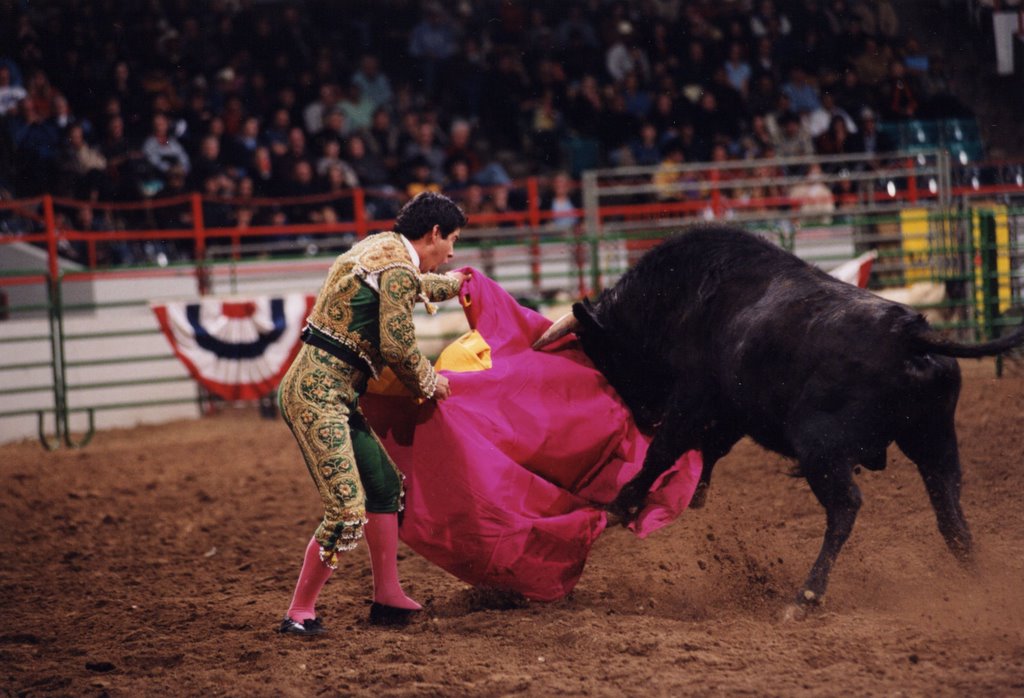
While completing a mission in Mexico City he meets Danny (Greg Kinnear); a straight-laced, mildly successful businessman and suburbanite with a loving wife (Hope Davis), an SUV and even a white picket fence. They share a drink and a late-night conversation at a hotel bar. The next day, while at the bull fights, the lonely but charismatic Julian tells Danny what he does, and how he does it. Rather than freak out and run, Danny listens and talks to his desperate new friend, a lonely man who confesses, “I don't live anywhere” and has lost whatever social skills he once possessed. If Julian needs a friend, Danny needs some distraction from an equally grim financial situation. He is in Mexico to sign a last-ditch deal to save his fledgling company.

Six months later, back in Denver, the doorbell goes. Danny and his wife Bean (Hope Davis) have a visitor, the hitman, still falling to bits and telling the surprised businessman, something that most likely the truth, “You are my only friend in the world”. Having moved in, charmed Bean with flashes of his deadly charm and allowed himself to be cared for, Julian and Danny together attempt to fix his overwhelming problems, not least of which is that his former employers might be trying to eliminate him.

Brosnan is terrific, and it's hard for me to say that. I've seen Evelyn, Laws of Attraction and After The Sunset. I know exactly how bad a bad actor he can be. Here, though, he's brilliant, carrying the whole movie with deliciously ambiguous turn as the dangerous, unpredictable Julian. Witty and brave, with a scraggy beard and a vulpine smile, it’s a performance as surprising as it is entertaining. Kinnear and Davis as the married couple share a fun chemistry and a wholly believable relationship, thankfully never threatened by Julian’s unexpected arrival.

A delicate character study that manages to incorporate a buddy comedy, a clichéd thriller plot, elements of black comedy, exotic location shooting and slick action sequences, The Matador is clearly trying to do everything. In attempting the impossible, debutant director Richard Sheperd unsurprisingly misses some of his targets. Nevertheless, with interesting, offbeat characters spouting lively, original dialogue and a complicated but slow-burning plot, The Matador economically creates more than a few resonant moments and some fine jokes.

Cold Front

Success really can’t bring happiness in The Weather Man, a painstakingly developed and craftily poised character study that chronicles the mid-life crisis of a man whose personal life is in a shambles just as his professional life gains a new momentum.

Nicholas Cage, doing his downbeat everyman, plays Dave Spritz, a Chicago television weather man going through a mid-life crisis. His exasperated ex-wife (Hope Davis) has moved on with her life after their divorce and is in a relationship with a man that Dave can’t stand. Their two children are troubled. His overweight daughter (Gemmenne de la Pena) urgently needs social guidance and his teenage son (Nicolas Hoult from About a Boy) is remote and troubled. He’s also getting far too close to his creepy student counsellor (Gil Bellows). Most painfully, his father (Michael Caine), Robert Spritz, an acclaimed writer, has been diagnosed with terminal cancer. David does not value himself, much less his profession. Maybe people discern that from his permanently smiling face, which is why they throw fast food at him from passing cars. They can tell that he’s a self-loathing loser, a miserable failure and the object of his own contempt.

Some of Dave’s inadequacy can be traced to his father Robert (Michael Caine), a Pulitzer Prize winning novelist, the toast of the Chicago literary set, who cannot hide his disappointment in his only son. It’s not that Dave is on TV discussing the weather, it’s that he’s just reading out the information. He’s not a qualified meteorologist and has no ambition to become one. For his part, Robert is coming to terms with his sad news and is desperate to teach his floundering son some life lessons. “Do you know,” he asks, “that the harder thing to do and the right thing to do are usually the same thing?” With his life in a shambles and his spirits sinking lower than the November barometer, Dave leans something nobody on television should ever learn, that he is artificial. The knowledge almost kills him.

The film was directed by Gore Verbinski, who previously made The Pirates of the Caribbean and The Ring, and like Cage, isn’t someone you’d pick for the material. He does well, setting a suitably frosty mood through some inspired photography and some delicately emotional scenes. He also makes room for a little levity, through some funny wordplay and tellingly suburban comedy of embarrassment, but only a little. The atmosphere otherwise is gloomy and contemplative. The scenes between Cage and Caine are by far the films most effective, Cage’s existential uncertainty playing beautifully against Caine’s icy, bourgeoisie self-control. As a character essay about inadequacy and the emasculation of the modern man, The Weather Man predicts a chilly forecast, with too little sunshine to fully recommend.