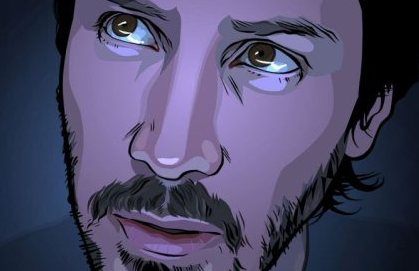
 Richard Linklater is for me, one of those hit or miss filmmakers but regardless (- I have to stop myself going into my anti Before Sunrise, Before Sunset rant here. Give me a minute-...) one with the ability and determination to make his own personal, experimental films, like them or not (-deep breath-) while at the same time crafting slick commercial entertainments like School of Rock. Thankfully A Scanner Darkly is a hit, but a perverse one. A meditation on the nature of addiction and perceptions of reality presented as a paranoid, psychedelic freak-out, Scanner Darkly is real, surreal and hyper-real and all at the same time. It’s as close as science-fiction cinema has come since Blade Runner to capturing the vibrancy, intensity and complexity of Phillip K Dick’s fiction. That it achieves this while being made more linear and accessible and frequently very funny, marks it out from the crowd of others that have tried and failed to translate Dick’s warped, wild visions into ‘must-see’ cinema.
 What Does A Scanner See?
Richard Linklater is for me, one of those hit or miss filmmakers but regardless (- I have to stop myself going into my anti Before Sunrise, Before Sunset rant here. Give me a minute-...) one with the ability and determination to make his own personal, experimental films, like them or not (-deep breath-) while at the same time crafting slick commercial entertainments like School of Rock. Thankfully A Scanner Darkly is a hit, but a perverse one. A meditation on the nature of addiction and perceptions of reality presented as a paranoid, psychedelic freak-out, Scanner Darkly is real, surreal and hyper-real and all at the same time. It’s as close as science-fiction cinema has come since Blade Runner to capturing the vibrancy, intensity and complexity of Phillip K Dick’s fiction. That it achieves this while being made more linear and accessible and frequently very funny, marks it out from the crowd of others that have tried and failed to translate Dick’s warped, wild visions into ‘must-see’ cinema. "A Lightning Doodle Project"

Long exposure times and coloured torches allow the Japanese animators at PIKAPIKA to eat light and shit magic.
Not Waving But Drowning
 Lucky old Harry Farber (Bob Balaban), the newspaper film critic in M Night Shyamalan’s bizarre and incompetent new film about a beautiful sea nymph called Story (Bryce Dallas Howard) who inspires ordinary people to do magical things. The socially awkward, snippy new arrival to The Cove, an apartment building managed by Cleveland Heep (Paul Giamatti), encounters a CGI monster three-quarters of the way through The Lady In The Water, and is so spared the sight of talents like Paul Giamatti, Jeffrey Wright and Bryce Dallas Howard struggle through to an uncaring finish, not waving but drowning.
Engine Trouble

Lightning McQueen (Owen Wilson) is a confident, charming young racing car, in his rookie year on the competitive circuit and desperate to make his name. Having lost his companion Mack The Truck (returning Pixar favourite John Ratzenberger), Lightning is speeding along the famous old Route 66 when he crashes, literally, into sleepy Radiator Springs, destroying the main street and causing consternation among the few inhabitant automobiles that remain in the almost-abandoned roadside town. Brought before the judge, Doc Hudson (Paul Newman), the cocky racer is sentenced to community service, which must be completed before he can leave to get to the final race of the season. Lightning must win the coveted Piston Cup in order to secure a better contract with a more glamorous, better equipped sponsor, introducing an element of beat-the-clock to his court-appointed good works, his efforts to restore the town dwindling spirits, assemble a new pit crew and win the heart (carburettor?) of the smart, optimistic local beauty, Sally The Porsche, brightly voiced by Bonnie Hunt. The rest of the folks in town, a population that offers various diversions and entertaining dead-ends, include the slow-witted Mater The Tow Truck (voiced by a US hillbilly comedian called Larry the Cable Guy), Fillmore The VW Van (George Carlin) a free-wheeling throwback specialising in ‘natural’ fuels, and Tony Shalhoub and Guido Quaroni as the Ferrari-loving tyre specialists Luigi and Guido.
The films two big racing set-pieces top and tail the central story, leaving long sections of the film without much in the way of excitement, visual or otherwise. Ultimately, the story here is too twee and culturally specific to connect with audiences with the same impact as the undersea spaces of Nemo or the alternate universes of Toy Story. Cars laps at a much slower pace than Pixar usually set, extending the middle section of the film at the cost of making scant introductions and one-track characterisations that in turn reduce any surprises when it comes to the chequered flag. It’s also the least funny of the studio’s films, or perhaps my ignorance of the scenarios of NASCAR racing meant most of it went over my head. The score, from regular Pixar tunesmith Randy Newman, is virtually anonymous, not helped by the absence of the space in which to stage a jaunty sing-along. Squealing tyres and revving engines fill in instead, at volume.
Michael Mann Interview: Miami Vice
 Los Angeles is so hot right now. Not like Paris Hilton’s twittered catchphrase (although I suppose it is that too) but more in the sense of sweating through your fingernails. The TV weatherman has run out of superlatives to describe the 112 degree inferno blazing outside and has resorted to fanning himself theatrically and hooting at a crimson map of the Californian peninsula, dotted with swollen yellow suns. In an anonymous room in the Four Seasons, I’m in a puddle, even with the air-conditioning on full blast and a shelf full of condensation-dripping water bottles standing by. I’m checking the capillary creep under my armpits and wondering if there’s time to dash upstairs and change my shirt when the door opens and Michael Mann scurries into the room, looking like he just stepped out of the fridge where they keep the talent chilled. He’s around the table in a trice to take my soggy hand in a firm grip and carefully place a discreet Dictaphone down beside mine. In any other circumstances this would be unusual, but Mann’s attention to detail is legendary and this recorded insurance is part of that cautious data-mining. Squat and intense, with swept-back hair matching his silver glasses and a confident grin, he sits himself down and motions his bored-looking assistant into a discreet chair in the furthest corner. All set, he takes a final check on everything around him, rolls his shoulders and cocks his head to one side, exposing a thin, transparent hearing aid that follows the contour of his inner ear, waiting for my first question.
 I start off our conversation by casually remarking that the director has come full circle with his new film, Miami Vice. It’s a kind-of remake of the seminal 1980s TV series that Mann originally brought to television screens worldwide as executive producer, the pop-culture defining success of which allowed him to write his own ticket in Hollywood, after his Hannibal Lecter story Manhunter and the Nazi horror of The Keep. He takes the observation with a nod, and shrugs his shoulders. “The time was right to make this one”, he says quickly and finally and we move on. The night before, the combined European press watched this new incarnation (which stars Colin Farrell and Jamie Foxx as Sonny Crockett and Ricardo Tubbs) in a preposterously comfortable screening-room in West Hollywood. The reaction to the frenetic, astonishingly violent cop drama, even from the hard-bitten chaws of the continental press, was decidedly muted. As Mann himself was sitting three seats down from me throughout the screening, I wondered what his reaction to our reaction was. “Ah, the foreign press. I’ve learned with you guys that you just cannot judge by the room. We had the American press in the same theatre, watching the same movie, and they were applauding and laughing and cheering. They were much more expressive. Personally I love this movie, so the short answer is, I don’t know yet exactly what the foreign journalists think, but it is the movie I wanted to make and that’s that”. I tell him I’m only going on the silence as the credits rolled, and the hurried exit of most of the audience. He fixes me in a look and asks me what I thought of it. Trying to be diplomatic and mindful that we’ve only just sat down, I tell him that with the cars and the guns and the violence, it’s a guy’s movie, typically Mannish in its high-octane delivery and brutal exposition. The director stops me with a raised hand and quotes some focus group statistics. “Well, that’s not the case”, he says in his Midwestern drawl, dredging up the facts from some recess of his encyclopaedic mind. “Women under twenty-five love this movie and what they love most about it is the violence. This goes against everything that the studio marketing department would tell you, but they’ve done their tests and that’s what the figures say”.
Ok, but to get back to the original question, why did he make the movie in the first place? “The idea came up first at a party I was at with Jamie Foxx and he gave me the hard sell on playing a new kind of Tubbs. He had everything worked out, even down to specific shots for the trailer. My initial reaction was, you’ve got to be kidding me, why would I want to go back to Miami Vice? Then I looked again at the pilot and some of the early episodes and I got kind of captured afresh by the deep currents and the emotional power of those stories, and I’m talking here about the first two seasons. The way the issues were brought in from the outside world into the lives of Crockett and Tubbs and the way the stories impacted on them. To me, these stories summed up Miami Vice as it originally was. Secondly, Miami has always had a real allure for me, in the same way maybe as Las Vegas had in the 1970s (Mann wrote and directed the Robert Urich starring TV series Vega$ back then), it was really sexy and beautiful and really dangerous and deadly and tragic at the same time. I love those kinds of places, those Twilight Zones, you know. Today, Miami still has all of those elements, even more so, but the physical look of the place, especially at night, has completely changed, even though I don’t have as much of the city on screen as I might have liked”.
It’s not all that has changed. Forget the pastel shades, the flamingos, the flashy jackets with rolled-up sleeves, the pounding Jan Hammer theme tune and the neon graphics. This is a far tougher, more practical Miami Vice, one that takes the business of fighting crime by working undercover very seriously and hasn’t time for goofing around with girls in bikinis. What we forget though, in the time since the show ended in 1989, is how ground-breaking and gritty the original series was, in its depiction of unorthodox police procedure and its commitment to prime-time moderated violence and gunplay. This time, Farrell & Foxx play the charismatic, unorthodox duo, working undercover infiltrating a South American drug trafficking network. The deeper into the business they go, the more the line between reality and fabrication becomes blurred. This is an altogether darker, more grounded take on the work of undercover cops, fighting a better equipped, infinitely richer enemy in Luis Tosar’s cold-eyed drug lord, Arcángel de Jesús Montoya, a typically isolated, ruthless Mann villain. Where he does show his hand, and gives the nod to the film’s origins, is in the shiny machinery; the growling Ferraris, the bouncing speedboats and the swanky private jets that ferry the new model Crockett & Tubbs from palm-sprayed Miami to their far flung investigations around the Caribbean. Most surprising of all though, in Mann’s macho, testosterone-fuelled world, this is his most tender film, featuring synchronous relationships that are given plenty of time to develop, between Farrell and Chinese superstar Gong Li and Foxx and the rising British talent Naomie Harris. These women get both undercover cops into trouble in different ways, adding heart and emotion to the grandly staged, percussively violent set-pieces that mark Mann’s films out from his legion of pretenders. This version of Miami Vice is a far more dangerous proposition than a meekly told re-hash of an old TV show, cravenly baiting retro-nostalgia and crippled by homage. Casting the film posed few problems for the director. “Jamie Foxx was a no-brainer for Tubbs, this is our third movie together. With Colin, it was a question of asking who out there would be Crockett. I saw his work on Minority Report, which was great, and I watched all of his other movies, but there was the prisoner of war movie with Bruce Willis, Hart’s War, that’s the one that got me. Everyone was telling me, ‘oh, Colin’s the real deal’, but he has these couple of moments in that film that really got me and that made up my mind. It’s not about glamour or celebrity; he is a great actor.”
Was there any pressure on him to make more of the film’s small screen origins? “The studio really wanted to make this film, they were pushing me to get it started, but what I wanted to do was going against the conventional industry wisdom, which says that your summer tent-pole movie is a PG-13, disposable popcorn movie. My idea was that you do Miami Vice for real, make it a hard R-rated movie with real violence, real sexuality and using the language of the streets. That took them aback more than a little and there was a series of meetings where I had to make my point. But they knew what I wanted from the outset, and in sitting around the table it’s my job, in part, to convince them that this is the right way to go. We all have to feel that we are making the same movie, and that we want to make that movie. And to their credit, I brought my perspective on Miami Vice to them and they endorsed it completely”. Mann sees the studios willingness to listen to him as part of a sea-change in the way summer films are made and marketed. “There were two R-rated movies last summer, comedies, that both did really well. After that, Hollywood started to believe that maybe everyone is getting tired of the same old bubblegum summer movies. I felt strongly that nobody wanted to see some nostalgic version of Miami Vice, like the other movie versions of TV shows that have been made, with the same elements and cameos from the original cast and all that stuff. Not putting those kinds of movies down, you know, but why would you bother? If you want to see the Miami Vice from 1984, we’ve got a whole rack of really beautiful DVDs you can buy, so you can get your nostalgia trip that way.”
Part of that new realism is updating the technology that goes into both creating and fighting crime. Even something as rudimentary as a mobile phone was the fevered dream of a madman at the time the original series was made, but the new Crockett and Tubbs are equipped with the latest in high-tech crime-fighting gizmos, with the villains likewise equally well equipped. “Well”, says Mann, “it’s not really a balance. The bad guys have bigger budgets and more money, simple as that. That’s why they’re tricked out with the latest in technology”. He gives me a run down on the speculative finances. “Imagine you spend $500 dollars to produce a product that you can then wholesale for $15,000. That’s just a single kilo of cocaine, and tons of this stuff is moved every week. Only two or three percent is intercepted. So the business has unbelievable profitability and a tremendous amount of cash flow, meaning these guys can go out and buy the best. If you’re a drug producer and you want to find out what moves the DEA (Drug Enforcement Agency) are making on you, you go out and buy the best people on the planet to do your counter-intelligence, your signal intercepts, to be on the DEA phone lines listening on your behalf. Like we show in the movie, if you want a private meeting, and you want to keep it private, you can buy a private army and close down a neighbourhood – jam the phones, block the roads – whatever. The scene as we show it is very real and the technology is a major aspect of that. It’s like the whole world is a globalised ‘Crazy Eddie’s’ and you can buy anything you want within it – drugs, software, weaponry, information. I have to hew to what’s real and that is the reality.”
Mann himself isn’t afraid to spend money on the new cinema technologies that he used in making this movie, although he points out that my assumption - digital cameras make filmmaking more economical - is incorrect. “Not so”, he says, “and that’s a common misunderstanding. Digital on a major movie has little or no effect on the budget. You could use the technology to make cheaper movies, for like $100,000 or whatever, but why would I want to do that? Short answer, I don’t. If I go to Cuba, for example, and I see a location, beautifully crumbling buildings, Art Moderne architecture, astonishing scenery, even down to the old cars they have there and I want to use it in my movie. But I can’t shoot in Cuba, so I go to Uruguay and I build that house or recreate that scene or whatever. Uruguay is far away and it costs a lot of money to go there and do these things. I’m not ever going to be able to do that with $100,000”.
Getting to the point of spending any money at all wasn’t easy. First off, his star Colin Farrell had a much-publicised battle with drink and ‘prescription’ drugs that landed him a stint in rehab, from which he is now fully recovered. So much so that a visiting Finnish journalist’s well-intentioned gift of a bottle of expensive vodka is diplomatically returned by the Dubliner’s minders unopened, something unthinkable a year ago when the party animal was in his pomp. Temptations aside, filming was then delayed by a series of hurricanes (Dennis, Rita and the all-destroying Katrina) with Mann fighting to keep up with his hefty schedule throughout the shoot as Mother Nature battered the south-east coast of the US. These troubles were compounded by other, hotly-denied, rumours of script problems, well-publicised on-set incidents with firearms and gangs and, worst of all for the perfectionist director, a budget that eventually ballooned to a figure somewhere bordering $200 million, a quarter more than was originally envisaged.
Stay Your Hand
 The biggest laugh (in a choice parade of entirely unintentional guffaws) to be had in Stay Alive comes when geeky computer whiz-kid Frankie Muniz googles the term ‘perceptive reality’. The same search later made good reading for the film critic - the first hit leads to an essay about how difficult it can be sometimes to believe what is happening right before your eyes.
The source of the digital evil is The Blood Countess, Elizabeth Bathory (a real historical figure worthy of a googling herself), a sadist who terrorised the virgins of Eastern Europe in the 16th Century. Somehow, she has pitched up in modern-day New Orleans, inside the piece of cursed software, and proceeds to slake her thirst on the kids. According to Muniz’ search engine, the source of Bathory’s contemporary power is “homicidal replication on a sociopathic level”, a remark which makes as much sense as any of the rest of William Brent Bell’s hackneyed horror, more concerned with dropping hip references into the background (Steamboy, Halo) than it is in providing even a modicum of threat or fear up front. The cast are all eminently dislikeable; the story is rubbish and the dialogue swill while the cartoonish gore is kept to an absolute minimum. At no stage do they stop playing the game and find something better to do, like go to the movies.
Moving Hearts
 Brooke (Jennifer Aniston) and Gary (Vince Vaughan) first meet at a Chicago Cubs baseball game, where he proceeds to insult her boyfriend, force her to eat hot-dogs and then attaches himself to her elbow. From that obnoxious beginning and soon enough, their entire early romance is shown in a montage of photographs that play over the opening credits, a sequence that would cause uncontrollable drooling among the paparazzi, desperate to snap the same shots of this real-life celebrity couple. For those three minutes that open The Break Up, the two seem happy enough, but like the remainder of what follows, there is nothing deeper on display here beyond the surface images of snuggles and kisses and drunken, costumed revelry.
 Back With A Bang
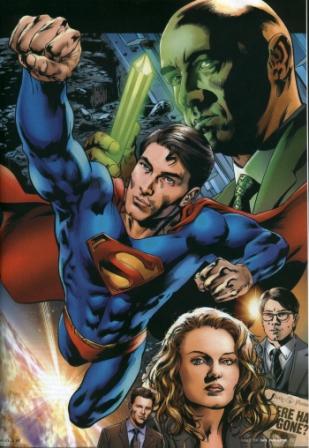 “Why the World Doesn't Need Superman” is the headline of an article in the Daily Planet that wins Lois Lane the Pulitzer Prize in Superman Returns, the latest and greatest big-screen resuscitation of the original movie superhero. She’s wrong, as she comes to realise herself by the end of this exemplary summer adventure.
 (The comic-book image at the top of the post is from The Superman Home Page. Not everybody in the world of movie blogs agrees with my assessment of Singer's labour of love, by the way. Cullen Gallagher at Cinema-Journal fucking hated it.)
Excess Marks The Spot
 There’s a great moment in one of the dozens of battles in the new Pirates of the Caribbean sequel, Dead Man’s Chest where Will, trapped in the crow’s-nest, sticks his sword through the main sail and uses the friction the cut creates to abseil down to the deck. The first man to do the stunt was Douglas Fairbanks in the original action adventure, The Thief of Baghdad, more than 80 years ago. The daredevil Fairbanks did the job himself, he buckled his own swashes. Bloom, like any modern actor, is safely harnessed, ditto his stunt-double, in a complicated rigging of wires and sandbags, scrubbed away later by a bored effects technician. Somewhere in that binary stream, in the gap between the stuff they strap on and the stuff they take off, you’ll find, like it or not, the heart of the modern summer blockbuster. Like it plenty, in this case.
Lady Muck
 Manhattan socialite and PR Ashley (Lindsay Lohan) is blessed with supernatural good fortune. Every scratch-card is a winner, it stops raining when she leaves her penthouse and she can always get a taxi. Everything is going great until one night she goes to a masquerade ball and meets Jake (Chris Pine), a penniless janitor at a bowling alley who moonlights as a manager, and is desperate to get a CD from his up-and-coming band into the hands of a music mogul. Ashley winds up kissing Jake, leading to her good luck being swapped with his bad, along with the spit. Immediately, she breaks a heel on her swanky stilletoes then she almost gets killed and winds up in jail. Worst of all, she loses her job and the platinum company credit card, although it is a mystery what exactly that job entailed beyond batting her eyelashes. Even to the world of eyelash-batting, this is no great loss. Nevertheless, Ashley must restore her mojo so sets about finding and kissing every dancer employed at the ball - like Cinderella with a chapstick. She must also stay alive, so takes Jakes old job in the bowling alley, cleaning toilets and deodorising shoes.
In fact, the only thing Ashley does not posess is a golden palomino pony, but then she does live forty floors up in New York and I suppose there must be some tattered scrap of reality remaining if this cynical romance is going to work. But I wish they had found room for the horse. My kingdom for the horse, if only for its (hopefully talkative, wisecracking) appearance to let all but the most impressionable members of the young audience in on the joke. That this leaden, clumsy romance is a fantasy and not a guide to life, that ‘unlucky’ and ‘poor’ are different things altogether, that behaving like an uppity Anglo Saxon epithet for ninety minutes ultimately requires, demands, comeuppance.
You ask a homeless person why they’re sleeping on the street and they won’t tell you it’s because they broke a mirror or walked under a ladder. They’ll tell you a story you probably don’t really want to hear, much like Lohan and her producers who blithely float through the routines here without so much as a nod towards humanity. Much fun is made of Jake fishing a dog-turd covered five dollar bill out of a park dustbin, the same bill that a rich man just used to wipe his dogs arse, with the scene concluding with the young dreamer being confused with a rapist because he looks a bit shabby and is out of breath. Ashley meanwhile is learning that manual work is just so much fun! There are so many things to break, it's unreal! Aren't bowling balls heavy! Wow. I know. Aren’t regular people funny, with their saggy clothes and cheap shoes and dull jobs and limited vocabulary? Don’t ‘the other half’ live like pigs? Someone should say something. Gawd!
Later, for their big performance, the band’s name is transformed to resemble the logo of a well-known burger restaurant (same red and yellow colouring), but this incidence of product placement is notable only for its conniving subtlety in a film where coveted brands are blatantly promoted. Forget the ads before the trailers, the main feature is riddled with commercial breaks. There is never any doubt about which lifestyle Ashley preferred, rich or poor, army surplus or Dolce & Gabbana, despite her last-gasp homily about ' maybe going home to her parents to think things through'.
Even more uncomfortably, for a film rated PG and made for twelve year old girls, there's a lot of unnecessary use of the word shit, which surprised me in the context, and lots more of the same old scatological nonsense involving actual piles of faeces; the imagery fast replacing Monument Valley or the Manhattan skyline in the panoply of American cinema. Perhaps they are trying to tell us something.
Lasseter Come Home

Loathe and all as I am to link to CNN, there is a fascinating article with Pixar's head honcho John Lasseter on their financial pages where he talks about his personal filmmaking history, the origins of digital animation and the rise of Pixar, the recent big-money merger with Disney and Cars, their new one.
Revelations include the fact that he started out sweeping the floors in Disneyland and learned everything he knows about comic timing from operating one of the rides there. You can find it here, it's a must read.
Gael Force

There has been so much written about Ken Loaches Palme d’Or winning Wind That Shakes The Barley it is almost impossible to separate the film itself from the entity that has taken shape in the media here and in Britain over the past couple of weeks.
We Are One

80 posts later, or so, Confessions celebrates it's first year of existence with a cup of strong coffee and a cigarette. Thanks to those who drop by to read the reviews, and a special thank you to those who leave comments. Appreciate it.
Caravan of Hate
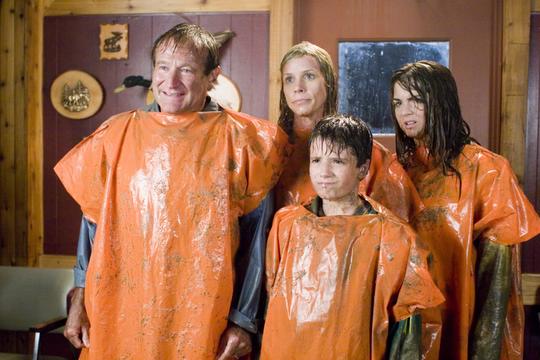 It took considerably more effort that is usually required to recall the events of RV, a misbegotten family comedy whose true depths of malignant ineptitude can only be succinctly described in hot, harsh, ineloquent words. Suffice to say that in my house we know him as Robin Fucking Williams.
The untrammelled horror involved in surrendering oneself to his desperate mugging is returned threefold when RV's twinned spectaculars of waste and unfunniness are remembered later. The film does end, thank the good Lord, after about an hour and a half of pointless, poorly-timed pratfalls, but the pain of it endures.
In terms of harrowing, knuckle-whitening cinema RV puts United 93 in the ha’penny place. Like, seriously.
The first night on the road, they meet the over-friendly Gornicke family -- Travis and Mary Jo (Jeff Daniels and Kristin Chenoweth) and their kids. For some reason, they take a liking to the Munros. For some even more unfathomable reason, they are upset when the feelings are not reciprocated. The film then sets a pattern of the Munro’s getting into difficulty (with racoons, faulty brakes, lost computers) and the country & western yodelling Gornicke’s getting them out of it.
Although he has given a decent account of himself as a straight dramatic actor in films like Dead Poets Society and Insomnia, Robin Williams hasn’t made me laugh since 1983. The curious thing is he is never just plain old bad when he is bad (which is most of the time), he has to be apocalyptically bad. There is a bit in RV where Mork does a five minute impression of an African American basketball player talking trash on the court, a breathtakingly embarrassing scene that alone, in a career littered with cringes, would see him in the dock in The Hague if the film critics ruled the world. How is this, presumably semi-improv, rant funny when it smacks of racism and more to the point, how does that comes under the heading of children’s entertainment? Maybe the situations involving the handling of poo, which Williams does often and at length, are supposed to be the fun stuff. Even hepatitis doesn't want him.
There are a small few interesting nuggets of character and situation nestled among the detritus that address modern urban living and balancing work and family, but they are drowned out by the roar of William’s murderously frantic capering and comedy as broad as all outdoors. Two thirds of the film is given over to the hairy little gnome running, cycling or driving at a pace calibrated to a degree just below heart failure. Not a single frame of it has any value as comic entertainment, with the rushing about merely bringing the failings of the remainder of the underwritten, unashamedly larcenous screenplay into sharper contrast. Williams’ wide-eyed physical exertions are later replaced with a few dewy eyed sermons about family love and integrity so laden with Hollywood sugar they should come with a warning for diabetics. Message delivered, Sonnenfeld goes back to the diarrhoea gags. It is impossible to gauge which is worse.
Nobody emerges from the wreckage of RV with their dignity intact. Williams can forget about it, and good riddance, but it is sad to see Jeff Daniels reduced to this level with the brilliant Cheryl Hines from Curb Your Enthusiasm wasted completely in role that only requires her to tilt her head sympathetically and smile a big smile. To her credit, she doesn’t appear to be enjoying herself much and you won’t either.
Signs of the Times
 Much is made in the new version of The Omen of the 6th day of the 6th month, 2006 being the day that Armageddon will arrive. That’s today, so hopefully there will be someone left alive to read this tomorrow. I’ll look pretty stupid if there isn’t. In any event, that numerical co-incidence, coupled with 9/11, barcodes, the Columbia space shuttle disaster, the Asian tsunami and the appearance of a mysterious comet, convince the scientists at the Vatican Observatory that the end of days is upon us. At the same time, American diplomat Robert Thorn (Liev Schreiber) is switching his stillborn son for a healthy child at a hospital in Rome, without informing his young wife Katherine (Julia Stiles).
United 93
 As everybody knows, on the morning of the 11th of September, 2001, four American airplanes were hijacked by al-Qaeda operatives, two of which crashed into the World Trade Centre towers in Manhattan, one into the Pentagon in Washington DC and the other into a field outside Pennsylvania. Paul Greengrass’ harrowing United 93 is the story of what happened to the last plane and is one of the films of the year.
If the film is anything, it is a memorial, a hewn-granite mausoleum of fear and futility, an eye-witness sketch of the face of death. It offers no comfort and neither should it. It is galvanising in its stark depiction of horror, unnervingly ordinary and arbitrary and empty. It only takes on meaning when viewed dispassionately as a collected sequence of events and the observer bears witness. But I’m warning you, it’s a tough job.
The Final Insult
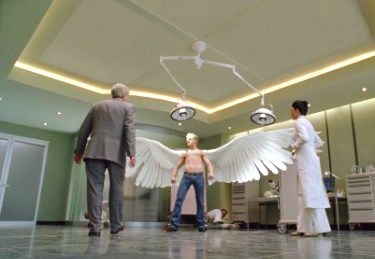 With original director Bryan Singer jumping ship to make Superman Returns, the once-noble X-Men franchise has been handed to second-tier talent Brett Ratner to ruin, and in The Last Stand, ruin it he most emphatically does. You know you’re watching a Ratner when the transfatty acids in the popcorn franchise outing don't sit well when sprinkled with the hundreds and thousands of the After The Sunset director’s failings.