Heart of Darkness: James McAvoy and the Last King Of Scotland

“How's things?” says James McAvoy, stretching a hand in greeting and widening his eyes in a charming gesture of polite inquiry. Fine, I say, how are things going for you? “Relentlessly”, he says, and lets out an enormous sigh, a surprising displacement of breath from such a slight man. “Reee-lent-less-ly”, he repeats, collapsing sideways into the over-stuffed Dorchester couch, stretching out his syllables with another deep exhalation. For a moment, I thought he was going to sleep, but instead the actor launches unasked into a prĂ©cis of the last five weeks of his life, time spent touring the world to talk to people like me about his new film, The Last King of Scotland, the latest in a lengthening line of ‘breakthroughs’, taking in film festivals in Toronto, LA and New York, a month and more of talking, shaking hands and more talking. It sounds exhausting.

The increasingly important Toronto festival, seen as a gateway to distribution in the US, was McAvoy’s first time at the kerbside of the busy intersection between cinema and commerce and he found himself surprised by it. He had three films being screened, including the one we’re here to discuss today, but he doesn’t know quite how to feel about that singular success. “I couldn’t really get involved in anything except my own stuff. There are just so many people running around chasing their own arses and chasing their own success – everyone is rather focused on their own thing, so you wonder what it is that they are doing. A festival is supposed to be a celebration, isn’t it? And yet its not a celebration, it’s just an extension of marketing. Great for the people of Toronto who get to see lots of great movies, but if you go there as an actor, you have no ‘festival’ which is a shame – my impression is that it’s a lot of work”.

He looks across the room at something for a moment or two and then returns with a blink to the conversation. It’s fair to say he looks a little distracted. The 27 year old, small-framed like most actors, is dressed in a black v-neck jumper and artfully distressed jeans, with a mop of floppy hair and dark circles around his eyes. McAvoy picks up a silver pencil from the table and starts twisting it in his fingers; drops it, picks it up, drops it again, and says something as his head is turned away from my microphone. Later, I decipher it as something about eventually running out of things to say. We’ve been talking for less than two minutes. I attempt to kick start the conversation again by asking him if he’s tired of being constantly called ‘an actor on the rise’. “Well”, he replies, visibly brightening, “I dunno really. I suppose I’ve always been a young actor, I’m a young man, but people can say things like that about you at any point in your career. I’ve been doing this for nearly eight years now and the fact that people are taking notice of me, now as opposed to when I was starting out, doesn’t really make me feel any different and doesn’t change the way I do my job. I’m honestly not bothered about what people say. If I’d been around for a week and then was called an actor on the rise, that might make a difference, but by now I’m quite used to people judging me, every night in a play, every time I’m on the telly”.

I look down at the few scribbled notes I’ve taken as he was talking. ‘Dark circles’. ‘Big sighs’. The word ‘fidgety’ is underlined twice. Now McAvoy is looking at what I’m looking at and I’m hoping he can’t read upside down. This all happens in a moment, and he politely breaks the silence with a line that probably sums up his last couple of months, expressed with the greatest weariness imaginable, “I think people think too much about actors”. Oh yeah? But if the right people are talking about you as a talent they want to work with, doesn’t that lead to better scripts, famous directors and new opportunities? “Honestly”, he replies, “up until very recently, I’ve just taken whatever it is I've been offered. People say to me, ‘oh, you've chosen such interesting projects’, and I say to myself, ‘take what you can get’. I've been lucky that most of those have been good choices, but that was never a conscious thing. I've gotten a little more choice, but it’s not that much choice, and with having a choice comes a certain amount of fear- you’re responsible for whatever it is that you are doing, so you have to be bloody good”.

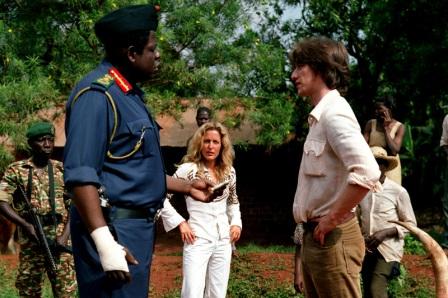
Luckily for me, he kept talking and luckily for everybody else, he is bloody good in Kevin McDonald’s dramatic debut. The Last King of Scotland is the story of Idi Amin, the Ugandan dictator who ruled his country with a bloodstained fist throughout the 1970s. Based on Giles Foden’s award-winning novel of the same name, the film offers two indelible portraits: one of charming, psychopathic dictator who ravaged his country and the other of a self-serving pleasure-seeker who eventually finds enough courage to take a stand. The unconventional biopic examines a fascinating historical figure through the eyes of a fictional character by exploring the emotionally complex relationship that develops between the two men. Forrest Whittaker plays Amin with brute force and a childlike bluntness. McAvoy plays Nicholas Garrigan, a feckless Scottish missionary doctor who arrived in the country in 1971 on a whim, and quickly ingratiated himself into Amin’s inner circle, becoming his personal physician and as a result, living high on the hog. His character is a fictionalised amalgam of a couple of ex-patriot playboys that flitted from country to country around that time, making money and connections on the back of unimaginable oppression. How did McAvoy get the role? “I simply don’t know how they decided on me. Possibly, because I was the only Scotsman of the right age and experience to do it, and still cheap enough – I’m not being funny now – but a lot of the other Scottish actors mid-twenties to early thirties were all a bit too expensive. That was that”.

Location filming in and around Kampala took the actor to Africa for three months of 2004, an experience he has found difficult to shake off. “I had never been there before. My first impression was that this is poverty on a level I could have never prepared myself for. The media and news coverage of Africa is a great thing, but it supposes that we understand the world, and we don’t, really. We have an encyclopaedic, academic viewpoint, but we don’t actually know it. I knew I would encounter these things, but until you actually do, you just aren’t ready – physically, you know. I learned that pity is a completely redundant, cheap emotion. Saying to yourself, ‘oh that’s a wee shame’, means you can walk away and not actually connect with anything that’s happening in front of you, but walk away thinking you’re a good person. That means nothing”. To illustrate this point he tells me a couple of stories about the time he spent in Ireland preparing for his role in Damien O’Donnell’s Inside I’m Dancing, detailing the reactions he felt while working with differently-abled people that boiled down to the same cheap sentiment, something he didn’t like himself for feeling, and something he struggled to get over. “That’s not all that different from the first reactions I had to Africa. I couldn’t actually do anything until I got over this sense of pity. That was the first thing I went through. After that, the rest was all work for me. I literally worked in every single scene in the movie – fourteen hour days, six day weeks, for three months. I never got a day off. So, my only cultural experience was downtime spent eating and talking with the crew and a single night spent camping beside the Nile”. Later, McAvoy tells me he will return to Uganda to work with a group of actors and musicians led by David Oyewolo (who plays Dr Junju in the film) for a couple of weeks in the early part of 2007, detailing the work that they do and how it helps the local community. It is one of the very few times that he smiles.

When I ask him about Whittaker, his more experienced co-star, McAvoy is full of praise for the heavyweight actor. Between them they divide the lion’s share of the storytelling and the friendship that developed between the two men is palpable. “It’s an odd relationship – firstly because it’s between two men. They have a lot of love for one another and that always seems to make people uncomfortable, even if it’s not a sexual thing. The other thing is that the relationship between me and Amin represents very closely the relationship the British government and Foreign Office had with him. The ups and downs are the same; the key points in ours are the same as the historical key points in theirs. Amin wasn’t just a murderer; he was a sensation, a media-manufactured figure. Instead of telling the truth, that this guy was a demon, instead we heard that he liked to wear blue Stetsons and wearing kilts and, you know, what fun! All just to make the white man laugh”. He found himself wary of intruding on the older actor while filming, with Whittaker buried deep inside a complicated character. “Forrest isn’t exactly what you’d call a method actor, but he is when it’s necessary and appropriate and this was one of those times. It’s difficult to learn anything from watching him, because you just don’t want to mess him up. He’s living it; he’s trying to become someone, so he doesn’t need someone like me asking ‘er, sorry pal, how are you doing that’?”

McAvoy had a similar learning curve to negotiate with McDonald, the director behind the award-winning documentaries One Day In September and Touching The Void, slowly building a rapport and establishing the right approach to the material. “I thought his documentaries were really cool, but I had no reason to trust him. The only thing that gave me heart before we started was the fact that I wanted to portray the character differently to the way that the script portrayed him. I didn’t want Nicholas to be an innocent caught in the middle without realising where he is. That’s the way it was originally written and, for me that had to change. So we sat down and discussed those issues and made the changes and McDonald was great with that. He re-mastered the script and that process continued when we were in Uganda. But the simple fact that there was some agreement there meant we could go off together and do it. I had to trust him and, you know, he had to trust me. We could have gone out there and it could have been a disaster”.

We’ve been talking for a while now, and the actor’s breathable intensity has hardly dipped for a moment. He seems angry about the dark history raised in the film, and passionate about telling the truth as he discovered it for himself. Raised in a working class family in a tough part of Glasgow, I wonder if he is more politically charged now as a result of his experiences. “No, politically is the wrong word, but socially charged, definitely. I have an understanding now that what we have in the West is unbelievably privileged. The working-class chip on my shoulder is gone, and I have an entirely different perspective on what real hardship is. You have to be incredibly unfortunate in this country to be born with less of a chance than anybody in Africa”. We talk for another couple of minutes about the stark statistics that end the film, estimates of the dead, a roll call of devastation. McAvoy looks genuinely pained as I rattle out the numbers. The twirling pencil falls again from his grasp and he slides off the couch to pick it up. All he says is “yeah, yeah”.
The Defiant Ones

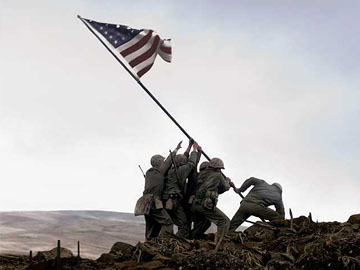
Right from the opening scenes of Clint Eastwood’s epic Flags of our Fathers, the viewer is dragged into the hell of the pacific War in 1945. Flares burst overhead as frightened soldiers scramble over the black rocks of Iwo Jima, a dot of volcanic land 300 miles south of Tokyo and the scene of one of the bloodiest battles in the entire conflict. An essential air base for the Japanese, the island is guarded by 20,000 soldiers, dug into tunnels dug in the mountain. An expeditionary force of 30,000 American GIs arrives, in an enormous fleet of battleships, to dislodge the enemy and move on to the mainland. Among these men are John "Doc" Bradley (Ryan Phillippe), a navy medic, Rene Gagnon (Jesse Bradford), Native American Ira Hayes (Adam Beach), their leader Sgt. Mike Strank (Barry Pepper), and a nervous teenager, Ralph ‘Iggy’ Ignatowski (Jamie Bell). The film focuses on those that would eventually raise the Stars and Stripes as a display of defiance, an event captured by Joe Rosenthal in an iconic photograph that would define the entire war for the American nation. What the public was not told is that the flag-raising was re-staged for the camera, and that the men, whose faces cannot be seen, might not be the same men hailed as the heroes.

Returned from the battlefield by their superiors, quick to realise their propaganda potential, three of the surviving young men are put to work selling war bonds to the public, advised by one cynical PR man that unless they can help raise $14 billion dollars, America will be bankrupt and will ‘have to give the Japanese whatever they want’. Re-enacting the event for the cameras, and seeing it everywhere from posters to postage stamps to ice-cream deserts, the men are hailed as heroes. The preening Rene delights in the attention, the stoic Doc reminds everybody that the real heroes are dead on the island while Ira the Native American falls further into sorrow and whiskey. The complicated narrative traces a line through three separate timelines – the initial assault on the island, the return to the US for the promotional tour and, rather less emphatically, the efforts, years later, of Doc’s son to write the story of his father’s wartime experiences, the book by James Bradley that the film is based upon. However, Eastwood and his regular writing partner Paul Haggis, concentrate in the later stages on the tragic character of Ira, who is returned to a life of poverty and discrimination once the glint wears off his medals. Regardless of the mangling effect they have on the narrative, these almost-silent scenes are immeasurably powerful. There is further, deep-felt sorrow in the conclusions that Eastwood draws around Doc, who dies in his bed an old man, surrounded by his family, and seems to despise himself for it. Although the war ended fifty years before, Eastwood makes it clear, with considerable cinematic skill and tremendous empathy, that the men that fought it never left it.

A war film, even one as unmistakeably anti-war as this one, uses blood and death as its currency, electrifying us with images of carnage. Eastwood, who has built a career on screen violence, employs all the technical skills that allow that reconstruction today, but throughout forces the audience to confront the carnage, holding his camera still, for long, unendurable moments on scenes of unblinking, graphic brutality. This is an intense and ultra-realistic war film, the initial assault on the black sand beach out-performing Saving Private Ryan (Steven Spielberg is one of the producers), but there is no exultation here. The director is more concerned with the way the truth can be manhandled to fit the circumstances, and the ghosts that live in dim remnants of memory, than he is in rattling his sabre. The effect is profound and deeply saddening. This is a film about the artificial creation of heroes, men made larger than life to fill a gap in the public consciousness, exposing the hypocrisy of the glad-handing US Administration and the manipulative media, as they both seize on any aspect of the men’s experience to further their agenda. The story of these six men must also be compared to the recent US military efforts to adapt the death in Iraq of the All-American Corporal Pat Tillman or the ‘rescue’ of Pvt Jessica Lynch for their own purposes, expediently changing the facts to suit their needs.

Although Flags of our Fathers shows flaws, they are minor defects; more instances of awkward storytelling than any core problem of philosophy or execution. Showing his dedication to and respect for the truth, Eastwood will revisit the battle in Letters From Iwo Jima, set to open early next year, where he will tell the story again, this time from the point of view of the Japanese. I cannot wait to see it.

The Best and Worst of 2006

I sat down the other day to compile my 'best of' list for the newly minted Dublin Film Critics Circle (more about that in a few weeks) and found myself surprised at how many really excellent films I saw in 2006.

There are about 250 movies released in Irish cinemas every year. Its interesting, to me at least, that I can confidently mark 10% or so of them as being well worth watching and well-nigh essential if you consider yourself conversant with the modern cinema. Just as interesting, about 10% of that annual slate are unmitigated rubbish, leaving the majority of films in the mediocre category - that may have proved popular, like Superman Returns, Casino Royale, The Queen or World Trade Centre, but are flawed for a variety of reasons. I really enjoyed watching Superman and gave it a glowing review at the time, but the film passed from memory too quickly and my opinions on it have changed very slightly. My opinions have hardened on Casino Royale, but to a much greater extent. WTC was too bland to consider re-considering.

But the point is this. 25 movies of a standard as good as any year in the recent history of the medium is a decent rate of return for the regular cinemagoer. There are at least another 25 that won't leave you feeling disappointed, exactly. If you picked the shit 25 (to which I could add another 25 if I was feeling particularly bilious) well that's just tough.

The Departed was, for me, the most consistently entertaining and exciting film I saw this year. I am a Scorsese fan (as opposed to fanatic) but was electrified by the angular story, the gritty performances and the blank, dark tone. It's the only film this year that I went out to watch again in the cinema. So thats tops, but the remainder of the must-see list are presented in no particular order.

Best Films of 2006

The Departed

United 93 - for a sense of horror that didn't fade for days

Pan’s Labyrinth - awesome visuals and brilliant writing and performances

Little Children

Little Miss Sunshine

The New World - utterly transfixing, made me aware of changes in my breathing.

The Squid & The Whale

The Wind That Shakes The Barley - after The Departed, the film most people talked with me about this year

Junebug

An Inconvenient Truth

The Three Burials of Melquiandes Estrada

Borat: Cultural Learnings…- the funniest comedy

Red Road - the ending was disappointing, but what went before was excellent

The Host

Flags of our Fathers - angry, brilliantly realised war film

Romanzo Criminale

Marie Antoinette

Crank - best action film, consistently surprising

Children of Men - most dropped jaw moments

Good Night, and Good Luck

Stranger Than Fiction


One title jumps out unchallenged when selecting the worst film of the year, Martin Lawrence's unrequested reprisal of his obscene 'family' clown, the monstrous insult Big Momma's House 2. I hate that unfunny prick and his sub-normal caricature of entertainment. The remainder of the 'worst of' list should be considered, like finding a head on a stick during a jungle stroll, a warning not to proceed.

Worst Films of 2006

Big Momma's House 2

RV

The Holiday - yikes

The Tiger’s Tale - the right things, said in the wrongest possible way

Step Up

Big Nothing

Tenacious D In The Pick Of Destiny

A Good Year - Crowe at his most crass

All The King’s Men

The Da Vinci Code - overhyped, overlong and under-entertaining

The Lady In The Water - humourless, odd, rambling junk

Life & Lyrics

Beerfest - not a single funny moment

Stay Alive

Just My Luck - mental poison

Fast & The Furious: Tokyo Drift

When A Stranger Calls

Freedomland

Firewall

Rent - distilled from the tears of unicorns

Aeon Flux

D.O.A. - beat 'em off made from a beat 'em up

The Lake House - sloppy and soppy

Rather than leave you with the thoughts of Keanu slobbering over Sandra like a stoned bloodhound eating a packet of Opal Fruits, the best film book I read this year was Patrick McGilligan's A Life In Darkness & Light (even if it was published in 2003) and the best song I heard was Mississippi Fred McDowell's [wiki] 61 Highway, which is of far earlier vintage.

Man, I have to think about contemporising in 2007.

Yule Be Sorry

The awful Black Christmas represents yet another remake of a supposed cult classic horror, culled from the seemingly endless supply of 1970s slasher pictures by grubbing studios desperate to mine the last nuggets of revenue from a long exhausted seam. What this movie (like Texas Chainsaw Massacre, The Fog and The Hills Have Eyes remakes before it) illuminate is the true depth of Hollywood’s creative crisis; lazy, uncaring product spewed without care or craft into the eager Cineplex supply line and an example of audiences being fed leftover turkey before the Christmas.

The original 1974 film, which starred a pre-Superman Margot Kidder and a post-2001 Kier Dullea, was an efficient gore-fest by the standards of the time but clunky and almost comic today. It was directed by the hack Bob Clarke, who later made an about-face with the very cute adaptation of Jean Shepherd’s A Christmas Story, but also made Karate Dog and Baby Geniuses 2, so it’s not like they’ll be opening film schools in his name anytime soon. The original movie teetered on the sole, subversive contrast between Peace on Earth and pieces of sexually precocious teenage girls. Nobody remembers it now, which might offer this shabby remake a snowballs chance at the box office, but I doubt it. As regurgitated by Final Destination producer turned director Glen Morgan, Black Christmas is a cretinous procession of sub-pantomime acting, illiterate dialogue and larcenous plotting, scattered throughout with scenes of torture, titillation and tacky gore. While I can never approve the former, I am generally in favour of the latter, especially in the context of an entertaining horror story. That is not found here.

The major difference between the two films, original and remake, is that this time out the psycho loses his anonymity and has an elaborate back story grafted onto his demented shoulders. After that shabby set-up, we cut to present day where the killer’s childhood home has been converted into a sorority house, a university dormitory that houses a gang of eight bitchy young women; Kellies and Megans and a couple of, like, Heathers. Barring internet floozies du jour Lacey Chabert and Michelle Trachtenberg, the cast are anonymous, but collectively they display all the life and humanity of a cutlery drawer. Their middle-aged minder Mrs Mac (Andrea Martin), tells them the legend of Billy (played by Robert Mann making his debut and, with any luck, taking his bow), while gathered to exchange grudging Christmas gifts. Soon, one of them turns up dead, with the cast of suspects including the aforementioned killer, a sleazy amateur pornographer boyfriend and the hilariously miscast ‘big sister’ of one of the teens, played by the director’s 40 year old wife.

Bonkers Billy stalks the skimpily dressed robots throughout the labyrinthine house, making noisy, threatening telephone calls and then picking the victims off, one by one, in a series of increasingly tawdry murders. Throats are slashed, eyeballs are plucked out and buckets of blood are splashed over Christmas decorations, while out in the cheap seats, yawns are stifled and watches are checked. The film is nigh on unwatchable. Word is that the studio Dimension enforced script changes and demanded an alternate ending, in effect taking the film away from Morgan, but the director doesn’t otherwise hint that there was anything here before the interference. He creates no atmosphere, no sense of dread or suspense and relies on the outward thrust of his cast’s cleavage and the staccato beat of his cheap shock moments, with the only scare being the speed at which both of fall victim to the laws of diminishing returns.

Pretty, Vacant

A horribly contrived and echoingly empty confluence of ‘Christmas movie’ and ‘chick flick’, The Holiday marks the return of What Women Want and Something’s Gotta Give writer and director, former studio executive Nancy Meyers; a lady who knows more about demographics than she does cinema and who, it would appear, is immune to voodoo. It’s either that or I haven’t been sticking the pins in far enough.

A series of short vignettes introduce us to the four main characters. Amanda (Cameron Diaz) owns a Los Angeles company making movie trailers and has recently broken up with her two-timing boyfriend (Ed Burns, briefly). On the other side of the Atlantic we meet lovelorn London journalist Iris (Kate Winslet), finally getting over her unrequited love, the caddish Jasper (Rufus Sewell). It’s Christmas, and neither woman can face being alone, so they decide, during the course of a quick internet exchange, to swap houses for two weeks. Now, you’ll stop me there. Isn’t that Tara Road? Yes, it is.

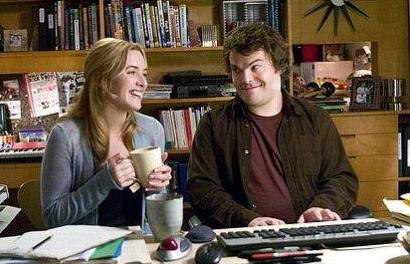
Enter the men, Jude Law and Jack Black; a singleton London book editor and a piano-playing soundtrack composer respectively. The unholy coming together of the two couples is arranged in a series of ‘meet cutes’. Meyers later wheels out the great Eli Wallach as an elderly Hollywood writer, to explain what she means, and have a pop at the current state of studio cinema while he’s at it. There’s a heartbreaking irony in this turn of events. Wallach’s character makes a tear-jerking speech at a Writers Guild of America function arranged in his honour, the same Guild that met in arbitration to discuss the authorship of The Holiday. The WGA eventually gave the credit to Meyers, although both Maeve Binchy and Helen Fielding’s names must have come up at some stage.

Diaz, who is lovely to look at, is insufferable to watch; playing a dizzy, air-headed blonde without a screed of plausibility, shrill and clumsy and wooden. Her disastrous performance aside, the chatter she is asked to express is choice. Detailing her urgent need for a vacation she trills the line, “I want to eat carbs without wanting to kill myself”. If you are the kind of woman to whom this magazine-article line rings true, you really need to talk to somebody. Winslet comes out the better of the two female leads, but there’s only a hair between them. She bears the contrivances well enough, and certainly perks up later on, but it is sad to see such talent wasted. Jude Law plays Jude Law, but with extra mischievous twinkle and later, a whole heap of blubbing pathos. He has never been more irritating. Jack Black, whose appearance as a romantic lead initially gives hope to something out of the ordinary, ruins it by doing that terrible improvised singing thing he does. By the third time he opened his gurning yap, pap-skip-skap-skoodly-doo, I was half way out of my seat, until some greater power, call it a sense of duty or ingrained masochism, forced me to stay put.

The film’s pretence that it shares a heritage with the classic Hollywood screwball comedies of the Golden Age is as inappropriate as it is desperate. Meyer’s approach to sparkling wordplay is to have one character jabber on for two incomprehensible minutes, then have the other character say something pithy, like ‘Exactly!” Failing that, there’s always a reaction shot from a dog. It is pure drivel. The director’s plotting is even less sophisticated, with every well-forecasted, painstakingly arranged plot point driven home as if at the head of a sledgehammer. Deathly bland and false, The Holiday is as bad a film as I have seen all year. Whether it works as a romance or not is a matter of individual taste, but it cannot be a comedy unless it contains jokes. Actual gags, not the exhausted Black or the dippy Diaz routine. A special mention is reserved for Hans Zimmer’s outrageously syrupy score, a constant meander of plinking piano designed to reinforce emotions the cast are simply unable to muster themselves. Like everything else on display, it is nauseating.

Write On

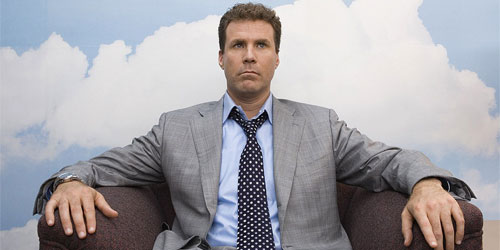
Breathless comic Will Ferrell plays it mostly straight in Marc Forster’s enchanting modern-day fable Stranger Than Fiction, a brilliantly realised story of an ordinary man caught up in an inexplicable fantasy. Ferrell plays Harold Crick, a quiet, isolated US government tax inspector who wakes up one morning hearing a mysterious voice in his head. The female voice, clipped and plummy, isn’t talking to him, it’s talking about him, describing his mundane actions and predictable moods in a precise narration, like a voice over in a movie. Harold, who shows worrying signs of obsessive compulsion, an odd world-view beautifully explained by the director with on-screen graphics showing Harold’s continuously compiled internal calculations, is naturally perturbed at the intrusion, especially when the voice tells him, in a matter of fact way, that he is about to die.

Just at the point where Harold believes himself to be going mad, he seeks advice from a psychiatrist, (played with a squint of suspicion by Linda Hunt), who listens patiently to his ravings and refers him on to a professor of literature, Dr Jules Hilbert (Dustin Hoffman), a man as spontaneous and emotional and strung out on caffeine as Harold is ordered and subdued. Hilbert also listens, while slurping constantly from his coffee mug, explaining to Harold that whatever story he believes himself to be a part of can only be resolved through one of a number of standard literary archetypes. Patient questioning comes up with a handul of names of authors who could be transcribing his life, eventually leading the duo to one writer, Kay Eiffel (Emma Thompson), simply because all of her published novels end in the death of the main character.

It’s a good deduction, Eiffel is indeed the writer, a fact confirmed when Harold hears her speaking on an old television show, but she has problems of her own. She hasn’t published anything in a decade, and is terminally blocked, writing and rewriting the last couple of chapters of Harold’s life without being able to find a way to conclude her story satisfactorily. To that end, her publishers have sent her an assistant (played with restraint by Queen Latifah), a no-nonsense woman who quickly takes the neurotic, chain-smoking, suicidal author in hand and attaches her to a routine. Meanwhile, something extraordinary has happened to Harold. His apartment has been destroyed in an accident, forcing him to move in with his only friend Dave (played by Tony Hale from Arrested Development). While dealing with this spur of disorder, he goes to meet a woman who has misfiled her tax return, and falls in love with her. Ana, a free-spirited, heavily tattooed baker (played with a heartbreaking sincerity by Maggie Gyllenhaal) initially despises this government enforcer, rifling through her papers in an effort to prosecute her, but gradually softens, until a point where the two stand before one another, mutually smitten, and suddenly alive again. But the voice is telling Harold his time is running out, with his life being taken from him just at the point where it has become worth living.

Zach Helm’s script, his debut, appears at first to follow the trendy, labyrinthine path of Charlie Kaufmann, but the film most closely matches The Truman Show in uncovering the individual decisions that these characters make in order to fulfil a destiny they are secretly terrified of. Director Marc Foster tells the story beautifully and intelligently, adopting a low-key mood and having his talented cast unquestioningly accept the magic that has come into their lives. Crucially, he never attempts to explain it all, adding immeasurably to the satisfaction, even as his characters arrange a compromise ending to the story we are watching. The acting performances are flawless, funny and touching and deliberate. The picture looks terrific, and boasts an outstanding, delicately used soundtrack.

Roots, Bloody Roots

Guillermo Del Toro’s extraordinary grown-up fairytale Pan's Labyrinth arrives on a wave of expectation, having wowed the crowd into a half-hour standing ovation at Cannes, in the process garnering the best reviews of the Mexican directors career, and it doesn’t disappoint. It is a hugely rewarding film; a rich, dark, meaty stew perfect for a long winter’s night. The story, written by del Toro, opens in Northern Spain in 1944, where we meet a young girl, Ofelia (Ivana Baquero), travelling with her pregnant mother Carmen (Ariadna Gil) from the city to the mountain headquarters of Captain Vidal (Sergi LĂ³pez), a Franco Nationalist on a mission to eradicate the local Republican resistance. Ofelia’s mother, recently widowed, has recently married the sadistic Captain, who has demanded she travel to the hilltop camp so his son can be born in his father’s house. Ofelia has brought her only possessions, illustrated books of fairy tales, although she has been told she is getting too old for them.

Soon, the young girl meets a strange, clicking insect, who transforms into a mute fairy, which in turn guides her to a lost labyrinth, an underground maze, where she is greeted by an ancient faun (played by del Toro’s regular collaborator Doug Jones). The seemingly benign faun introduces himself as the guardian of a gateway to a fantasy world and explains that Ofelia is a reincarnation the daughter of the king of the fairies, an almost-forgotten princess of a world hidden just out of sight of what she knows as reality. Ofelia, who in her heart has always suspected as much, listens intently as the faun gives her a series of tasks to perform, in order to prove herself worthy, open the doors to the lost kingdom and fulfil her destiny. With her mother is confined to bed, suffering from the long journey and the lack of adequate care, Ofelia is taken into the care of the good-hearted, brave housekeeper Mercedes (Maribel VerdĂº), a sister of the leader of the resistance committed to supplying the rebels with food and medicine from the army supply store. With the woods closing in around her, the lonely young girl is trapped; between childhood and adolescence, war and peace, between her dying mother and her raging adoptive father, between a sinister world of fantasy and a far more dangerous reality.

Del Toro expertly creates this dual universe; a magical fugue state of crumbling, ancient stone etched with arcane symbols, in harsh shadows and creaking wood peopled with fantastical creatures from the subconscious, and also his real, concrete world of infinite sadism, blind ideology and practical cruelty. His fluid control over both is exemplary. His lead actress, thirteen year old Banquero, gives a brilliant performance as the resourceful Ofelia, manifesting a child’s fears and uncertainties through little more than widened eyes and shortened breath. Beside her, Sergi LĂ³pez gives a startlingly monstrous performance as the wicked, ruthless fascist, a cunning, all-powerful executioner. This is a horror fantasy, as brutal and occasionally terrifying as the genre demands, but it is also a delicate allegory for Spain itself and the decades of totalitarian rule imposed on her people. Death is everywhere and hope is fleeting. There are moments in the film where redemption seems inevitable, with del Toro determined to whisk it away again before it can take root, just as he did in this film’s companion project, the little seen Devil’s Backbone. The film, photographed by Guillermo Navarro, looks astonishing with indelible creature effects and a finely crafted, all-pervading sense of unease, half-remembered mythologies and the true horror buried in the heart of even the sweetest fairy stories.

Robert Altman RIP

Robert Altman, one of America's finest directors and a wilful, cantankerous son of a bitch, died yesterday in LA. He was 81. Like Hitchcock and Scorsese, he had been nominated for the Best Director Oscar a total of five times (the last being for Gosford Park in 2001), but never won it.

Having had a heart transplant a decade ago, a fact he kept to himself, the academy gave him the honorary statuette last year, paying tribute to the genius behind M*A*S*H, McCabe & Mrs. Miller, Nashville, Short Cuts and The Player, just in time as it turned out.

Altman started out in industrials before Alfred Hitchcock gave him a start directing episodes of his television series in the 1950s and went on to direct innumerable television shows and about 40 features, some of them the finest American film of the past forty years and some of them, it has to be said, the worst. His latest, A Prairie Home Companion, is awaiting an Irish release. One of the first films I watched with properly adult eyes was Short Cuts, while a student in Limerick in 1993. It had a profound effect on me; being cynical and funny and strange and sad.

A true maverick, Altman was always good for a quote. I like this: "This business is run by accountants who, as long as a film makes $40 billion, don't give a shit if it kills the whole goddamn industry. Everything can also be shown so quickly in the home now - which means that the people who go to movie theaters are teenagers who just want to get out of the house. The audience has changed and the content has changed to suit that audience."

Bang on.

I had just cracked the spine on the copy of Altman On Altman I bought earlier this year in LA. Might leave it back on the shelf for a while, now.

Further Reading:
Eddie Copeland has a touching tribute
As does Dennis Cozzalio at Sergio Leone & The Infield Fly Rule
Keith Uhlich bows his head at The House Next Door
The Guardian's obituary

Busted Flush

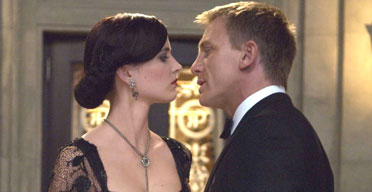
Meet the new Bond, same as the old Bond. Blonde British actor Daniel Craig might be the current incarnation of Ian Fleming’s super spy, with the filmmakers set on re-inventing the suave agent for a new generation but in Casino Royale, the much-heralded changes are mostly cosmetic. The 40 year old franchise is again produced by the Broccoli family, directed by Goldeneye’s Martin Campbell and written by veteran Bond team Neil Purvis and Robert Wade. With the success of Matt Damon’s Bourne films, Bond was forced to contemporise, but the more they change, the more things stay the same.

After a short, violent, black and white sequence that explains how Bond earned his ‘double 0’ licence to kill, there follows some jarringly awful opening credits, an over-designed extravaganza relayed in silhouette, based on the four symbols from a deck of cards and a whirling roulette wheel. It is an ominous shambles, further undermined by a terribly bland stadium rock tune from Soundgarden singer Chris Cornell. The film then quickly switches to Bond’s first proper assignment, spying on terrorist suspects in Madagascar, and a hyper-kinetic, dizzying, chase scene through a building site inspired by the urban sport of ‘free-running’.

Bond’s mission soon leads him to the Bahamas, where he discovers the evil Le Chiffre (Danish star Mads Mikkelsen), who has put in place a plan to fund a series of terrorist attacks by staging a high-stakes poker game at the titular Casino Royale in Montenegro. With his handler M (Judi Dench) unconvinced by Bond’s methods, the $10million he is given to infiltrate the game comes accompanied by a minder from the Treasury, the beautiful Vesper Lynd (Eva Green). Bond soon allies himself with Mathis (Giancarlo Giannini), MI6’s local field agent, and Felix Leiter (Jeffrey Wright) who is representing the interests of the CIA. These occasional asides do not distract from the long periods of boredom around the poker table. It would take some remarkable reinvention to make a poker game cinematically exciting again and it simply doesn’t happen here.

Craig is the first Bond since Connery to look like a killer. When Brosnan threw a punch, it was followed with a quip or a wave of his hanky. When Craig throws one it is followed with his forehead. I wasn’t fully convinced by the usually charismatic actor, but this is not all his fault. Casino Royale wants it both ways – to be tougher, more vital and more ‘realistic’ and at the same time sustain the fantasy of international intrigue, swooning beauties, luxury cars and the ultimate dream, death without consequence. The more the filmmakers try to ground the franchise, the further it sails away on the breeze. Bond shows his newfound nerve-endings in a brutal scene where Le Chiffre batters his scrotum with a knotted rope while the spy is tied to a chair. Rather than spend the remainder of the running time strapped to a packet of frozen peas, I was astonished to see the same man, in the next scene, saunter along the sands of Lake Garda without so much as a wince. A lot of blood, and a lot of it Craig’s, is spilled to remind us of the new Bond’s gritty humanity, but the story itself and its shiny presentation are so unnatural and mishandled they only go to remind us that we are watching a fiction.

Craig gives us a lot of piercing stares, his tiny blue eyes peering away at something in the distance as the camera holds his round head in close-up. I have no idea what he is looking at, his credibility disappearing over the horizon, perhaps. Where once there was Andress or Berry emerging from the surf, we now get Craig resplendent, a bulldog in speedos, squat and flexed and tilted forward as if constantly in motion. His action sequences are well executed, if a little repetitive, but the character’s newfound vulnerability, his determination to soul-search, leaves Craig looking occasionally unsure of himself.

There are deviations from the long-established Bond canon, most of them welcome. Green is not a typical giggling sex-object, she is smart and educated and very capable. The over-elaborate digital effects work the series had descended into – invisible cars, surfing tsunamis - have been dropped with what remains, for the most part, being utilised in an almost subtle manner. Q does not appear (and indeed no special attention is paid to the gadgets), replaced by an on-call team of boffins, none of them named Moneypenny, communicating with a tiny microchip buried in Bonds arm. As before, however, big-ticket brand names are showcased throughout; luxury cars, watches, couture clothing, with more attainable products, like mobile phones, laptops and family saloons benefiting from mini advertisement breaks all to themselves. Bond might have changed his face for a lumpier model, lost seven inches in height, gained seven in breadth and grown a pair, but his is still a licence to make a killing.

Rather than stand alone as a film, Casino Royale is an episode of a long-running serial, chopped up even further into bite sized chunks, a compendium of action scenes assembled around an immediately recognisable character. Scenes appear out of nowhere, and disappear back again just as quickly, without any impact on the overall momentum of the story. A final grand spectacle set in a crumbling Venetian villa rattles through the duplicities in double-quick time, leaving us with a conclusion of sorts. Having lost track of the thin story during the doldrums of the poker game, I wasn’t overly concerned, but there followed another ending, then another and then another. Then the new Bond stared out again for what felt like a solid minute and finally we heard John Barry’s theme, wrapping up this curiously back-to-front film. That’s not to deny that each of these endings, and indeed most of the work that preceded them, was efficiently presented, technically impressive and occasionally gripping, but they are not connected to one another with any strength. It’s very messy, and so long, at two hours and twenty minutes, that it’s eternal nature becomes an abstraction, another element of the whole phenomenon that doesn’t work.

Ride The Tiger

Things fall apart for Liam O’Leary, a millionaire property developer when he meets his doppelganger while stuck in a traffic jam, a sinister exact double that insidiously takes over his life in John Boorman’s snapshot of modern life in Ireland, The Tiger's Tale. Obsessed with finding out who this man is, and what he wants, O’Leary’s personal and professional lives quickly spiral out of control, as the double moves into Gleeson’s bank account, opulent mansion, boardroom and his wife’s (played by Kim Cattrall) bed. Now the Pauper to the impostor’s Prince, homeless and broke, O’Leary takes a journey of self discovery in an effort to patch up his fractured sense of identity.

Much of Tiger’s Tale is related with the heaviest of touches from Boorman, crashing and clanging through slow-moving panoramas of orgiastic debauchery and decadence. A lengthy scene through a nightclub, a stumble along the choked streets of Temple Bar and a visit to a hospital are all presented as the seventh circles of Hell through the unbroken steadicam of Seamus Deasy. O’Leary’s opulent home and free-spending lifestyle meets with nagging disapproval from his politically charged son, played by Gleeson’s own son Briain, manifested as short, undergraduate speeches about socialism and the exploitation of workers. Further clumsiness arrives when the impostor joins the unawares Jane in the marital bed, her initial vehement struggle against his attentions turning to coos of orgasmic delight. Boorman alone knows why this scene is played as it is, but it’s effect is to leave a very bad taste, further undermining Catrall, who up to that point had done little more than flick her hair and wobble her accent. Another clanger comes later, when a suspected “barbiturate” overdose by the already floundering junior Gleeson brings the family to the ground zero of A&E.

There is no doubting Boorman and Gleeson’s sincere anger; they are clearly pointing the finger at the lop-sided, selfish society we have created from a decade of prosperity, with an enormous gap between the haves and the have nots, our dilapidated services and our choked infrastructure. Boorman, who has lived here since the 1970s, and is in his seventies himself, is absolutely correct in a lot of what he is saying; the trouble is his argument is so inarticulately expressed and clumsily played. Continuing his long-running collaboration with the director, Brendan Gleeson plays both the boorish millionaire and the Geordie impostor with the same wide-eyed gusto, steadily racking up the hysterics even as the script collapses beneath him. The actor is at his best in the quiet moments, sipping tea at dusk at a farmhouse table or ducking beneath the breakers while swimming in the sea. The rest of the time he seems uncomfortable and uncertain, not helped by the broadest of supporting performances from Sinead Cusack as the troubled older sister and Cathy Belton and Sean McGinley as O’Leary’s loyal staff.

I Started Something

In Starter For Ten, working-class Essex-boy Brian Jackson (James McAvoy), has always been obsessed with trivia, growing up watching University Challenge on TV throughout the 70s and early 80s. When he passes his exams and gets accepted to Bristol, he leaves behind his widowed mother (Catherine Tate), and best friend Spencer (Dominic Cooper). At a fresher’s week party Brian meets the beret-wearing, right on Rebecca (Rebecca Hall, who also features in The Prestige). Just as something might happen between them, his head is turned by the snooty, stunning blonde Alice (Alice Eve), who is also his team-mate on the Bristol University Challenge squad. The story plays out against the background of the tricky TV quiz, as young Brian works out his priorities, romantic and academic, learning life lessons along the way.

Starter for Ten is scripted by David Nicholls from his own comic novel, once recommended by the Richard & Judy book club. That might tell you more than you need to know about the by-the-numbers plotting of the rites-of-passage story, easy meat for the mid-afternoon crowd, with the added nostalgia of Doc Martens, black leggings and fingerless gloves underlined by an eclectic greatest hits soundtrack. Debut director Tom Vaughan initially takes the traditional approach to his British romantic comedy, establishing new surroundings and exciting changes that lead to initially embarrassing romantic situations, betrayal of friendship and an epiphany of some sort, preferably during a rainstorm. Flipping a few of these standards on their heads in the last act might be clever, but the overall effects are negligible when capped with a last-minute realisation of the true love that was there, all along, under the hero’s nose, over his wry grin.

The airy tone, nuggets of droll observation and rising talent McAvoy’s earnest performance go some of the way towards making up for these deficits, but not completely. The film is never less than perfectly amiable and chugs along at a fair pace, but finds it difficult to sustain much in the way of enthusiasm. Highlights of the sideline performances are The League of Gentlemen’s Mark Gatiss’ uncanny impression of pre-Paxman presenter Bamber Gascoigne; an inquisitive, bubble-permed squirrel, and the delightfully named Benedict Cumberbatch as the pompous idiot team captain.

Repent in Dust and Ashes

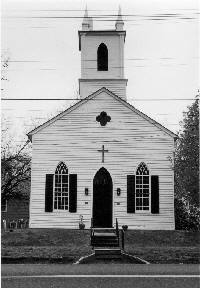
Brian Kirk’s gloomy Northern Irish gothic Middletown is the story of a squat, fogbound village, marooned in what might be the 1960s, visited by an avenging angel. Fifteen years before, young Gabriel Hunter (Tyrone McKenna) is told he has been called by God for a higher purpose in life. After a spell on the African Missions, Gabriel, now played by Matthew MacFadyen, comes back to Middletown to take over the local church, with his father Bill (Gerard McSorley), brother Jim (Daniel Mays) and his wife Caroline (Eva Birthistle) waiting at a dinner in his honour.

It doesn’t take long for the zealous young minister – the film doesn’t specify a denomination, although he is clearly Protestant - to discover that things in town have changed in his absence. The people have neglected the church and taken to drinking, gambling and cockfighting, mostly in the local pub, run by the heavily-pregnant, turquoise mini-skirted Caroline. With a name derived from the archangel of God and a nod to Charles Laughton’s The Night of the Hunter, Gabriel wastes no time in explaining to his congregation that they are hypocrites and sinners who must change their ways or face damnation. Bible-thumper or not, he’s right. Middletown is a nasty place, sharp-tongued and violent, peopled with sleeveens and ignoramuses that, for the most part, deserve what’s coming to them.

Director Kirk builds an atmosphere of steeply arched gothic, angling his camera from the rafters of the pokey church or shadowed under the low lintel of the pub door. There is an insistent sense of physical discomfort throughout the film; from the mildewed, cramped interiors to the itch of the wet woollen costumes and the straight backs demanded by hard wooden pews. There is no succour for the infirm either; corrective eye-patches, crutches and unchecked aches and twinges go to remind the parishioners that their deliverance will not come from science.

Daragh Carville’s screenplay begins as a drama about the chasm that exists between the ideals of a fundamentalist church and the reality of life as people live it, but ultimately wanders back to more familiar genre territory. Without some element of a personal history or any sense of humanity (even a simple mark like the ‘Love’ and ‘Hate’ etched on Robert Mitchum’s lumpy knuckles), Gabriel’s mission loses its spiritual dimension and becomes a procedural psychotic rampage. There are hints at a greater darkness, like a scene where the minister furiously scrubs his bare chest with wire-wool, but this territory isn’t explored in detail. There’s no mistaking Macfadyen’s blank-eyed conviction, whatever its source, but in the clunky melodramas that follow, he is a one-dimensional zealot, a stiff, lifeless cipher.

Better is Daniel Mays performance as the craven second-born son Jim, who can’t afford to get his house built and is smuggling diesel for spare cash. A graduate of the reflexive, freewheeling films of Mike Leigh and Ken Loach, Mays has a mobile face, quick and expressive. Eva Birthistle gives another rich performance as the independent, quick-to-anger Caroline, a woman who fights for her rights to make her own decisions but allows the men of the village to hold weekly cockfights in her cellar to sell more beer. Of the rest of the cast, Richard Dormer as Skinner, a grotesque butcher and Sorcha Cusack as Caroline’s protective mother give sturdy support. A mournful Mick Lally as the retiring former minister drops out understandably early but Bronagh Gallagher is lost in the background of a handful of crowd scenes, an oddly silent, anonymous presence.

I Like!

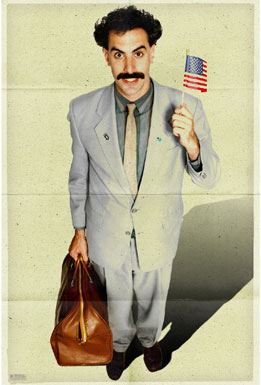
For those seven of you who don’t know, Borat Sagdiyev is the creation of British comedian Sascha Baron Cohen who, like his other alter-ego Ali G, makes the transition from small screen to big in the extravagantly, extraordinarily titled Cultural Learnings of America For Make Benefit Glorious Nation of Kazakhstan, but for those of you who remember In Da House, this time with considerably more comic effect.

Opening with a quick introduction to life in his impoverished village in impoverished Kazakhstan, proudly displaying his VCR and cassette player in the rundown shack he shares with a cow, Borat makes some quick introductions to his over-friendly sister, the fourth best prostitute in the country and his terrifying wife, who despises him, before announcing that the Ministry of Culture are to send him to make a documentary about the US and A. Enough of a storyline to satisfy our need for a consecutive narrative and sustain a stream of gags kicks in once Borat arrives in America, figures out the television in his hotel room and happens upon a rerun of Baywatch. The camera holds on his face, a picture of wonder, as Pamela Anderson bounces across the screen in slow-motion. Abandoning all other committments (the government, his journalistic integrity, the education of his nation), right there and then, Borat instead buys an ice-cream van and starts out on a road-trip, across the country to LA to find and marry the buxom babe with his flapping producer Azamat (Ken Davitian) and a huge brown bear in tow.

At the first stop on the road-trip, at a rodeo in Virginia, through a monumental lapse in somebody's concentration, Borat is allowed to address the crowd for a few minutes on the topic of the war in Iraq, before then singing the Star Spangled Banner, the traditional kickstart to public events in the US. The crowd clap politely while the heavily accented Borat endorses their “war of terror” and cheer when he wishes “George Bush drink the blood of every man, woman and child in Iraq”. The booing starts when, instead of the familiar lyrics, he sings a song about Kazakhstan potassium production over the lilting air. It goes on for a few minutes. In the background, startled by the unfamiliar noise, a flag-toting cowgirl falls from her horse in surprise in a brilliantly poetic accidental moment, and the scene ends. So it goes, scene after scene of hilarious inappropriateness, with barely a dull moment. He crashes around an antiques store, causing a couple of hundred dollars of damage. He shits in a bag and brings it to a swanky Southern society dinner table. He hatches a romantic plan that however deranged, is not beyond most men's daydreams. The Pamela Anderson scenes, most obviously, are scripted, but other than that there is a fair bit of predestined material. The best of it, however, and that is still most of it, is improvised. Although you and I are in on the joke, the people Borat meets along the way have no reason not to believe he is exactly as he says, a foreign documentary maker, making a real film. In a way, he is. Borat’s apparent innocence, his air of professional earnestness and initial willingness to learn and adapt make him irresistible to those willing to rise to the bait. Although coming for the most part from a sincere place, the well-meaning default setting of the typical American, some of the people he meets are dangerously easily prompted into agreeing with Borat’s racist, bigoted opinions. Some try to explain how things are different in the West. Some, probably the smart ones, just run screaming.

In the expert hands of Curb Your Enthusiasm director Larry Charles, Borat covers all the comedy bases in a rapid-fire 80-odd minutes, although most of his job involved pointing the camera and keeping it in focus. It's the Borat show, and this is sublime physical work – his walk is astonishing, his jumping idiot’s face and flapping hands are all-revealing. As carefully assembled as Chaplin’s Tramp, he creates an immediate effect in his rank polyester suit, square shoes, bushy head and broad moustache. His blathering, seemingly stream-of-consciousness dialogue is always hilarious and always beautifully timed. Baron Cohen’s ability to remain in character under the greatest duress and come up with the killer gag time and again is extraordinary to see. Busy outraging a panel of distinguished New York feminists with his stone-age beliefs, in a delicious aside, he asks one of them to “smile, baby”. Her jaw hangs open in astonishment, and yours will too.


To further pile on the embarrassment there are a few no-holds-barred gross-out scenes. He has Western bathroom etiquette explained to him in detail by a Southern Belle and wrestles his despoiling producer naked through a crowded hotel lobby in a riotous scene, done in a single unbroken take. On the issue of anti-Semetism, Baron Cohen is Jewish, so is perfectly entitled to mine this seam for humour in the same way as, say, Tommy Tiernan casts his yellow eye on the Irish. Anyway, it's not about Borat, really. Under the cover of his broken English and equally fractured grin, spitting out his enthusiastic catchphrases and requesting high-fives, the nub of it is that these people can believe for a moment any of Borat’s excitable, offensive ramblings; that ‘in my country’ women are kept in cages, people drink fermented horse urine and there is a man with 182 teeth in his head. No matter how outrageous and offensive Borat is, there is an American willing to match him. It's funny all the way through, but the kicker is that Borat's bottomless ignorance is being used to expose shades of the same bigotry and racism in those people he meets along the way. I would hate to think what dark corners he'd find if Borat walked the streets of Ireland asking the plain people of Ireland about knackers or immigrants, or table manners for that matter, but Baron Cohen choses his own targets. He gives America the rope, but they hang themselves.

UPDATE: Joe Queenan is a fucking idiot.
FURTHER UPDATE: Except for the opening paragraphs about Life Is Beautiful. He's bang on there, even if I don't really see the connection.

Eating Crowe

Based on Peter Mayle’s 80s yuppie fantasy A Year in Provence and directed by his old friend and colleague in the advertising business Ridley Scott, A Good Year is a tired, predictable knockabout farce pushed beyond the point of blithe disregard by an atypical performance by the Gladiator star Russell Crowe, unforgettable for all the wrong reasons. His Max Skinner (played as a boy by Freddie Highmore) used to spend idyllic summers at his roguish Uncle Henry’s (Albert Finney) chateau and vineyard in Provence. Now, fully-grown but hardly matured, Max is a bond trader in The City of London, a high-flying millionaire and low-minded boor. When word arrives that Uncle Henry has died, Max takes off to France to settle his affairs, and sell his treasured home to the highest bidder, leaving Henry’s staff, Francis (Didier Bourdon) and wife Ludivine (Isabelle Candelier) out of a job and homeless. A convenient job suspension for insider trading keeps Max in Provence longer than he planned, but just long enough for the rural charm to cast its spell. Intrigue and romance arrives in the form of beautiful American girl Christie (Abbie Cornish), who says Uncle Henry was her father and who might stymie Skinner’s plans for a quick sale.

A Good Year is so mistimed and miscast that it simply collapses. The elderly jokes are uncomfortably delivered, with much supposed comedy made from Crowe peeking up ladies skirts and down blouses. Not that amusing (unless you’re Sid James and the good year in question is 1963) but eye-wideningly crass and embarrassingly broadly played. Even more painful is the steady arrangement of slapstick physical gags; inelegant tumbles and pratfalls that Crowe, no gazelle, thumps his way through without raising a single moment of humour. By naming a dog Tati, and showing a few clips from M Hulot’s Holiday, Scott is attempting to channel the master of French confusion, Jacques. By the third or fourth banana skin homage, the director has run out of ideas, leaving the remainder of the mirth over to a series of running jokes (scorpions, cyclists, senility) that, uniquely, die more painfully each time they are revived. There is even a speeded-up sequence, believe it or not. Between these excruciating moments there is a constant slideshow of chocolate-box countryside portraits and some marginally more animated, misty-eyed flashbacks to Skinner’s idyllic youth.

All of this reminiscing is supposed to uncoil itself into a damascene conversion as Skinner learns the errors of his ways, but none of it works. Despite the script’s horrible contrivances and Crowe’s desperate mugging, the film never succeeds in changing our opinion of Skinner, much less learn to like him, although it does increase our sympathy for the other characters forced into his orbit. The film is laboured to the point where you feel obliged to notify a shop steward, even up to the point of the inane and undeserved happy ending (which wouldn’t have made it out of the room at a Scooby Doo script conference). Support, from the best mate Tom Hollander, Albert Finney as the bon vivant late Uncle and romantic interest Marion Cotillard as a feisty local waitress, is all wallpaper; mere dressing for Crowe’s master-class in smarm.

Having undercooked his last epic Kingdom of Heaven, Scott sticks closely to the recipe for light comedy here, but is uninspired and uninvolved, making his clumsy film feel middle aged and slightly tipsy. Displaying all the facility for the material you’d expect from his pug face and growling tones, Crowe never relaxes into the situations the story presents him with, much less breathe through his nose. Fatally, he never changes from smug and obnoxious to human and grateful, making A Good Year just one aggressive, blundering moment after another; an arrogant, actively dislikeable experience.

Queen For A Day

Opening on a static shot of the young princess supine on a chaise longue, wrapped in lace and surrounded by cakes, Sofia Coppola’s third feature, a kind of dreaming biopic of France’s ill-fated Marie Antoinette confounds expectations, being empty and superficial, but impossible to hate for all that. High-born in Austria, the innocent Marie (gracefully played by a childlike Kirsten Dunst) is married off to the shy Dauphin Louis XVI (Jason Schwartzman) in a match arranged between her domineering mother Maria Teresa (Marianne Faithfull) and the King of France (Rip Torn). Making the journey by coach to Versailles, the young princess is stopped at the border, in the first of Coppola’s more complicated and emotionally resonant scenes, to be divested of everything she owns, including her friends and her beloved puppy. On arriving at Versailles, the teenage princess is astonished at the opulent luxury of the court and troubled by the constant gossip and seemingly endless, incomprehensible protocol.

After the wedding, and the young couples first night together (blessed by a bishop, watched by a crowd) Marie is pressured into creating heirs, a process that turns into a competition with her sister-in-law, but stymied by young Louis seeming disinterest in sex. He’d much rather go hunting or read about locks and keys. Surrounded by ladies-in-waiting, led by the lemon-faced Comtesse De Noailles (Judy Davis) young Marie must follow an unbending regime, heading up processions of her courtiers; a constant movement through the court to pre-set destinations following a strict timetable. When her coterie fight over who is given the privilege of dressing her in the morning, like a doll, Marie protests that the treatment is “ridiculous”. “This, Madame, is Versailles”, she is told and that is the answer to everything.

The daily life of the court, from accounts in Antonia Fraser’s detailed biography, take up much of the middle section of the film; eating rituals, montages of spending sprees (on shoes and frocks), and Marie’s struggle against the insular society (personified by two backbiting Ugly Sisters, played by Molly Shannon and Shirley Henderson). With his father having died, young Louis ascends to the throne, but still spends most of his time hunting, leaving him “too exhausted” to consummate his marriage. These sections are deliberately drawn out, occupying the space where a narrative should be, but eloquently describe the tedium and routine of decadent nobility, tempered with the tang of futility and emptiness.

Coppola, who was given special permission to shoot at the Palace of Versailles, immerses herself in the splendour of the dĂ©cor, with her cinematographer Lance Acord showing the influence of Kubrick’s Barry Lyndon both in the naturalistic lighting and his use of jarring symmetries. Much has been made of Coppola’s use of a new-wave 80s soundtrack (songs from New Order, Bow Wow Wow and Gang of Four play over the action, much as they might have done in Heath Ledger’s A Knight’s Tale) but soundtrack is just one element of the whole cinema, and her choices are never intrusive.

Without an heir, Marie’s situation is precarious; a fact she is reminded of in her mother’s regular admonishing letters, and the lectures delivered by her ambassador (a wry Steve Coogan). Later, her brother, the Emperor of Austria (Danny Huston in a cameo) arrives to lecture the distracted Louis about his husbandly duties and the two eventually have children. The third act has the increasingly rebellious Marie establish a hideaway in Versailles, a manicured rural idyll where she can raise her daughter and entertain her friends, including a half-imagined affair with a young Swedish soldier (Jamie Dornan). These episodes are languorously told, simple framed moments drawn out into lengthy sections, adding to the ethereal mood but short on drama, dialogue or incident. Critically, Coppola stops her story just at the point where the revolutionary mob (played mostly as noises off) are kicking in the door of the palace; preferring a poetic, symbolic bow on a balcony to showing the Queen’s final bow before Madame Guillotine.

Coppola is creating an atmosphere of understanding rather than a documentary, in order to create her own movie, an interpretation of historical events reconfigured to make a statement about class, privilege and duty. This is not Les Miserables, thankfully, and neither is it is a crusty history lesson or a complete fantasy, but lies somewhere in the middle. There is no doubt that the rich, well-connected Coppola empathises deeply with her subject and that is all she must do in order to succeed in making her film, the third in her series of young women trapped inside their own lives, as sleepy as The Virgin Suicides and remote as Lost in Translation, but far more maddeningly disconnected and narratively obtuse. Like the ever-present pastries, Marie Antoinette is lovely to look at but provides only poor nourishment.

The Past Is A Foreign Country

The History Boys, the film version of the multi-award-winning play by Alan Bennett reunites the cast and director (Nicholas Hytner) from the theatre production for a snappy trip down memory lane for the 1983 graduating class in a Sheffield secondary school. As the film opens, a small group of nine high-achieving students, having just received their A-level results, are gathered together by their headmaster for an extra term to prepare for the Oxford and Cambridge entrance exams in December. Their favourite teacher Hector, played by the hugely entertaining Richard Griffiths (who steals the show here), tutors his charges in a loose, free-flowing curriculum covering everything from Vera Lynne torch songs to the Socratic Dialogues. The pretentious, blustering Hector argues for A.E. Houseman’s dictum that “all knowledge is precious whether or not it serves the slightest human use”. Although married, “unexpectedly” according to his colleagues, Hector is gay, frequently touching his students inappropriately while giving them a lift home on his motorbike. Oddly, and just one of the implausibilities that damage the film, none of the students seem to mind Hector’s lecherous attentions, being devoted to the portly old rogue and all seeing the clear benefits of his scholarship and his wisdom.

Although his methods might be unorthodox, and crustily old fashioned, his commitment to his pupil’s mental advancement is not. Bennett gives Hector long, dextrous monologues, full of historical anecdotes and witty wordplay, that mark him out among the cast as the repository of philosophical education, concerned more with their joining the dots in their education than achieving high grades. All too aware of his staff’s inability to bring students on to the next phase of their education, vinegary headmaster (Clive Merrison) brings in a specialist, Mr. Irwin (Stephen Campbell Moore), a cynical Oxford graduate, to tutor the boys in how to pass the exam and interview that will determine if they get to walk among the dreaming spires.

Hytner, who previously collaborated with Bennett to great success on The Madness of King George expertly and effortlessly captures the time and place, providing a perfect stage for deft, touching performances from both his young cast and the more familiar veterans. He is assisted tremendously in setting his mood by a classic soundtrack of early 80s British pop. It is the obvious chemistry shared by the large ensemble, and the fluency of their constantly shifting allegiances and motivations, that offer the best in the film. Of the nine younger actors, Dominic Cooper playing the cool, manipulative Dakin and Samuel Barnett as Posner, the conflicted teenager who is in love with him and clearly Bennett’s surrogate, that excel but the entire class give strong performances in what are complicated roles.

The theme here is knowledge and its application in the real world coupled with sidebars into the duty of educators to mould minds, the right-wing politics of early 1980s conservative England and the tangled mess of teenage male uncertainties, most of which have to do with questions about sexuality. Some of the plays darker themes – on the manipulation of history by politicians and the insidious influence of the media - have not made it to the screen, with what has survived being underplayed for the most part, barring one uncomfortable scene between Dakin and Mr. Irwin that is as cold and chilling as it is brilliantly played. Some of the large cast, Frances De La Tour in particular (as the world-weary Mrs. Lintott), are unhappily relegated to the background, the side-effect of trimming a large playbook into a feasible screenplay. There is still plenty of smart humour to be found in The History Boys, a constant stream of howling one-liners and witty references whizzing around the classroom, particularly during one early scene conducted entirely in French, but it doesn’t all come together entirely satisfactorily, a final scene giving us a flash-forward to what the students became adding unmerited pathos at the same time as providing a convenient conclusion.

Departed to the Judgement

After mixed success with his two grand epics, The Gangs of New York and The Aviator, Martin Scorsese returns to the mean streets of the American gangster movie for The Departed, a loose remake of the labyrinthine 2002 Hong Kong cop thriller Infernal Affairs and one of the films of the year.

Getting right into it from the opening frames, Scorsese introduces us to swaggering local mob leader Frank Costello (an electric Jack Nicholson, making his Scorsese debut) who has graduated through the ranks of South Boston mobsters to rule his fiefdom with an iron grip. He has groomed a bright neighbourhood kid, Colin Sullivan (Matt Damon) from an early age to join the state police and be his inside man, tipping him off about the investigations against him, in the process allowing him to extend his influence into drugs and high-tech contraband. On the other side of the divide, an unstable rookie cop from the area, Billy Costigan (forcefully played by Leonardo DiCaprio) accepts an assignment from his superiors to go deep undercover and infiltrate Costello’s mob, which means he must change identity, serve time in prison and on release, gradually gain the respect of the psychopathic Frank. Both men enter their new double lives unaware of one another, and are both charged with discovering the others identity – flushing out the rat.

Both have the backup of their respective administrations; Damon’s police are led by Captain Ellerby (Alec Baldwin) and his undercover experts, Queenan and Dignam (Martin Sheen and a never-better Mark Wahlberg), while Di Caprio has to contend with Costello’s dangerous second-in-command, Mr. French (Ray Winstone) and two henchmen, Fitzy and Delahunt (David O’Hara and Mark Rolston). It’s a brilliant set-up for the tense, twisting, violent drama that follows; rich with the language and psychology of the streets and fused for detonation as each man becomes consumed by his double life, each trying to smoke the outer out and suffering the consequences of living under a death sentence. The two moles lives also intersect at the point of police psychologist Madolyn (Vera Farmiga), who starts a relationship with Colin at the same time as she starts to counsel Billy, who comes to see her as part of his parole.

Of the three leads he has played for Scorsese, this is by some distance DiCaprio’s best, matched step for step by Damon. Both give astonishing performances, mature and grounded, playing men disintegrating under the strain of double lives and constantly on the verge of being found out. The film belongs, however, to Nicholson, who is just astonishing, delivering a performance of rare menace and constant threat, leavened with a dark streak of bilious humour and some killer one-liners. Still crazy after all these years, Nicholson here is the personification of evil, insane and bloodthirsty. The other noteworthy supporting performance is from Alec Baldwin, playing the cocksure, unstable police captain with an irrepressible abandon.

The brilliant script, from Boston native William Monahan takes the central notions from Infernal Affairs and spins them out into a beautifully positioned meditation on identity and guilt, like so many of Scorsese’s films, where sin and suffering are endured in the hopes of eventual redemption. These characters, the situation they find themselves in and their relentlessly cynical attitudes make The Departed Scorsese’s most uncompromisingly bleak film, darker and less forgiving even than Taxi Driver, where the abject nihilism was at least tempered by a hint of redemption. Here we descend into a startling closing reel, another sustained Scorsese bloodbath of violence and retribution, played ultra-realistically for maximum effect. Michael Ballhaus’ fluid camera, filled with dramatic noir shadows, gives the film a tremendous texture, matched by the peerless control of editor Thelma Schoonmaker and a rousing Scorsese soundtrack of ocassionally celtic-derived rock and roll. And the Rolling Stones, naturally.

Far from being just another gangster yarn, The Departed is a rich and rewarding film. Scorsese uses the colour red throughout the film to signify death and danger, particularly in a demonic scene at the opera where Nicholson leers directly into the camera. The letter ‘x’ is also used symbolically, scratched on windows and floors as a tribute to the 1932 movie Scarface. Being Scorsese, the film is packed with other references to classic cinema. A scene with Damon and a mobile phone set on vibrate matches Hitchcock for drawn-out suspense. A chase through a Chinese neighbourhood recalls The Lady From Shanghai, with another nod from The Third Man that has Madolyn ignore Colin at a funeral, walking past him with a devastatingly eloquent thousand yard stare.

Following in the wake of indifferent, similarly expensive and high-profile, offerings from his fellow noir-influenced directors Brian De Palma and Michael Mann, Scorsese shows his true class in The Departed; a gripping crime story, brilliantly realised and boasting career-best performances from the three top-lining actors. Emerging from the screening, the first thing I wanted to do was go back in and see it again. The director says this will be his last gangster picture. Let’s hope he changes his mind.


Departed to the judgment,
A mighty afternoon;
Great clouds like ushers leaning,
Creation looking on.

The flesh surrendered, cancelled
The bodiless begun;
Two worlds, like audiences, disperse
And leave the soul alone.

Emily Dickinson [wiki]