The Weight of History

When Jean-Luc Godard resolved that his next movie would be about “a girl and a gun”, he was cracking wise about the conventions of gangster movies and at the same time coming to terms with the fact that in order to sell tickets, the filmmaker must give the public what it wants. So it proves in Oliver Stone’s World Trade Centre, which takes the true story of two policemen who were pulled from the rubble of the collapsed towers to fashion a mausoleum of faithful Christian heroes, substituting gat-toting molls for atheists and foxholes. From the bones of a story that everybody knows, we are presented with a flag-waving, overly sentimental film designed to help American audiences exorcise the ghosts of 9/11 without ever confronting the reasons why the catastrophe happened or how it brought about the War in Iraq.

WTC opens in peace with a long montage of dawn over Manhattan on the 11th of September 2001, then focuses to follow police sergeant John McLoughlin (Nicholas Cage) taking roll call at the Port Authority. The impact of the first plane stops all the day’s planning, with McLoughlin and his small team, including policeman Will Jimeno (Michael Pena), rushing to the Twin Towers to help evacuate survivors, unaware of the details of what has happened and scrambling for rescue equipment. While making their way in to the scene through an underground foyer, the two men are trapped in a stairwell as the building collapses.

From this point on, Stone switches faithfully back and forth between the trapped men and their suburban families on the outside. The stories run in parallel, as the men talk to one another to prevent slipping off into what might prove a final sleep and the women, surrounded by their friends and families, wait for news and worry and watch the television news. The third arm of the story is the introduction of the rescuers, notably David Karnes (Michael Shannon), who leaves his office job in Connecticut, gets a haircut, puts on his old Marine Corps uniform and strides into the smoking rubble to search for survivors. Astonishingly, although he appears to be a construct of a fevered propagandist, Karnes’ story is true, even if Stone later uses him to articulate America’s desire for revenge and, most unforgivably, by drawing attention to the fact that he later served two terms in Iraq, suggesting a causal link between 9/11 and the subsequent invasion of Iraq that has repeatedly been proved to be false. If the approach taken is at times unreliable, the cast at least are solid throughout in what are difficult, unambiguous roles. Maria Bello and Maggie Gyllenhaal are convincing as the frantic wives, deftly skipping through rocky emotional scenes. Gyllenhall is at her best in a scene in a supermarket, offended by the suggestion of a normal life in the midst of her most terrible crisis. Bello’s moment comes later in the hospital, a mumbled conversation with the mother of another survivor slowly opening into a devastating point of release.

Stone’s best touches illustrate his newfound restraint as he allows the screen to go dark a dozen times throughout the film, long pauses that poetically suggest the fall of the towers and the untold horrors the news cameras couldn’t see. It’s a tribute to Cage and his co-star Pena that they make this tiny enclosure into a stage, with the close-ups on their desperate faces making for riveting viewing. The sense of terror under the rubble is carefully crafted, through moments of shock like when a dead colleague’s gun goes off randomly, through falling dust that might announce a further collapse, with the masterful use of the creaks and screams of falling concrete and metal and the off-camera groans of the two cops, muttering prayers or encouragements. Stone’s most bombastic moment arrives with a wobbly apparition of Jesus carrying a bottle of water that Jimeno sees in a dream and excitedly relates to McLoughlin, who, inspired, subsequently imagines his wife lying beside him in a halo of saintly light. Then we see Jesus again, his arrival having been presaged by long, unbroken shots of a simple wooden cross in a chapel and a leather bound bible opened on the first page of the Book of Revelation. Was this an attack on America or an attack on God? Is there a difference anymore?

WTC has its merits, it is a well made and effectively moving drama, but by focusing on the survival of two men, it sacrifices the stories of the thousands of people, of all faiths and nationalities, who died on the day itself and in the wars that have followed in the subsequent half-decade. By turning his camera away from the wider truths to focus on the only story with a happy ending, Stone refuses us the connections that allow us to frame such an enormous tragedy in our own minds. There is no denying the bravery of those who risked their own lives to help evacuate the buildings and later search for survivors, humanity at its best responding reflexively to humanity at its worst, but WTC concentrates on courage and defiance at the expense of any other analysis, becoming more of a re-enactment, a memento mori, than an honest look at what might turn out to be the defining moment of our times.

There are those who will consider the entire enterprise shameful; a for-profit film that recreates the mass murder of thousands of innocent people for the purposes of feel-good sermonising. What looked like a blockbuster movie come to life when we first watched it on the television news is now just that; a property, a product, remade on an LA backlot with Big Stars and styrofoam rocks and ancillary rights. As a story of survival from a seemingly hopeless situation, WTC pushes all the right buttons and in the right order and that is all it does. Stone’s closing shots of the hobbling heroes at a picnic serve as nothing more than a recast, relocated “Mission Accomplished”, the dust-covered Manhattan streets standing in for the aircraft carrier in the Arabian Sea. As with that stage-managed victory ceremony, similarly desperate for unwarranted closure and easy validation, Stone is dropping the curtain halfway through the play, having shown us only enough to placate us.

Apocalypse Soon

The world, the one you’re standing on right now, is heating up faster than a teenager’s face at a school disco, a process that means serious trouble for mankind. Now that is inconvenient.

Global warming is real, not the ramblings of tree-huggers. And it isn't a natural, cyclical phenomenon, we caused it to happen. A short twenty years from now, according to Al Gore in his brilliantly argued but terrifying documentary, An Inconvenient Truth, it’ll be too late to reverse its disastrous effects, meaning life for our children and grandchildren will be an distinctly uncomfortable prospect.

Director Davis Guggenheim’s documentary is, for the most part, a simple recording of the powerpoint presentation and lecture that Gore has toured the world with (on carbon-spewing aeroplanes, worryingly) for the past five or six years, enlivened by the addition of some robustly presentled statistics of doom, a few chucklesome, self-effacing jokes and long segues into biographical background details on the former US Vice President. If that sounds boring, the film is anything but – it’s as gripping as any horror movie with the difference being that this is real, and its denouement is imminent.

Gore, who does get a great moment out of a cherry-picker, doesn’t otherwise require much in the way of spin or smooth talk to convince his audience that the Earth is in serious trouble. Although the film could be read as an elaborate campaign advertisement for a still-active politician, who carefully positions himself as the man with the plan to save our sorry hides, it is better viewed as the wake-up call we need to pay attention to. The beaten candidate at the election that brought the oil-hungry Texan GW Bush to power, Gore by contrast comes across as an educated, decent and earnest fellow, informed and passionate, with a professional politician’s highly-developed communication skills, especially when presenting complex ideas in a clear and unequivocal manner. Rather than wring his hands while preaching to the choir, Gore presents hard evidence that can support no counter-argument, and proposes a consensus on up-to-date scientific thinking. Red-tinted graphs show the rapid increase in global temperatures and the corresponding increases in greenhouse gas emissions. Simple, unadorned comparison shots of glaciers, reduced to ice-cubes in as little as thirty years, or the disappearance of the snows of Kilimanjaro. The film is packed with troubling case studies; struggling polar bears swimming hundreds of miles searching for their melted habitats or the sequence of stark Google Earth forecasts that illustrate the deluge that awaits the coastal cities of the world (which includes most of the metropolitan areas in this country) when the ice-caps melt and the sea-levels rise. Better learn how to swim.

Then there are the grim statistics. The 10 warmest years in history were all in the last 14 years. The Gulf Stream and the other ocean currents of the world are changing as sea temperatures rise. There is more carbon dioxide in the atmosphere that at any other time in history. Snow reflects sunlight back into space, but since the polar ice-caps are melting, in an alarmingly rapid manner, and sea-water actually absorbs heat, the more the ice melts, the more of the sun’s energy is retained by the ocean. Gore leaves us with the hope that the effects of one hundred years of industrialisation can be reversed if action is taken immediately. An Inconvenient Truth is the most important documentary released to cinemas this year, but movies don’t change the world, people do. Lobby government, change your lifestyle, get informed and do what you can to increase awareness in your local area.

Practical information and more details on the film are available at the film's special website.

A Ray of Hope

Little Miss Sunshine, the Sundance-winning feature debut from husband and wife directing team Jonathan Dayton and Valerie Faris, takes a stock film genre, the dysfunctional family road-trip, and with the help of a razor-sharp script from fellow newcomer Michael Arndt, breathes into it new, albeit warped and sardonic, life.

The American everyman Greg Kinnear and the brilliant Toni Collette are Richard and Sheryl Hoover, a married couple barely holding everything together in the flat-pack suburbs of Albuquerque. She’s tired of trying, feeding the family take-out chicken on paper plates while he’s a failed motivational speaker. They have two children; teenager Dwayne (Paul Dano), who is devoted to Nietzsche and has taken a vow of silence until he is allowed to join the air force and the younger Olive (Abigail Breslin), a chubby seven year old who harbours dreams of becoming a beauty queen. Their grandpa (the extraordinary Alan Arkin) is helping her achieve this dream, in between hits from his heroin stash. When Sheryl’s brother Frank (Steve Carell), a literature professor, fails in a suicide attempt and has nowhere left to go, she takes him in, completing the dysfunctional clan. All they need now is something to do; which, when another kid drops out, takes the shape of a cross-country road trip to take little Olive to the titular Little Miss Sunshine pageant in California. With little money, they pile into the family van and hit the road.

Following the standard set by Chevy Chase in another space and time, the Hoovers clapped-out VW bus encounters engine trouble, with the part required obviously not immediately available. Dauntless, they struggle on, introducing a repeated gag where the cheerleading Richard sits behind the wheel while the rest of the family pushes, running alongside and leaping into the cabin as the van gains momentum. As a symbol of struggle, and how tenuous a hold we all have on our sense of self-belief, the backfiring yellow van would take some beating. Taking them from fleapit motels to cheap roadside diners, across the physical spaces of the American countryside and the psychological spaces between them all, it’s the vehicle, literally, that allows the estranged Hoovers to find again their freedom and the love for each other, something they have let the hassles of daily life erode away.

The screenplay allows these characters to interact in a marvellously natural manner, with the finely tuned comedy brilliantly brought to life by the stellar cast, with Carell in particular displaying a hitherto unsuspected affinity for playing bitter and lost. Kinnear’s Richard, a flailing paterfamilias has a wound-up smirk and a fine line in peppy clichés while Colette tries to hide her disappointment and despair behind an open face and a level gaze. It’s rare in film that a cast can form a credible family as completely as the Hoover’s do. The road trip, taken chiefly to give the troublingly remote Olive some much needed interaction, becomes a kind of rescue mission for the family itself, which is coming apart at the seams. Hidden away, somewhere between the bitter jokes and the gradual burn of the character’s development, there is a constant, overwhelming sense of the simple struggles of middle-class American life – a myriad of financial and career problems, the closed doors of alienated teenagers, the dreams of children and the desperate attempts by their parents to both enable them and establish a barrier that protects them from life’s hard truths for as long as possible. Illuminating this in a typically understated moment, the silent Dwayne, desperate to leave his hated family behind, turns down to sound on the TV in order to better hear his parents argue.

Although the story, which starts as a keenly observed slice of disillusioned American life, reaches beyond incredulity towards the finish, the characters sing true throughout, regardless of the increasingly daft things they are required to do. Their honesty and humanity is underscored when the Hoovers meet the other pageant parents, a collection of aspirant monsters and pushy snobs smothering their children in airbrushed fake tan and choreography. They might be struggling to keep their place on the ladder and disintegrating before our eyes, but the family never pretend to be anything other than themselves. It might take as its starting point a well-established cinema formula, but that’s not the same thing as being formulaic. Quirky, darkly observant and distinctly individual, Little Miss Sunshine is also heart-warming, funny and life affirming, and there’s no blueprint for that.

Crank Shaft

Crank, I am assured, is American street slang for methamphetamine, making it the perfect title, never mind prerequisite, for this blistering action movie which takes us through the last day on earth of an ex-pat British hit-man. Jason Statham, who has made a career out of these tough-guy chase movies following The Transporter, plays British hit-man Chev Chelios, who wakes up on the day in question with a bit of a problem. Local Chicano gangster Ricky Verona has taken umbrage with Chev eliminating a Chinese drug runner, and has administered a dose of ‘Beijing’ poison while he slept. According to the DVD message Verona leaves behind, Chev only has hours to live and there is no antidote. Already struggling, our anti-hero makes a run for it, believing there must be some way to stay alive or at least exact an excruciating revenge on his tormentors. His medical pal Dr Miles (a deliciously sleazy Dwight Yoakam) is stuck on an airplane, but tells him that the only way to keep breathing is to maintain the adrenaline level in his body until he can attend to him. Cue deliberately dangerous manoeuvres on Chev’s part as he screeches around LA, with the requirement to stay buzzed matched by the desire to avenge his own death. Meanwhile, the army of gangsters are furiously trying to finish the job, Chev’s pot-smoking surf-girl girlfriend Eve (Amy Smart) is along for her own safety and the cannon-fodder cops are closing the dragnet, following the eye of the hurricane.

A twitchy thrill ride with large dashes of charm and invention added to the high-octane mix, Crank is a superior action movie that only occasionally stops to think about what it is itself describing, making it the perfect entertainment for these attention deficit times. The grim-set Statham and his co-directors Brian Taylor and Mark Neveldine have fashioned an extraordinary punk rock action movie, one of the best of its kind in a long time, which unleashes extraordinary havoc on the screen. An instant classic of the unstoppable, one-man-army genre that takes its cues as much from Rambo and The Terminator as it does MTV and Duke Nukem, this is a light-speed paced juggernaut of vandalism and obscenity that is as thrilling as it is exhausting. The admirable stunt work and towering body count aside, the film adds layers of finesse to the mayhem by constantly changing direction and focus, cutting away to the inside of Chev’s body as the adrenaline kicks in, or the nightclub memories in the mind’s eye of his cross-dressing sidekick Kalo (Effren Ramirez).

For a film with a super-flashy visual style it’s interesting that the majority of the action is physically executed in camera; notable throughout is the lack of wire-work or digital trickery. Statham will never play Hamlet, but this is nevertheless a powerhouse performance, the effort of which is etched all over his granite face. It helps that the script is packed full of ear-catching dialogue and the soundtrack is relentless. Crank is also brilliantly photographed, with a heart-shredding pace established from the opening 8-bit credit sequence taken from old video games, the constantly mobile camera and the inventive and often surprising editing. Chev’s precarious condition means he has to pit-stop along the way, at a corner shop for a whole shelf of energy drinks, at a strip-club for a wrap of cocaine (inhaled off the floor of the gents) and best of all, at a hospital for a shot of something to keep him going that kick-starts a long chase sequence that culminates in a highly-charged encounter with a defibrillator. Crank is fiercely told, violent and crude and occasionally surreally funny, but it is bedlam throughout, pure unfettered madness really, and because of that a hugely entertaining popcorn adventure.

Sentry Duty

Michael Douglas leads the line in The Sentinel; a dull, formulaic political thriller that gives the surgically-elevated grandfather another opportunity to race around in a dark suit, shouting important-sounding things into his cuffs and shooting off guns. He plays Secret Service agent Pete Garrison, who in 1981 took a bullet during the assassination attempt on Ronald Reagan and is still guarding current President Ballentine (David Rasche) 25 years later. Garrision’s duties also include tending to the First Lady Sarah (Kim Basinger), with whom he is having an unlikely but passionate affair, under the noses of the crack security team and the world’s press.

After a West Wing-like introduction to the complicated White House security systems, Garrison’s best friend on the service is assassinated on his doorstep, just after telling the grizzled old G-man that he had an urgent message for him. It appears, from Garrison’s scant investigations that a foreign faction, led by sneering, pint-drinking ‘terrorist’ The Handler (Richie Costa) is planning to kill the president. According to a different, half-cracked, informant, there’s a double agent mole in the Secret Service and after failing a polygraph test in order to protect his high-profile lover, suspicions fall on Garrison and he flees. Chasing him down is his former protégée David Breckinridge (Kiefer Sutherland), who believes Garrison had an affair with his ex-wife, and his new sidekick Jill (Eva Longoria).

Without going much further into the plot, torturously delivered and really not worth relating, Garrison must try to stay free long enough to clear his name and foil the assassination attempt while convincing his friends on the service that he remains loyal and salvage his under-pressure relationship with the stiff First Lady, who has gone from 9 ½ Weeks to 9 ½ Seconds. That the ‘mole’ is immediately obvious from the first time we are introduced to him is the least of the half-hearted film’s myriad problems, a thriller without the thrills and a conspiracy without a secret. Douglas, literally a man who shoots first and asks questions later, looks exhausted for the duration. The scenes he shares with Sutherland descend into toe-to-toe shouting matches, with more than a few unintentionally hilarious lines roared across the six inches that separate their noses. Longoria pouts and jiggles in the background. The last half hour continues the irreversible decline, with the final scenes at a G8 summit in Toronto (whose membership includes, bizarrely, Iceland) playing more like a spoof of this kind of paranoid political thriller, In The Line Of Fire chiefly, than a straight-told tale. When it came to scripting The Sentinel, from an airport novel by Gerald Petievich, someone fell asleep on their watch.

Three is a Crowd

From crashing the wedding to crashing the honeymoon, Owen Wilson continues his one-man assault on the funny bones of the world with this middling ménage-a-trois comedy, which might be underwritten and derivative but still provides a fine platform for the golden boy’s easy charms. In You, Me & Dupree, newlyweds Molly (Kate Hudson) and Carl (Matt Dillon) return from their Hawaiian honeymoon to discover that Carls oldest friend, and best man, Randolph Dupree (Owen Wilson), is homeless, broke and looking for somewhere to stay. Carl offers him the couch, without first clearing it with the new wife, and so begins a comedy of exaggeration that is ruthlessly efficient in its bright and breezy method, with a script tweaked to within an inch of bruising to deliver the humourous circumstances that allows a wide-eyed Wilson to do his thing in his calm, carefully measured, way. Molly and Carl are the perfect couple, with a fine line in eco-consciousness and social responsibility. A trust fund girl, she teaches a class of children in a public school. He toils as a low level desk-jockey in her fathers company, promoted after the marriage but disillusioned that his pet project – an ecologically sustainable property development – has been changed by her father (Michael Douglas) into a sprawling conurbation.

Although she looks like a strong breeze would knock her over, the smiling Kate Hudson is an adorable presence, goodness herself, with the face of a beauty queen and the patience of a Stoic. With an easy sexuality and a nice line in spontaneity, Hudson does very well in this rare foray into comedy. Beside her, and playing Wilson’s straight-man, Matt Dillon is asked to do some very odd things, least of which is change from generous buddy to jealous husband in a couple of short scenes. Stranger still is the appearance of the permanently surprised-looking Michael Douglas, doing a riff on his Wall Street character Gordon Gekko to little comic effect although his shiny visage is a tribute to the art of sandblasting. Unhappy with his daughter’s choice of husband, Douglas’ mean old dad hatches various humiliations for Carl, the most conniving of which involve bringing Molly and Dupree closer together.

Played strictly according to the formula and adding nothing in particular to the long run of similar American comedies, Dupree is a mediocre romp elevated to three-star respectability by Wilson’s endearing presence. Part Zen philosopher, part surf dude, part puppy dog; what Wilson does best is play annoying characters without being annoying to watch. Skirting the borders between sweetness and infuriation, Dupree is a classic Wilson character, an innocent abroad, wrinkling his brow at everyday American life, confused by everything but able to smooth the ruffles in life with a smile and a wink. I have no doubt this kind of man still exists somewhere outside of the movies, a thirty-something with negligible emotional intelligence, eternally arrested in adolescence and prepared to float through life on a breeze, but Dupree is also a man with advanced cooking skills and the innate ability to exist on his wits alone, so how does that work? Dupree’s breathless tomfoolery, little of which is particularly inspired, seems sometimes like the actions of a different character in a different movie, one that doesn’t have to rely on tired old set-ups and extracts from old movies to make its point. Dupree is an essentially tragic character, popping up in a knockabout farce and joining in the fun, but his confident grin doesn’t really hide the sadness. “Oh, I can’t impose”, he says, while already seated and scanning the room for somewhere to dump the rest of his stuff. It’s a shame he is surrounded by so many distractions, from a lost-and-found of physical props to the more infuriating dead-end sub-plots, which together swallow-up his essentially good-natured Dupree, leaving him chasing around in circles mugging for laughs. They do not always arrive.

For a film that, at almost two hours, is more than a little too long, Dupree contains some decidedly strange omissions. The character of Mandy, a Mormon librarian corrupted by Dupree in an homage to Last Tango In Paris, is never shown on screen. Later, the shrewish wife of a neighbour can certainly be heard, screaming orders, but again, her face isn’t seen. These enforced anonimities are odd decisions, that ensure Hudson is the only woman on display but cause the film to suffer as a result. Other elements of the set-up feel forced and unnecessary. A street full of neighbourhood kids, all arrived from central casting with their 8x10s still pinned to their lapels, add nothing but backdrop to Dupree’s kidult capering. A very craggy Harry Dean Stanton gets a bewildering cameo that leaves the distinct impression there was far more of his performance dropped to make room for another chase sequence or gags about malfunctioning toilets. The other cameo comes from Lance Armstrong, the mono-testicled cyclist who pops up momentarily in more than a few of these buddy comedies, representing, I suppose, the crowning achievement of American manhood and the glory that awaits us all, if we only had the time and the thighs.

Wilson antics in particular had me sniggering away but the comedy is not sustained in any meaningful sense, the energizing release a big laugh would bring doesn’t arrive and the film peters out to such an extent that it was difficult later to recall the events of the final reel, barring the usual frantic chasing about that typically brings events to a stop in this battered old genre. With Dupree, we get three of these toppers in a row, the various degrees of destruction wrought providing the backdrop for most of the secondary cast to take a final bow and good night. It’s a shame but it is not unusual for welcomes to wear thin, as Dupree could tell you himself.

What Does A Scanner See?

Richard Linklater is for me, one of those hit or miss filmmakers but regardless (- I have to stop myself going into my anti Before Sunrise, Before Sunset rant here. Give me a minute-...) one with the ability and determination to make his own personal, experimental films, like them or not (-deep breath-) while at the same time crafting slick commercial entertainments like School of Rock. Thankfully A Scanner Darkly is a hit, but a perverse one. A meditation on the nature of addiction and perceptions of reality presented as a paranoid, psychedelic freak-out, Scanner Darkly is real, surreal and hyper-real and all at the same time. It’s as close as science-fiction cinema has come since Blade Runner to capturing the vibrancy, intensity and complexity of Phillip K Dick’s fiction. That it achieves this while being made more linear and accessible and frequently very funny, marks it out from the crowd of others that have tried and failed to translate Dick’s warped, wild visions into ‘must-see’ cinema.

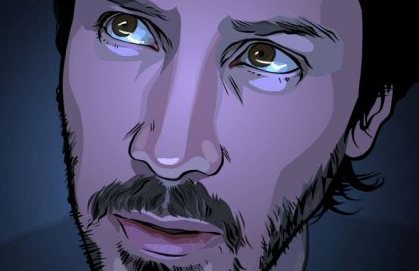
As he did with his stream-of-semi-consciousness Waking Life, Linklater has shot the film in real life and then applied the techniques of ‘interpolated-rotoscoping’ to the results, making Scanner Darkly into a kind of demonic cartoon, a constantly shifting, ethereal presentation that connects with the films themes of disorientation, identity loss and hallucination. Set in the sprawling Californian exurbs ‘seven years from now’, the film opens with one of its strongest scenes, as Freck (Rory Cochrane), a junkie addicted to Substance D, wakes to find he is covered in monstrous insects that might or might not be crawling under his skin. Unnerved, he hightails it to the oracle Barris (Robert Downey Jr), a talkative, similarly addicted know-it-all, who dispenses cracked advice from the sofa in the doss house he shares with Ernie (Woody Harrelson) and Bob Arctor (Keanu Reeves). They are all addicted to the same drug, marking time through popping pills and amusing themselves with garbled conversations and conspiracies. Arctor, though, is not what he seems. Not only is he a drug addict, in a relationship with a dealer Donna (Winona Ryder), but he is also an undercover policeman, assigned to infiltrate this zoned-out gang and remove the threat of Substance D from the streets. Arctor though has turned, and despite wearing a ‘scramble suit’, a constantly shifting human appearance projected onto a holographic outfit that gives him a sealed, protected environment to work in. Arctor is both operator and subject of a massive government surveillance network, a grid of phone-taps, satellite cameras and spies that matches the sprawl of housing estates, roads and blank office buildings in which he operates. There are references throughout to Dick’s other fiction, and the film even boasts an appearance from the writer as one of the multitude of images in the scramble suit. The shaggy, mad-looking one.

Although it might appear straightforward enough when laid out in synopsis, Scanner Darkly turns constantly, adding layers of deception and deceit onto its mobile surface, a whirlpool of interconnected relationships made even messier when we discover that Arctor is spying on himself and that Barris has turned informant, believing his friend to be a terrorist recruiter. Arctor is nearing the end of the road, the regime of drug addiction and the strain of his double life precipitating a breakdown, one that leads him to another sealed environment, a meadow full of flowers and a lobotomized life as a farm worker. The whacked-out environment and the surface gloss of animation makes it more difficult for the actor’s performances to make a deep connection, but Reeves in particular does extremely well, blank and monotone as we have come to expect, but full of emotion and despair as he moves inexorably to his own psychic breakdown, without the softening touch a note of hope would allow. The film calls for Reeves to deliver whole chunks of Dick’s precise, maddening prose in a dreamy voiceover, an insight into his interior descent as powerful as his outward decline. Downey Jr, Harrelson and Ryder have all, interestingly, had their own well-publicised drug addictions, lending some real-life weight to their anxious roles, even if Downey Jr plays Barris for laughs, Harrelson does an easy surf-bum and Ryder floats moodily through the piece, as if she is someone else, somewhere else. And perhaps, according to the noir-influenced Dick, she is. Linklater has taken the best of the source novel and compressed it into a unique and overwhelming film, as paranoid and unhinged as any of Dick’s work, but one with the directors own stamp of authorship applied, making it as close to a dead-cert cult-hit as anything we’ll see this summer. Profoundly pessimistic, immediately relevant and as dark and stark as its title suggests, Scanner Darkly, which ends with a scrawl of Dick’s LSD casualty friends over the closing credits, is a perplexing, ethereal film that offers as much immediate, satisfying entertainment as it does food for thought later.

"A Lightning Doodle Project"


Long exposure times and coloured torches allow the Japanese animators at PIKAPIKA to eat light and shit magic.

Not Waving But Drowning

Lucky old Harry Farber (Bob Balaban), the newspaper film critic in M Night Shyamalan’s bizarre and incompetent new film about a beautiful sea nymph called Story (Bryce Dallas Howard) who inspires ordinary people to do magical things. The socially awkward, snippy new arrival to The Cove, an apartment building managed by Cleveland Heep (Paul Giamatti), encounters a CGI monster three-quarters of the way through The Lady In The Water, and is so spared the sight of talents like Paul Giamatti, Jeffrey Wright and Bryce Dallas Howard struggle through to an uncaring finish, not waving but drowning.

The film, from a story Shyamalan made up to read to his children before bed, starts badly, with an introductory hieroglyphic animation that gives a scant introduction to a magical universe of undersea creatures that once lived in harmony with man. These angelic creatures, called Narfs, make occasional forays onto land from The Blue World to impart wisdom to Man and inspire peace on earth. Trying to stop them are the demonic Snarks, camouflaged wolves with red eyes and sharp teeth. Later, when it suits Shyamalan, we discover that the Snarks are policed by a similarly difficult-to-see gang of cosmic monkeys called the Tarturic, but only if there’s a full moon and an ‘r’ in the month and you touch your nose while turning around three times. Or some such. Cleveland is charged with assembling the team that will cast the complicated spell in order to allow the dying Story return to her own world, a Dirty Dozen of freaks and dropouts that must all play some part in the ceremony. All he must do is figure out who does what and when. This slow, convoluted casting, cued up by a taciturn Korean mother’s half-remembered old folk tale, conveniently allows Cleveland to do all those things that a diligent writer might do. He gets out and meets people, asks questions. He observes and listens. This emergence, which is told in a mundane array of episodic chapters, is the second half of the film. Shyamalan, who appears to be making it up as he goes along, even has his snooty film critic explain to Cleveland the various cookie-cutter rules of Hollywood storytelling, describing how the permutations might play out in a supposedly barbed taunt that only casts the directors own fluency and motivation in a further poor light.

In casting himself as a pivotal character, a blocked writer whose half-finished book holds the key to the future happiness of the world no less, Shyamalan displays an unfettered egotism only previously suspected. His is a strange, blank performance, played mostly in close-up. He’s no actor and this time, as director, fares little better. From the get go, Lady In The Water has a rushed, unfinished feel, a sepulchral pace and a rapidly dwindling interest. There is none of the grand staging, inventive camera positioning or other directorial grace notes Shyamalan has shown before. The toothy Snarks offer a few ‘boo’ moments to maintain attention levels but otherwise the production follows the storyline, being flat, cramped and bland.

Not even the usually dependable ensemble cast (and ace cinematographer Christopher Doyle) can rescue the film, itself an exemplar of the maxim that ‘cinema starts on the page’ as any of its own crippled allusions; to writers and their interior voices or faith in the salvation of imagination. Giamatti is the only one here with any presence, even if his stuttering, damaged loner never emerges as a true hero. Damsel in distress Bryce Dallas Howard does well initially, her pale features giving her a compelling, otherworldly look, but she is removed from the second half of the film, huddled in a shower cubicle spouting riddles while Cleveland rushes around enabling her, and his own, self-actualisation. Almost everyone we are introduced to in the building is a writer of some description; novelist, diarist or storyteller. One guy loves crosswords so much we never see him without a pencil and a folded newspaper. His ten year old son helps by reading secret messages hidden on the back of a cornflakes box, much in the same way Shyamalan does, you might think. These eccentric wordsmiths, and their various fellow tenants, are all wilfully inventive, wise and well-meaning and, crucially, able to suspend disbelief on cue, especially when the visitor called ‘Story’ arrives out of the blue. The film is not peopled with characters – these are beasts of burden, all carrying heavy metaphors and waiting to drop them off at appropriate points to supply the plot. Curiously, the heavier the metaphor, the less dramatic weight it adds.

Lady In The Water is a vainglorious self-portrait drawn as a simplistic fairy tale and a thundering waste of resources – talent, reputation and audience time. It is the flimsiest, most apologetic feature yet from the flim-flam man Shyamalan, whose output since his breakthrough film The Sixth Sense has been a steady decline into mediocrity. Referenced throughout the script and prominent in the advertising is the director’s coy line about his film being merely a ‘bedtime story’. Some might think this is misdirection, another devious cinematic trick. They might expect to find instead a reinvention of old genetic memories, doing for folk tales what Sixth Sense did for ghost stories, or Signs did for paranoid UFO movies. Lady In The Water has nothing like that. It is dull and insipid and fatuous. There is no enchantment here; just foolish, immature thinking, babbling gobbledegook and ultimately, embarrassment for all concerned.

Engine Trouble


From their first short film, twenty years ago, the Californian animation studio Pixar have set the standard in computer-drawn cartoon features, a mark none of their competitors have come close to matching; six record-breaking, impossibly innovative blockbusters in a row that rejuvenated a dying art-form and brought happiness to millions of children and their equally rapt parents. Yet, with Cars, their seventh release and the pet-project of their most successful director John Lasseter, that long run of winning films comes to an end, with the studio’s consistently maintained qualities of character and script falling shy of perfection.

Lightning McQueen (Owen Wilson) is a confident, charming young racing car, in his rookie year on the competitive circuit and desperate to make his name. Having lost his companion Mack The Truck (returning Pixar favourite John Ratzenberger), Lightning is speeding along the famous old Route 66 when he crashes, literally, into sleepy Radiator Springs, destroying the main street and causing consternation among the few inhabitant automobiles that remain in the almost-abandoned roadside town. Brought before the judge, Doc Hudson (Paul Newman), the cocky racer is sentenced to community service, which must be completed before he can leave to get to the final race of the season. Lightning must win the coveted Piston Cup in order to secure a better contract with a more glamorous, better equipped sponsor, introducing an element of beat-the-clock to his court-appointed good works, his efforts to restore the town dwindling spirits, assemble a new pit crew and win the heart (carburettor?) of the smart, optimistic local beauty, Sally The Porsche, brightly voiced by Bonnie Hunt. The rest of the folks in town, a population that offers various diversions and entertaining dead-ends, include the slow-witted Mater The Tow Truck (voiced by a US hillbilly comedian called Larry the Cable Guy), Fillmore The VW Van (George Carlin) a free-wheeling throwback specialising in ‘natural’ fuels, and Tony Shalhoub and Guido Quaroni as the Ferrari-loving tyre specialists Luigi and Guido.

Putting the undeniable skill and passion of the filmmakers aside, there is a limited appeal in the general scenario and only so many familiar car-related puns and jokes that Lasseter and his five other credited screenwriters can inject to liven things up. The decision to meld a couple of Hollywood standard storylines, and following them through without deviation, makes Cars a thin experience. Lasseter gives us another take on the notion that an impetuous youngster will learn lessons from a grizzled veteran and cannot avoid including whole sections establishing the soothing effect that the low-tempo rural way of life has on the spirit of a sophisticated urbanite. Once we go down these well-travelled roads, there is no turning back, making long stretches seem more like an animated updating of Doc Hollywood than a wholly original tale.

The films two big racing set-pieces top and tail the central story, leaving long sections of the film without much in the way of excitement, visual or otherwise. Ultimately, the story here is too twee and culturally specific to connect with audiences with the same impact as the undersea spaces of Nemo or the alternate universes of Toy Story. Cars laps at a much slower pace than Pixar usually set, extending the middle section of the film at the cost of making scant introductions and one-track characterisations that in turn reduce any surprises when it comes to the chequered flag. It’s also the least funny of the studio’s films, or perhaps my ignorance of the scenarios of NASCAR racing meant most of it went over my head. The score, from regular Pixar tunesmith Randy Newman, is virtually anonymous, not helped by the absence of the space in which to stage a jaunty sing-along. Squealing tyres and revving engines fill in instead, at volume.

The character design in Cars is somewhat less than we have come to expect from Pixar, with the fundamental design of the inspirational automobiles only made remotely anthropomorphic with the addition of windshield eyes and flipper-like tyres. The background art here is the real stand-out; pin-point accurate, bright and clear and astonishingly detailed. The single most stunning sequence comes during Lightning and Sally’s sparky romantic interlude, a meandering drive through the mountains and on into the Baja desert that offers luminous landscapes and backdrops, the striated mesas drawn after the old bonnet ornaments of the streamlined fifties, lit gold by a setting sun. Even by Pixar’s own high standards, this sequence is a breathtaking piece of work but without the connection with the characters that generates a growing emotional involvement in the adventure itself, Cars becomes just another digital cartoon, one in a very long line of similar releases already this year. The studios seventh feature is a solid entertainment for kids rather than the transcendent display of cutting-edge writing and animated artistry we have come to expect. Incidentally, don’t leave before the closing credits – the traditional ‘outtakes’ are better than most of what has gone before.

Michael Mann Interview: Miami Vice

Los Angeles is so hot right now. Not like Paris Hilton’s twittered catchphrase (although I suppose it is that too) but more in the sense of sweating through your fingernails. The TV weatherman has run out of superlatives to describe the 112 degree inferno blazing outside and has resorted to fanning himself theatrically and hooting at a crimson map of the Californian peninsula, dotted with swollen yellow suns. In an anonymous room in the Four Seasons, I’m in a puddle, even with the air-conditioning on full blast and a shelf full of condensation-dripping water bottles standing by. I’m checking the capillary creep under my armpits and wondering if there’s time to dash upstairs and change my shirt when the door opens and Michael Mann scurries into the room, looking like he just stepped out of the fridge where they keep the talent chilled. He’s around the table in a trice to take my soggy hand in a firm grip and carefully place a discreet Dictaphone down beside mine. In any other circumstances this would be unusual, but Mann’s attention to detail is legendary and this recorded insurance is part of that cautious data-mining. Squat and intense, with swept-back hair matching his silver glasses and a confident grin, he sits himself down and motions his bored-looking assistant into a discreet chair in the furthest corner. All set, he takes a final check on everything around him, rolls his shoulders and cocks his head to one side, exposing a thin, transparent hearing aid that follows the contour of his inner ear, waiting for my first question.

I start off our conversation by casually remarking that the director has come full circle with his new film, Miami Vice. It’s a kind-of remake of the seminal 1980s TV series that Mann originally brought to television screens worldwide as executive producer, the pop-culture defining success of which allowed him to write his own ticket in Hollywood, after his Hannibal Lecter story Manhunter and the Nazi horror of The Keep. He takes the observation with a nod, and shrugs his shoulders. “The time was right to make this one”, he says quickly and finally and we move on. The night before, the combined European press watched this new incarnation (which stars Colin Farrell and Jamie Foxx as Sonny Crockett and Ricardo Tubbs) in a preposterously comfortable screening-room in West Hollywood. The reaction to the frenetic, astonishingly violent cop drama, even from the hard-bitten chaws of the continental press, was decidedly muted. As Mann himself was sitting three seats down from me throughout the screening, I wondered what his reaction to our reaction was. “Ah, the foreign press. I’ve learned with you guys that you just cannot judge by the room. We had the American press in the same theatre, watching the same movie, and they were applauding and laughing and cheering. They were much more expressive. Personally I love this movie, so the short answer is, I don’t know yet exactly what the foreign journalists think, but it is the movie I wanted to make and that’s that”. I tell him I’m only going on the silence as the credits rolled, and the hurried exit of most of the audience. He fixes me in a look and asks me what I thought of it. Trying to be diplomatic and mindful that we’ve only just sat down, I tell him that with the cars and the guns and the violence, it’s a guy’s movie, typically Mannish in its high-octane delivery and brutal exposition. The director stops me with a raised hand and quotes some focus group statistics. “Well, that’s not the case”, he says in his Midwestern drawl, dredging up the facts from some recess of his encyclopaedic mind. “Women under twenty-five love this movie and what they love most about it is the violence. This goes against everything that the studio marketing department would tell you, but they’ve done their tests and that’s what the figures say”.

Ok, but to get back to the original question, why did he make the movie in the first place? “The idea came up first at a party I was at with Jamie Foxx and he gave me the hard sell on playing a new kind of Tubbs. He had everything worked out, even down to specific shots for the trailer. My initial reaction was, you’ve got to be kidding me, why would I want to go back to Miami Vice? Then I looked again at the pilot and some of the early episodes and I got kind of captured afresh by the deep currents and the emotional power of those stories, and I’m talking here about the first two seasons. The way the issues were brought in from the outside world into the lives of Crockett and Tubbs and the way the stories impacted on them. To me, these stories summed up Miami Vice as it originally was. Secondly, Miami has always had a real allure for me, in the same way maybe as Las Vegas had in the 1970s (Mann wrote and directed the Robert Urich starring TV series Vega$ back then), it was really sexy and beautiful and really dangerous and deadly and tragic at the same time. I love those kinds of places, those Twilight Zones, you know. Today, Miami still has all of those elements, even more so, but the physical look of the place, especially at night, has completely changed, even though I don’t have as much of the city on screen as I might have liked”.

It’s not all that has changed. Forget the pastel shades, the flamingos, the flashy jackets with rolled-up sleeves, the pounding Jan Hammer theme tune and the neon graphics. This is a far tougher, more practical Miami Vice, one that takes the business of fighting crime by working undercover very seriously and hasn’t time for goofing around with girls in bikinis. What we forget though, in the time since the show ended in 1989, is how ground-breaking and gritty the original series was, in its depiction of unorthodox police procedure and its commitment to prime-time moderated violence and gunplay. This time, Farrell & Foxx play the charismatic, unorthodox duo, working undercover infiltrating a South American drug trafficking network. The deeper into the business they go, the more the line between reality and fabrication becomes blurred. This is an altogether darker, more grounded take on the work of undercover cops, fighting a better equipped, infinitely richer enemy in Luis Tosar’s cold-eyed drug lord, Arcángel de Jesús Montoya, a typically isolated, ruthless Mann villain. Where he does show his hand, and gives the nod to the film’s origins, is in the shiny machinery; the growling Ferraris, the bouncing speedboats and the swanky private jets that ferry the new model Crockett & Tubbs from palm-sprayed Miami to their far flung investigations around the Caribbean. Most surprising of all though, in Mann’s macho, testosterone-fuelled world, this is his most tender film, featuring synchronous relationships that are given plenty of time to develop, between Farrell and Chinese superstar Gong Li and Foxx and the rising British talent Naomie Harris. These women get both undercover cops into trouble in different ways, adding heart and emotion to the grandly staged, percussively violent set-pieces that mark Mann’s films out from his legion of pretenders. This version of Miami Vice is a far more dangerous proposition than a meekly told re-hash of an old TV show, cravenly baiting retro-nostalgia and crippled by homage. Casting the film posed few problems for the director. “Jamie Foxx was a no-brainer for Tubbs, this is our third movie together. With Colin, it was a question of asking who out there would be Crockett. I saw his work on Minority Report, which was great, and I watched all of his other movies, but there was the prisoner of war movie with Bruce Willis, Hart’s War, that’s the one that got me. Everyone was telling me, ‘oh, Colin’s the real deal’, but he has these couple of moments in that film that really got me and that made up my mind. It’s not about glamour or celebrity; he is a great actor.”

Was there any pressure on him to make more of the film’s small screen origins? “The studio really wanted to make this film, they were pushing me to get it started, but what I wanted to do was going against the conventional industry wisdom, which says that your summer tent-pole movie is a PG-13, disposable popcorn movie. My idea was that you do Miami Vice for real, make it a hard R-rated movie with real violence, real sexuality and using the language of the streets. That took them aback more than a little and there was a series of meetings where I had to make my point. But they knew what I wanted from the outset, and in sitting around the table it’s my job, in part, to convince them that this is the right way to go. We all have to feel that we are making the same movie, and that we want to make that movie. And to their credit, I brought my perspective on Miami Vice to them and they endorsed it completely”. Mann sees the studios willingness to listen to him as part of a sea-change in the way summer films are made and marketed. “There were two R-rated movies last summer, comedies, that both did really well. After that, Hollywood started to believe that maybe everyone is getting tired of the same old bubblegum summer movies. I felt strongly that nobody wanted to see some nostalgic version of Miami Vice, like the other movie versions of TV shows that have been made, with the same elements and cameos from the original cast and all that stuff. Not putting those kinds of movies down, you know, but why would you bother? If you want to see the Miami Vice from 1984, we’ve got a whole rack of really beautiful DVDs you can buy, so you can get your nostalgia trip that way.”

Part of that new realism is updating the technology that goes into both creating and fighting crime. Even something as rudimentary as a mobile phone was the fevered dream of a madman at the time the original series was made, but the new Crockett and Tubbs are equipped with the latest in high-tech crime-fighting gizmos, with the villains likewise equally well equipped. “Well”, says Mann, “it’s not really a balance. The bad guys have bigger budgets and more money, simple as that. That’s why they’re tricked out with the latest in technology”. He gives me a run down on the speculative finances. “Imagine you spend $500 dollars to produce a product that you can then wholesale for $15,000. That’s just a single kilo of cocaine, and tons of this stuff is moved every week. Only two or three percent is intercepted. So the business has unbelievable profitability and a tremendous amount of cash flow, meaning these guys can go out and buy the best. If you’re a drug producer and you want to find out what moves the DEA (Drug Enforcement Agency) are making on you, you go out and buy the best people on the planet to do your counter-intelligence, your signal intercepts, to be on the DEA phone lines listening on your behalf. Like we show in the movie, if you want a private meeting, and you want to keep it private, you can buy a private army and close down a neighbourhood – jam the phones, block the roads – whatever. The scene as we show it is very real and the technology is a major aspect of that. It’s like the whole world is a globalised ‘Crazy Eddie’s’ and you can buy anything you want within it – drugs, software, weaponry, information. I have to hew to what’s real and that is the reality.”

Mann himself isn’t afraid to spend money on the new cinema technologies that he used in making this movie, although he points out that my assumption - digital cameras make filmmaking more economical - is incorrect. “Not so”, he says, “and that’s a common misunderstanding. Digital on a major movie has little or no effect on the budget. You could use the technology to make cheaper movies, for like $100,000 or whatever, but why would I want to do that? Short answer, I don’t. If I go to Cuba, for example, and I see a location, beautifully crumbling buildings, Art Moderne architecture, astonishing scenery, even down to the old cars they have there and I want to use it in my movie. But I can’t shoot in Cuba, so I go to Uruguay and I build that house or recreate that scene or whatever. Uruguay is far away and it costs a lot of money to go there and do these things. I’m not ever going to be able to do that with $100,000”.

Getting to the point of spending any money at all wasn’t easy. First off, his star Colin Farrell had a much-publicised battle with drink and ‘prescription’ drugs that landed him a stint in rehab, from which he is now fully recovered. So much so that a visiting Finnish journalist’s well-intentioned gift of a bottle of expensive vodka is diplomatically returned by the Dubliner’s minders unopened, something unthinkable a year ago when the party animal was in his pomp. Temptations aside, filming was then delayed by a series of hurricanes (Dennis, Rita and the all-destroying Katrina) with Mann fighting to keep up with his hefty schedule throughout the shoot as Mother Nature battered the south-east coast of the US. These troubles were compounded by other, hotly-denied, rumours of script problems, well-publicised on-set incidents with firearms and gangs and, worst of all for the perfectionist director, a budget that eventually ballooned to a figure somewhere bordering $200 million, a quarter more than was originally envisaged.

He is unwilling to discuss his stars recent difficulties, saying only that he is delighted that Farrell has put his experiences behind him and was a charm to work with. Otherwise, he says, there was a lot of nonsense rumour and there wasn’t much he wasn’t prepared to deal with. “You know this is a big movie and things will happen while you’re making it. If you’re going to go to Miami to shoot and you’re there for June and July and the whole summer and you have to ask ‘what’s the weather going to be like’, you’re going wrong from the start. We knew what was coming in terms of hurricanes, and we had to know exactly what we were doing and prepare for it in advance. From the moment the meteorologists gave us a hurricane warning, we were in a studio approved overage situation (meaning the cost of down-time is factored separate to the shooting budget). Everybody agreed to this beforehand.” Still, it must have been frustrating? “If you’re going to let something like that frustrate you, you’re going to have a lot of trouble in this business. You reach down into yourself and you make sure everything and everyone is safe and secure and you use that time to prepare, maybe for a scene that will shoot a month and a half from now. You get the job done.” With a nod of finality, he shakes my hand again, thanks me for making the trip, picks up his recorder, gives a thumbs-up to his assistant and struts out the door, on to the next thing. What about a sequel, I shout after him. “We’ll have to see what happens”, comes the reply, the gently closing door pushing warm, twice-breathed air across the room as outside Hollywood burns.

Stay Your Hand

The biggest laugh (in a choice parade of entirely unintentional guffaws) to be had in Stay Alive comes when geeky computer whiz-kid Frankie Muniz googles the term ‘perceptive reality’. The same search later made good reading for the film critic - the first hit leads to an essay about how difficult it can be sometimes to believe what is happening right before your eyes.

What follows in this dangerously anaemic slasher picture, built around the sub-Twilight Zone premise of a haunted video game hunting down and executing a gang of thick-headed, thumb-twiddling teenagers, provides more than a few more non sequiturs and inadvertent, eye-popping moments of hilarity but it is cruel, mocking laughter; this is one of the worst films of the year. See, the clownishly costumed ‘teens’, played by an array of pretty, tattooed no-marks and Malcolm in the Middle, all die in the real world in the same way as they die while playing the video game. It takes five of them to bite the dust (in various visually neutered, unimaginative methods of dismemberment) before those remaining take a break from reliving childhood traumas and figure this sequence of events out; making the players as dumb as the play and likely as dumb as the audience.

The source of the digital evil is The Blood Countess, Elizabeth Bathory (a real historical figure worthy of a googling herself), a sadist who terrorised the virgins of Eastern Europe in the 16th Century. Somehow, she has pitched up in modern-day New Orleans, inside the piece of cursed software, and proceeds to slake her thirst on the kids. According to Muniz’ search engine, the source of Bathory’s contemporary power is “homicidal replication on a sociopathic level”, a remark which makes as much sense as any of the rest of William Brent Bell’s hackneyed horror, more concerned with dropping hip references into the background (Steamboy, Halo) than it is in providing even a modicum of threat or fear up front. The cast are all eminently dislikeable; the story is rubbish and the dialogue swill while the cartoonish gore is kept to an absolute minimum. At no stage do they stop playing the game and find something better to do, like go to the movies.

This hopeless effort sets a new standard for ineptitude in a sub-genre already staggering under the weight of its own indulgence. Stay Alive? The challenge here is to Stay Awake or indeed, Stay Seated.

Moving Hearts

Brooke (Jennifer Aniston) and Gary (Vince Vaughan) first meet at a Chicago Cubs baseball game, where he proceeds to insult her boyfriend, force her to eat hot-dogs and then attaches himself to her elbow. From that obnoxious beginning and soon enough, their entire early romance is shown in a montage of photographs that play over the opening credits, a sequence that would cause uncontrollable drooling among the paparazzi, desperate to snap the same shots of this real-life celebrity couple. For those three minutes that open The Break Up, the two seem happy enough, but like the remainder of what follows, there is nothing deeper on display here beyond the surface images of snuggles and kisses and drunken, costumed revelry.

Whereas Brooke is a needy, unhappy woman, unfulfilled in her career and her life, Gary is a thinly drawn human male, withdrawn and immature, obsessed with the Chicago Cubs baseball team and playing violent video games. His motivations in life revolve around installing a pool table in the living room, so he can entertain his friends, and drinking beer in his best friend’s (played by Jon Favreau) corner pub. Later, we come to know that she likes the ballet, he likes the ballgame. She likes martinis and fancy shoes, he likes beer and t-shirts. And so on. She wants him to grow-up while he wants her to shut up. Soon though, they tire of one another. An argument over housekeeping spirals uncontrollably into an ultimatum and a final split. Having decided to break up, they must sell their new apartment, split the money and go their separate ways, but neither of them wants to move out, so Oscar and Felix-like, they must try to share the place before it’s sold by their estate agent friend Riggleman (Jason Bateman)

There’s a long sequence in the centre of the film where Gary is relegated to sleeping on the pull-out couch surrounded by a litter of fast-food cartons and beer bottles while she goes and gets her intimate parts waxed in preparation for a parade of handsome suitors, marched through the apartment in order to make him jealous. Although we can appreciate her desire to get on with her life and deal with the inconveniences that circumstances have thrown in her way, the film’s inability to break from this rut and establish some dramatic tension between the two top-line stars wastes the whole of the second act in tired, situation-comedy standard routines. Would any woman choose public embarrassment over private discretion, especially when the easiest thing to do happens also to be the right thing to do? Would any man just sit there and take it, jabbing the buttons on the x-box his only display of annoyance and hurt? Would he arrange a creepy stripper party, engineering the paid-for nakedness to co-incide with her arrival home? By the time these two come to sit down and talk about their problems, it’s far too late. That might be the moral here, but man, this is depressing stuff for a light romantic comedy.

The film shares a lot in terms of story and execution with last year’s stupid Drew Barrymore vehicle Fever Pitch, and the Colin Firth-starring British football story that inspired it, in showing men as stubborn cranks crippled by childish obsessions and adrift in a sea of ignorance, about themselves and the women they share their lives with. What all three films lack is any real insight into human behaviour, both male and female, and the compulsions and emotions that tie couples together. Here, as before, both sides of the relationship exist separate to one another, circling around the central truth that they are incompatible and delaying until the final moments the revelation to themselves that they are wasting their time. For the film to work, for us to be interested in the characters and their destiny, we have to feel at some stage that they cared for one another as they ask us to care for them. We never do. Circling the top-line talent is an underused ensemble of character actors, including cameos from Vaughan’s father and brother, who only get a couple of scenes to establish themselves and then quickly fade into the background. John Michael Higgins, as Brooke’s Broadway-loving brother, turns a family dinner into an impromptu sing-along that adds a little humour and awkwardness but it is nothing like enough. Best of the support is Vincent D'Onofrio, as Gary's fussy older brother, driven to succeed in business and crippled by his inability to help his floundering sibling.

The best that the film has to offer is in the scenes where Brooke and Gary cut loose and argue properly, tough and realistic episodes that rely on dialogue and gesture to show the profound irritation and heartache that comes from realising their mistakes. Here, both actors (Aniston in particular) show real vulnerability and emotional instability that contrasts uncomfortably with the shabby slapstick and pop-psychology of the remainder. Although The Break-Up does aspire to turning romantic-comedy convention on its head, leading to a sad, inevitable conclusion that alone has the ring of authenticity about it, there simply isn’t enough here to justify the talents of the filmmakers or the patience of the audience. As a date-movie, it’s perhaps the one to choose if you and your significant other need to have a long, difficult talk, and require a cinematic spark to set it off.

Back With A Bang

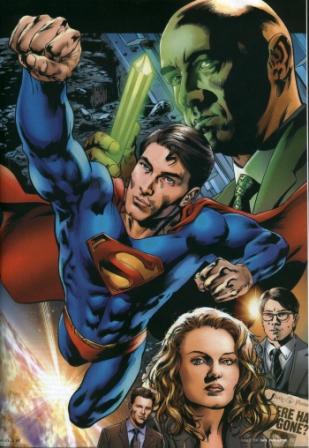
“Why the World Doesn't Need Superman” is the headline of an article in the Daily Planet that wins Lois Lane the Pulitzer Prize in Superman Returns, the latest and greatest big-screen resuscitation of the original movie superhero. She’s wrong, as she comes to realise herself by the end of this exemplary summer adventure. Despite there being a twenty-year gap in big screen outings for the character (dead in the water by Quest For Peace in 1987), and the trouble and expense bringing this $250 million, long-delayed incarnation to the screen, director Bryan Singer more than justifies the effort. After a five-year journey into deep space to find any traces of his home planet Krypton, Superman (Brandon Routh) returns to Earth filled with doubts and fear. A lot has happened in the time he was away and humanity is on the brink of collapse without him to save the day. Chief originator of the chaos is Lex Luthor (Kevin Spacey), released from prison on a technicality and quickly returning to his nefarious plans for world domination. He has found Superman’s abandoned Fortress of Solitude in the Arctic and plans to use its mystical crystals to build a new island in the Atlantic that will flood the eastern seaboard of the United States. Another discovery, a meteorite made of kryptonite, gives Luthor a vital secret weapon, once Superman arrives to foil the scheme. In his other life, back at work as a reporter on The Daily Planet, Clark Kent finds that former flame Lois Lane (Kate Bosworth), has moved on with a new partner (James Marsden) and a son (Tristan Lake Leabu), suspiciously just about 5 years old. Lane, a tough and diligent journalist, offers Superman his best chance at feeling human emotion, their romance rekindled spectacularly on a night-flight through Metropolis that raises old stirrings that are tempered by new realities.

Bryan Singer makes a radically different summer blockbuster to his contemporaries, building on the smart, literate and emotionally credible ground established in his two X-Men films. This film has been carefully and lovingly directed, where others have been assembled from pre-modelled kits. Every subtle flourish from Singer adds heart or humour or gives a jaw-dropping twist to a stunt work standard; the way a vast expanse of outer space dissolves into a field of glowing stars on a child’s bedroom ceiling, the way Superman generates a corona of vapour as he re-enters the earth’s atmosphere or the little kid’s asthmatic off-screen wheeze as he realises Kent and Superman are the same person. Thankfully, Singer doesn’t spin his film into concentric rings of self-reference, irony or camp. He knows there is a legacy here, and pays due homage, but this is his own sincere work, far grander in scale and deeper in emotion than anything that has gone before in this much maligned and abused genre.

For a newcomer, especially one donning such a legendary mantle, Brandon Routh gives an exemplary performance, bringing nuance and vulnerability to what could easily be a flying, costumed stiff. Much of this comes from his deliberate, graceful movement which add great force and control to his actions. It helps that Routh plays these scenes mostly mute with the gaze of a man on the outside, looking in on the mess humanity has created and he is duty bound to repair. Routh’s effortlessness in the role betrays the weight of the character and his meaning to fans across generations. Stealing the show, and all the best lines, Spacey plays the cocksure criminal genius Lex Luthor with demonic élan. Beside him Parker Posey plays a perfectly sassy moll, particularly when arranging a false rescue to distract Superman that pays direct homage to his famous debut issue of Action Comics.

For every complicated stunt or grand battle there is a contrasting moment of quiet visual poetry that opens another door on Superman’s story; a dropped scrabble board (‘isolation’ is the only word I caught), a snatch of Ligeti on the soundtrack when Superman ascends into space, his adopted mother’s (Eva Marie Saint) face in the crowd outside the hospital, a mask of worry and unbreakable separation. Singer and Routh succeed in giving us a new, better understanding of Superman by allowing him to feel a full range of emotion. This is an omnipotent being that can stop bullets, fly through space, see through matter, but he cannot be human and it’s killing him. Isolation is the theme here, the existential pain of his uniqueness. Rather than a simple all-conquering cipher carrying the red white and blue ideals of America, this is a Superman for all mankind. Now, Superman represents “truth, justice and…all that stuff”, a pointed awareness that nowadays “the American way” isn’t always the right way, reinforced every time he orbits the Earth and looks down on all of creation.

Singer’s deft efforts to add depth and significance go as far as making Superman Returns a blatant Christ allegory. Superman, according to his father Jor-El (Marlon Brando in a port mortem cameo) is “the light” that will “show humanity the way”. When he ascends to the heavens and uses his super powers to hear what everyone is praying for, we get a sense of his otherness and his supernatural godliness. Superman is prepared to make the ultimate sacrifice, up to and including a crucifixion-inspired last breath, his side pierced by a Kryptonite lance. He is raised again, seemingly from the dead, to destroy the evil kingdom Luthor has established in the ocean. Regardless of this heavy tone, with Superman Returns, Singer does almost everything right in what is a beautifully rendered film. His action sequences are new and exciting, coherent and motivated and drive momentum into the long, complicated story. The world really does need Superman, if only for the tremendous entertainment value.

(The comic-book image at the top of the post is from The Superman Home Page. Not everybody in the world of movie blogs agrees with my assessment of Singer's labour of love, by the way. Cullen Gallagher at Cinema-Journal fucking hated it.)

Excess Marks The Spot

There’s a great moment in one of the dozens of battles in the new Pirates of the Caribbean sequel, Dead Man’s Chest where Will, trapped in the crow’s-nest, sticks his sword through the main sail and uses the friction the cut creates to abseil down to the deck. The first man to do the stunt was Douglas Fairbanks in the original action adventure, The Thief of Baghdad, more than 80 years ago. The daredevil Fairbanks did the job himself, he buckled his own swashes. Bloom, like any modern actor, is safely harnessed, ditto his stunt-double, in a complicated rigging of wires and sandbags, scrubbed away later by a bored effects technician. Somewhere in that binary stream, in the gap between the stuff they strap on and the stuff they take off, you’ll find, like it or not, the heart of the modern summer blockbuster. Like it plenty, in this case.

As conceived by director Gore Verbinksi, Pirates is fast-moving, wilfully complicated and, most importantly, fun filmmaking, so the briefest of synopses is best, rather than spoil any surprises. After a hugely enjoyable introduction, we discover that Captain Jack Sparrow (Johnny Depp) has yet another secret. Years before, Sparrow sold his soul to the king of the oceanic underworld, the fearsome Davy Jones (Bill Nighy), and is now desperate to find a way to hang on to it. With time running out, Cap’n Jack drags the young lovers, Will Turner (Orlando Bloom) and Elizabeth Swann (Keira Knightly), into the mess, not knowing that they in turn have been sent to recover the mystical compass he wears around his neck, for the new sheriff in town, Lord Cutler Beckett (Tom Hollander). If they fail, Turner and Swann can never get married, and Sparrow will become one of Davy Jone’s phantom ghouls, trapped forever on his hulking ship, The Flying Dutchman.

These are the kind of pirates that Disney loves. In story terms, like The Empire Strikes Back, this is a movie smack bang in the middle of an epic saga, and one that was shot back to back with the third instalment which we will see in 2007. The original was Jerry Bruckheimer's biggest hit by literally hundreds of millions of dollars. Depp even has it in his contract that Disney will pay to make two films of his choosing for every Pirates film he gives them in return. Since the first film, the three main actors have gone on to better things (like Oscar nominations) but the films belong to Depp, who is just a joy to watch, as much a villain as a hero, a bastard as he is a best mate. Jack Sparrow tells lies with a fluency and grace and with never a thought to his being found out, which makes him a very attractive character. From the time we are re-introduced to him here, with his full-range of oi’s and tics and whistles, it is impossible to take your eyes off him. As a display of cinematic charisma and joyful expression, and comic timing, there hasn’t been a performance to match his limp-wristed, elegantly wasted squalor all year.

Knightly and Bloom can’t hope to keep up with Depp, which doesn’t stop them trying. Bloom brandishes his cutlass with perfectly acceptable swagger but Knightly fades badly, not helped by her insistence on wrinkling her brow and holding her mouth agape, a mannerism that is really starting to annoy me. Regardless, what saves the film from being just another bloated blockbuster, and what separates it from duds like Poseidon, is the energy and vibrancy of its acting performances, the comic quality of its script and the sheer unadulterated exuberance of it all. Bill Nighy, the urbane middle aged city gent, plays Davy Jones as a salt-encrusted Scottish tar, even from behind his wriggling mask. The effects work here, and throughout the film, is astonishing, absolutely believable, but thankfully the rubber mask doesn’t hide the surprisingly intimate and expressive power of Nighy’s performance. The other new additions include Stellan Skarsgard as Will’s father Bootstrap Bill and British actress Naomie Harris, from 28 Days Later, as the Jamaican voodoo priestess Tia Dalma. Creating and concluding their storylines might add a lot to the running time, but both prove more than worthy. Pirates might be unwieldy and complicated, but it still finds the space to allow a character like the one-eyed Raggitti (Mackenzie Crook) to sit facing us at the start of the third act and re-cap on what has happened so far. The film knows it’s an epic, full to bursting with dead-ends, conceits and sly references and as infuriating as it is entertaining but it doesn’t really care because it knows you love it anyway.

The human performances aside, what will have fans of the first film coming back for more is the massive and massively complicated action set-pieces, which follow here one after the other in a convoy of spectacular juggernauts. Chasing our heroes are armies of cannibals and crews of barnacle-draped half pirate half-fish mutants, which makes for a couple of hilarious and dramatic narrow escapes, sword-fights and sea-battles. The back-story gives us a burgeoning triangular romantic split, some dark political intrigue and spooky witchcraft, not forgetting an all-destroying monster in the gruesome shape of The Kraken. The all-encompassing breadth and complication of the computer-generated special effects work here is staggering. Like in the year’s other big blockbuster, King Kong, they are all at once subtle and bombastic, but always seamlessly brought to the screen. One of Davy Jones’ crew has melded with a hammer-head shark, making his the first face your eyes fall upon on every time he appears. His comrades are just as gruesome and unforgettable. This is really remarkable character design, totally original and perfectly realised and should prove as eternal as the Star Wars creations in the mind of the audience, although the younger ones might find it all a bit too bizarre.

The practical, physical sets are also marvellously wrought, from the veneer of civilisation in port to the witch’s house in the depths of the swamp. The interiors are beautifully created, on a vast scale, and full of tiny details that should aid repeat viewings. Most impressive are the all-new tall ships, including a re-modelled Black Pearl and Davy Jones’ monstrous Flying Dutchman, covered in a reef of coral and barnacles that give it a monstrous profile. This is a world that is authentically filthy, covered in slime and dust and dirt. Describing Depp’s teeth alone would take a couple of hundred words. For a digital blockbuster, the film is surprisingly physical, with long sequences that play out like old Three Stooges shorts; a barroom brawl, a swordfight on a water-wheel, aided considerably by the meaty photography. In visual terms, Pirates is right at the cutting edge of cinema and is on all counts a staggering display of true artistry.

The problem is there is too much of everything, because there is too much movie. Dead Man’s Chest is too long by about a half an hour. Everything hits a dead stop when the very complicated story gets yet another coat of varnish and the film runs aground for a while. In these circumstances, when your backside starts telling you you’ve been sitting down too long and you find yourself comparing the film to silent, black and white two-reelers from the last century, waiting out the doldrums can prove exhausting and maddening.

Lady Muck

Manhattan socialite and PR Ashley (Lindsay Lohan) is blessed with supernatural good fortune. Every scratch-card is a winner, it stops raining when she leaves her penthouse and she can always get a taxi. Everything is going great until one night she goes to a masquerade ball and meets Jake (Chris Pine), a penniless janitor at a bowling alley who moonlights as a manager, and is desperate to get a CD from his up-and-coming band into the hands of a music mogul. Ashley winds up kissing Jake, leading to her good luck being swapped with his bad, along with the spit. Immediately, she breaks a heel on her swanky stilletoes then she almost gets killed and winds up in jail. Worst of all, she loses her job and the platinum company credit card, although it is a mystery what exactly that job entailed beyond batting her eyelashes. Even to the world of eyelash-batting, this is no great loss. Nevertheless, Ashley must restore her mojo so sets about finding and kissing every dancer employed at the ball - like Cinderella with a chapstick. She must also stay alive, so takes Jakes old job in the bowling alley, cleaning toilets and deodorising shoes.

Just My Luck has been mercilessly targeted by its six screenwriters to tick off every possible item on the tweenie checklist. Ashley has a cool job, lots of money, wardrobes full of designer clothes and about 100 pairs of shoes. She's super-skinny but still has a rack. She actually lives in the same actual building as the actual Sarah-Jessica Actual Parker. She has two supportive, not-too-pretty, not-too-rich friends, who take her in when things get bad.

In fact, the only thing Ashley does not posess is a golden palomino pony, but then she does live forty floors up in New York and I suppose there must be some tattered scrap of reality remaining if this cynical romance is going to work. But I wish they had found room for the horse. My kingdom for the horse, if only for its (hopefully talkative, wisecracking) appearance to let all but the most impressionable members of the young audience in on the joke. That this leaden, clumsy romance is a fantasy and not a guide to life, that ‘unlucky’ and ‘poor’ are different things altogether, that behaving like an uppity Anglo Saxon epithet for ninety minutes ultimately requires, demands, comeuppance.

You ask a homeless person why they’re sleeping on the street and they won’t tell you it’s because they broke a mirror or walked under a ladder. They’ll tell you a story you probably don’t really want to hear, much like Lohan and her producers who blithely float through the routines here without so much as a nod towards humanity. Much fun is made of Jake fishing a dog-turd covered five dollar bill out of a park dustbin, the same bill that a rich man just used to wipe his dogs arse, with the scene concluding with the young dreamer being confused with a rapist because he looks a bit shabby and is out of breath. Ashley meanwhile is learning that manual work is just so much fun! There are so many things to break, it's unreal! Aren't bowling balls heavy! Wow. I know. Aren’t regular people funny, with their saggy clothes and cheap shoes and dull jobs and limited vocabulary? Don’t ‘the other half’ live like pigs? Someone should say something. Gawd!

Lohan, who isn’t all bad in general, is all bad here. She stumbles unconvincingly through the film on cheerful, toothy autopilot but it comes across as distracted and stiff. Pine gets less to do and does less with it. The direction, from Donald Petrie, is flat and unadventurous. The fact that his film also contains long sequences involving the real-life boy band McFly doesn't help. They look, and sound, like the bus home after a special-needs day-trip to the trainee hairdressers.

Later, for their big performance, the band’s name is transformed to resemble the logo of a well-known burger restaurant (same red and yellow colouring), but this incidence of product placement is notable only for its conniving subtlety in a film where coveted brands are blatantly promoted. Forget the ads before the trailers, the main feature is riddled with commercial breaks. There is never any doubt about which lifestyle Ashley preferred, rich or poor, army surplus or Dolce & Gabbana, despite her last-gasp homily about ' maybe going home to her parents to think things through'.

Even more uncomfortably, for a film rated PG and made for twelve year old girls, there's a lot of unnecessary use of the word shit, which surprised me in the context, and lots more of the same old scatological nonsense involving actual piles of faeces; the imagery fast replacing Monument Valley or the Manhattan skyline in the panoply of American cinema. Perhaps they are trying to tell us something.