Thursday, April 27, 2006

Nothing Left To Lose

It’s 1999 and Brenda, a distraught mother (Julianne Moore) arrives with bloodied hands at an Accident & Emergency in New Jersey, claiming to have been carjacked by a black man at a local housing estate. When he arrives at the hospital, the grizzled local detective Lorenzo (Samuel L. Jackson) finds out that her 4-year-old son was in the back of the car. Soon, the cops are looking for a local man who fits the description, the local community are complaining of police bias and racial profiling and Brenda’s brother Danny (Ron Eldard), a white cop with anger management problems, is fanning the flames in order to try and smoke out his suspect.

Into this messy manhunt comes a missing-child activist (Edie Falco), who organises a search party and is determined to prove that Brenda isn't telling the truth about what happened. Samuel L gives their theory a lot of credence, and plenty of his thinking time, but seeing as nobody seems all that bothered about the case, not the media, or his bosses, or the community at large, he can follow his nose as long as he pleases.

I am unsure exactly how the police then justify their laying siege on the district, enforcing a mass house arrest and not allowing people to leave until they supply them with the suspect Rafik, played by Fly Williams III. I am similarly unsure, other than reporting it as a fact having seen it, how the community as a whole then turn into a petrol-bomb throwing mob and start a riot, which in turn triggers a police response and a standoff and, er, the end.

Samuel L Jackson couldn’t tell you much about what’s going on, by the looks of things. He doesn’t even know he’s got asthma given the baffled expression that greets his occasional wheezing fit. He looks at his inhaler like a man discovering he has fingernails. When he’s not gasping, he’s roaring. He’ll deliver the first part of the line in a whisper and then SHOUT FOR EMPHASIS, in that rolling, expletive-littered, biblical way that he does. It’s great, thrilling even, when he’s got the lines to justify the pantomime but it’s a grind when the play is as dull and foolish as it is here. Here’s hoping Snakes on a Plane has been written rather than typed.

Poor old Julianne Moore can hope in vain, because she is marked absent here, as she was in another Joe Roth shambles, The Forgotten. So she wouldn’t be much help in figuring out what the hell is going on, either. She wanders about, spouting nonsense and drooling for the most part, only making sense when a little exposition is required. It’s a fright to see. The secondary characters are all stereotyped, with William Forsythe again left with nothing to do but offer a reassuring pat on the back at opportune moments as the sidekick. The African American community is relegated to stereotype, a first-principles list of firebrand preachers, angry youths and proud women, and all manner of central casting ‘gangstas’ bouncing on the spot in the background. The media are represented by a small handful of reporters, one a man in his seventies in a porkpie hat brandishing a notebook. One television reporter addresses a single camera, another aspect of the story ripe for juicy drama that is ignored or relegated to shorthand. The big speeches are there in order to fill us in, I suppose, but they are so badly played, too shouty or too weepy or too door-slammingly piqued, as to be rendered neutered.

Neither side of the story, the racial tensions or the abduction mystery, are given anything like a satisfying treatment. Nothing about the situation is convincing or engaging save once scene involving Moore and Falco. Sitting outside an abandoned orphanage (the Freedomland of the title and as clunky a piece of symbolism as you’d find outside of a pop-up book), the Sopranos actress delicately drills the sobbing Moore for information. But it’s one scene, and it’s over all too soon. No time is devoted to any of the stories dramatic elements and if you were to ask me what they spent it on instead, I would find it hard to answer in any detail. Director Joe Roth asks us to fill in so many blanks in the story, it’s a wonder there’s a film left at all to see. With so many precarious personalities and politics involved it’s not a question of when it will all collapse, but how much dust it will raise.

Speaking of Joe Roth, he is unspeakable. Before this atrocity he directed the eyeball-bleedingly awful Christmas With The Kranks and the smug America’s Sweethearts; barely films at all and both among the worst of their kind. He has also produced (if that’s the right word, I think excreted is better) Tears of the Sun, Daddy Day Care, and Mona Lisa Smile. Back-of-the-class genre pictures that nobody would miss if they weren’t there, his range stretches from insincere flag-waving issue movies to tail-chasing re-threads. More than anything else, it is this man’s inability to distinguish a motion picture from a hat-stand that should stop anyone still curious because of Samuel L from darkening the door.

Thursday, April 20, 2006

Dreams With a Z

Sometimes you just have to laugh. Not seeing the challenge in making already exhausted and terrified cinemagoers even more miserable, in the 1940s a director called Preston Sturges made a series of satirical comedies about WWII, each one a masterpiece. Mistaken identities, coincidences and accidents, contrivances and caricatures were all mashed together in zippy, wise and funny entertainments that at their hearts, said it was ok to laugh at it all. Even the gravest fate can be made to appear ridiculous. Although he set out initially to make a serious film, once he started reading about it, there was something so cosmically unilateral about Mutually Assured Destruction for Stanley Kubrick, the only option was slapstick. His pitch black, acid farce is framed around a clownish cabal of madmen, somehow entrusted to positions where they hold the fate of mankind in their hands. Even if they no longer control the hand, they cling to power though arrogance and private stupidity. So, in the current climate, Paul Weitz is to be commended for trying to make America laugh again in the face of disaster, even if in American Dreamz, the frame for the farce is far glitzier and he forgot to write any actual jokes.

Taking on Bush and the war in Iraq, Weitz, who directed American Pie and About A Boy, also takes a pop at American culture in the shape of their Pop Idol clone, ‘American Dreamz’, a karaoke-text TV show that enjoys 92% of the available television audience. It’s mean, smirking presenter, and the most famous man on the face of the planet, is the black-clad, self-centred Brit, Martin Tweed (Hugh Grant). The recently-single Tweed is plotting the new season of his smash hit show in his fabulous mansion appointed with Ferraris and wall-sized televisions, but Tweed is bored with success, and the ease with which he attained it. He wants to change things around on the show so sends his producers (John Cho and Judy Greer) out into the heartland to find a no-hoper to go up against whatever ‘talent’ rears its head. On the other side of the continent, President Staton (Dennis Quaid doing a puzzled George Dubya impression) is also coming off the back of a success, he’s just been re-elected but is hardly aware of it. He’s a bit off-colour, happier to stay home and mope than meet his people. Worse, he has started reading the newspapers they read, rather than his prepared briefings, which has made him even more depressed. Despite the ministrations of his first lady (Marcia Gay Harden) and his micro-managing chief-of-staff (Willem Dafoe), like Tweed beyond in LA, The President wants to shake things up a bit.

Into the frame comes Sally Kendoo (Mandy Moore), whose scrubbed, pale yellow exterior hides a neck like a jockey’s bollocks. She’s more than ready to be plucked from the herd and have her ‘dreams’ come ‘true’, with the help of her agent and a media-savvy young woman’s innate grasp of what works best for the reality TV audience; a mix of tears and teeth. Up against her is Tweed’s not-so-cunning plant Omer (Sam Golzari), the glitter-wearing, show-tune loving no-hoper Arab immigrant; there to capture the audience’s sympathies and keep them watching and calling and texting from week to week. Circumstances have contrived to connect Omer with a terrorist cell in LA, who love the high-life as much as the most satanic capitalist and have dark plans for Omer’s sudden high profile. When the President, now keen to connect with the kids and show his range, agrees to be a guest judge on the final show of the season, everything comes crashing together.

Even in synopsis, the script with which Weitz delivers his satire is messy and uneven. Welding the mood of frantic screwball to a supposedly biting farce that squares up to international terrorism, the buffoonery of elected officials and the all-pervasive power of commercial television is a good idea, ripe for comedy you’d think, but the results are flat and toothless. Without the razor sharp writing to merit tackling the touchy material, there’s little in the film beyond the performances of the cast to justify the effort. Grant, hampered by the fractured nature of the story and the lack of any good jokes, still manages to play a nasty, unhappy man with charm and energy, even if both are darker and more muted than usual. Luckily Dennis Quaid has the brilliant Willem Dafoe to help him out with his very thin parody of Bush, the two of them establishing a tender and amusing co-dependency that is marred by some tired tomfoolery with an earpiece that prompts the President when he’s speechifying. Mandy Moore does well as the determined, media-savvy contestant, plucked from obscurity by the producer’s agenda and all to willing to buy into it. She too has a fixer, an agent who will ‘appear mean and greedy, so you don’t have to’, as one character describes his function. Newcomer Sam Golarz, playing the reluctant martyr Omer, is likewise being controlled by his bungling sleeper cell, devoted terrorists all too easily distracted by the comforts of American life. Golarz makes the multi-stereotypical Arab kid rounded and likable. Somehow, and I really don’t know how, Golarz’s enthusiasm brings something new to the old standards (Luck Be A Lady, I Did It My Way) he is mandated by the plot to belt out, while dressed as an imbecile. An actor who can do that is doing a fine job. The results are not all that funny, but it’s not his fault.

Perhaps it has something to do with timing. Bush, remember, was elected six years ago and was labelled a dummy on or about day three. American Dreamz again sees him as a monkey but since he managed to get himself re-elected, and is currently fighting a war on every front he can find, to underestimate him and his cronies seems, to me, to be a trivialisation and a mistake. The caricature is too easy and Weitz doesn’t make it any more difficult for himself than he has to. The same is true of Pop Idol, which made its debut in 2001 and was quickly co-opted for comedy. Without going as far as citing Wag The Dog, after 15 years of The Simpsons, a fresh approach is required. Odious though he may be, Simon Cowell is not the problem.

America - the fool, according to Weitz - is a nation in thrall to its elbow-tugging inner child. It just wants to go play. As a people, they all dream of the same thing, to have fame, riches and glory. Not to earn it, to have it bestowed upon them. Not the glory of discovering cures for disease or building rockets to Mars, though there is a sizeable constituency of Americans who dream outside of themselves, but they’re not pretty enough for network TV. The collective fantasy, ingrained in the American mind, is popularity; to be loved and to love them for loving you. To make some kind of difference. To earn applause. Wouldn't it make you sick?

In the end, perhaps American Dreamz says that in order to hear the hoots of acclaim, people require management, or at least they feel the desire to be managed. Dreams and philosophies will only get you so far in a country devoted to forward momentum, to action and resolution. Mediocre singers, mediocre singer’s mothers and boyfriends, all the way up to the Commander-in-Chief, even terrorists; they are all requiring of middle-men and enablers. On the few occasions that Weitz narrows his beam, it's the hucksters that get burnt.

Even if the film doesn’t all work, it is heartening to see that someone over there is willing to take a jab at the dumber aspects of their society, and increasingly, our shared cultural world. Be it the Lithium glow of network television and its insidious global reach, the way ambition beats talent in the race for recognition or the preposterous nature of fashion and consumption. They all get a roasting, no matter how low the temperature is set, up to and including the administration that misinforms and manipulates in order to fulfil an agenda that perhaps, if we are honest about it, we are better off remaining ignorant about. Weitz sometimes pulls his already feeble punches, there is no doubt about that, but at least he's taking a swing.

Tuesday, April 18, 2006

Meet The Febriles

A beautifully observed and expertly played slice of American life, the unassuming but hugely powerful Junebug sets a complicated trap to capture what are in a very real sense the minutiae that make up our shared experiences. Debutant director Phil Morrison builds his case for clashed cultures through almost invisible gestures and flicked glances, silences, the imperceptible differences in language and custom and the niceties of human contact, concentrated in the return to the rural family home after a couple of years of a nice young man and his new city wife.

Opening the film with a series of yodelling rebel yells, a sound you could only hear in the deep mountain back country, the worldly, polished Madeline (Embeth Davidtz) is immediately out of her depth. Bobbed and manicured, she’s a thirtysomething dealer in difficult, intellectual outsider art who must travel to rural North Carolina to sign up a local painter David Wark, based on the real-life reclusive genius Henry Darger and played with considerable relish by a mumbling Frank Hoyt Taylor.

Her new husband George (Allesandro Nivola) grew up in the area, although he hasn’t been home for three years, so they decide to travel together and spend time with his father and mother (Scott Wilson & Celia Weston), his listless younger brother Johnny (Benjamin McKenzie) and his heavily pregnant young sweetheart Ashley (Amy Adams). The glamorous Madeline and the now gentrified and grown-up George make a considerable splash in the small, religious community, not least in the family home, which is more or less unchanged. Troubled and remote, Johnny resents his brother for his success and his smiling confidence. His father is meek, tiptoeing through his own home and relegated to fussing in the basement while the drama is enacted over his head. Most of the that noise comes from the busy, fussy mother Peg, who doesn’t believe Madeline and George have thought out their relationship and is uncomfortable around the newcomer. Not so Ashley, naive and enthusiastic, who is literally open-mouthed in her admiration for her new sister-in-law, who to her eyes seems to have stepped out, fully formed, from the pages of a magazine.

Everything is tense in this situation, but strangely, the film is not. There is drama, certainly, and humour and insight, but the film plays out beautifully, finding time to fill in elements of the back story we might not consider important while choosing not to reveal that which we would think essential. We don’t know much about Madeline and George’s marriage, beyond the shared smile and chance meeting that started them off, but we know enough. We get to know very little about Dad, but what we do find out is beautifully illuminative. At times the camera itself looks away, its attention caught by a copse of trees, or an empty room, or a neighbour waving. Economically sketched and open to discussion and interpretation, Angus MacLachlan’s tight and telling script is a joy.

All the relationships are open to question, with the newlyweds coming to realise who they are married to, the parents terrified that the stranger might interrupt their routine, and the young couple whose love has been diluted by boredom and familiarity. The story’s drive is provided by the imminent arrival of Ashley’s first child, and Madeline’s increasingly fraught efforts to sign up the hot new art talent, against competition from another gallery. While both these elements provide rich moments and engrossing drama, they are not crucial to the films appreciation. Both do lead to scenes of incredible power and veracity. Amy Adams as the sweet-natured, angelic Ashley shares a scene with Nivola that is the cinematic equivalent to a kick in the stomach, yet the film doesn’t exploit or extend it and carries on, bravely. Relative newcomer Adams, as the emotional heart of the piece, is a revelation and she fully deserves the plaudits her performance has received. The rest of the cast are just as good, honest and real and tremendous company and it is their multi-layered, wholly human performances that make Junebug is a great film to watch because it is open; unhurried and confident and true to itself. Quirky and unexpected, it is profound and thoughtful and, crucially, continues to search for authenticity and originality as it unfolds in Morrison's skillful hands. It is also jam-packed with one-liners and sarcastic asides, which gives the darker moments pep and lift. The dialogue might ring true, and amuse and warm the heart, but what remains unsaid and undone is just as important and just as illustrative and just as profound and ultimately what separates this low-budget gem from Meet The Hill Billy Fockers, without the toilet jokes.

Friday, April 14, 2006

Neighbourhood Witch

Following the deeply foolish Exorcism of Emily Rose comes An American Haunting, another supposedly factual story of supernatural goings-on, this time focusing on the activities of a poltergeist causing all kinds of trouble to an innocent family in a rural community in 1818. Donald Sutherland and Sissy Spacek play John and Lucy Bell, Tennessee farmers in the early part of the 19th century and parents of two teenagers, the pretty Betsy (Rachel Hurd-Wood) and the strapping John Jr. (Thom Fell). When John Sr. is found guilty of the sin of usury by the church elders, the aggrieved party, Kate Bets, who everyone thinks is a witch, swears vengeance on the steps of the courthouse. Soon enough, the god-fearing family are beset by ghostly wolves, scratching noises in the attic and apparitions of a long-haired girl. When the angry spirit then appears to focus on young Betsy, the apple of her father’s eye, John Sr. must try to find a way to exorcise the demon and restore his family and good name.

Based on Brent Monahan's novel, The Bell Witch, which was itself based on what is apparently the only known case in which the U.S. government acknowledged a death by supernatural forces, An American Haunting is a tricky film to get a grip on. Book-ended by two unnecessary modern vignettes and compromised by having been done a billion times before, the film's willingness to abandon itself in camp Hammer horror cliché and hammy histrionics means the few very creepy moments can never amount to the feeling of dread the audience requires. The copiously be-wigged Sutherland glowers and cowers and brandishes his bible, but overcooks his performance terribly. Spacek, hampered by an underwritten part and playing yet another innocent abroad, does still manage to ground the film in what is the films best display of the fear and bewilderment a god-fearing woman of the times might have experienced. Rachel Hurd-Wood, who is a young actress and shows tremendous promise, is brave and totally convincing as the troubled teenager in the early stages of the film but when the majority of the films running time is given over to the unseen demon, from whose swooping point-of-view we see the events take place, her performance is pushed to the background. The Evil Dead's-eye-view device quickly becomes tired, by the way, save for one inspired shot through the window, around the wooded neighbourhood and into a fleeing carriage.

Enlightenment and the age of reason is represented by the college-educated school teacher Richard (James D'Arcy), who is also, handily, the object of Betsy's juvenile crush. The Church which shuns John Sr and his family is later exposed as a fraud in the person of the drunken minister, played by Matthew Marsh. But reason has little place here, and neither of them have much to do but have their minds changed by being witness to a greatest hits of posession movie special effects.

Given that director Courtney Solomon’s only other film is 2000’s Dungeons & Dragons, he could have cobbled this together as Scary Movie 5 from the bins outside the studio and still have shown immeasurable improvement. His film is competently executed and moderately affecting, even if it never rises above the level of a reconstruction on Living TV’s Most Haunted. That the film has a twist, although it comes as no real surprise to anyone into the genre, might add resonance to the proceedings for some audience members, who will otherwise find little to frighten them here.

(The creepy illustration, the copacetic result of a lazy Google Image search, is by Robert M Place and is his copyright. It was created for the Bell Witch entry in The Encyclopedia of Ghosts and Spirits. See more Robert M Place artwork here.)

Saturday, April 08, 2006

Undercurrent: Please Don't Tell The Terrific Ending

FIPRESCI, the international federation of film critics, has just launched Undercurrent a new magazine "for reflection on films, on the cinema and on film criticism".
The first issue has an interview with sound designer Leslie Shatz, a bizzare attempt at critical restoration for Cameron Crowe's insipid, botched Elizabethtown and the transcript of a very interesting discussion group at the Brisbane Film Festival about how critics work.
Very interesting, for me, at least. They also have an open call for essays and articles.

Friday, April 07, 2006

Undersea Life

For a jaded critic, blinking from the onslaught of dismemberment fantasies and twee children's animations clogging the arteries of the nation's multiplexes, Noah Baumbach's scorching semi-autobiographical divorce comedy/drama The Squid and the Whale offers immediate relief, a cinematic balm that provides both excitement and gratification in equal doses. Of all the many good reasons to turn off your computer right now and go see it, the best is the central performance of Jeff Daniels as a self-absorbed, full-of-it, middle-aged father. I’m not sure which beast he represents but Bernard (pronounced in the American fashion with a flat, nasal A) is such a fantastic movie character and Daniels gives such a faultless acting display that the only proper response has to be; who knew he had it in him? So long relegated to second string anonymity and being confused, in my mind at least, with Jeff Bridges, this is Daniel’s finest hour since The Purple Rose of Cairo twenty years ago. I might have put Dumb & Dumber (which was only ten years ago) because there too Daniels is outstanding but more because in his head, Bernard thinks he is Woody Allen’s suave matinee idol, Tom Baxter. But in reality this man is a slightly better read, more opinionated version of the Farrelly Brother's heavy-lipped simpleton, Harry Dunne. A failed novelist who hasn’t published anything for years, Bernaaaard is unhappily married to Joan (Laura Linney), his second wife and a woman of enormous patience, not least on the tennis court. They have two teenage sons, a well-appointed house and a cat and are busy living the 1980s Reaganomic dream of nikes and volvos, tennis and neighbourhoods, self-absorbtion and self-interest.

Bernard is closely based on the directors own father, the novelist and teacher Jonathan Baumbach. I would love to know if he has seen the film, and what he thinks of it, because his son sees him as a relentless attention whore, constantly seeking affirmation and consolation and bewildered by the turns his life has taken. He is consumed by this need for control, so much so that he cannot see anything else; his failing career and its various improprieties, his remote, fractured wife and children. He can’t hear his own droning voice or read his hackneyed writing. It’s more than a writer’s vanity; it’s a complete oblivion, a selfish retreat into the mind and the minor glories of a long-gone past. The only thing that shakes him out of his stupor is the threat to his standing in the family and his rampant ego that Joan’s new career as a writer represents. In one glorious incident, the great teacher asks if she had followed his advice on some notes on a piece of her prose. She tells him she didn’t make the changes and liked it better her way and he visibly winces, for her benefit, in sympathy. We get to see precisely how patronising Bernard has become (because she wouldn't have married him if he was always like this), is highlighted when he drives, with his eager son and his starry-eyed girlfriend to give a reading to a half-empty hall in a small college, from a book printed before most of the audience were born. Soon after, Joan's story is published in the New Yorker.

With the balance of power shifted, and the ground gone from beneath his feet, Bernard’s response is total collapse. He moves from the family home to a crumbling shack, starts an awkward affair with one of his students (a spot-on Anna Paquin) who writes lengthy short stories about her vagina and causes consternation over the timetable the new, doubled-up households bring about. While Try and make the divorce as hard as is possible on everybody. Like I said at the outset, he’s a brilliant movie character, annoyingly dense and boorish but charming and funny too. The family split, it falls on the two sons to try and salvage their lives from the wreckage the adults leave behind. The older of the two, Walt (Jesse Eisenberg), sides initially with the father, spouting his tired old opinions and affecting his scholarly air of detachment. The younger, Frank, takes to drinking beer and acting out. As Bernard letches over his nubile Lolita, Joan starts an equally inappropriate affair with the boy’s tennis coach (played by William Baldwin) and everything starts to unravel.

Baumbach is publicly cleaning out some old closets here, but with tremendous charm and honesty, he doesn't stop his caustic eye from falling over his own teenage self. His character, Walt, is a loathsome, mouthy creep; anxious and uncomfortable, pretentious and ill-informed. Your typical teenager, maybe but he claims Pink Floyd lyrics as his own and worse, treats everybody terribly, exactly as his father has repeatedly shown him to do. There is no doubt that Baumbach has seen the error of his ways, and knows just what a monster he was. Making the process of telling an autobiographical coming-of-age story itself part of the process of growing up and learning to deal with it all is, casting aside, his master stroke. In the end, Baumbach is merciless. Everyone gets caught out and everything is forensically exposed; Bernard as a fool and a bastard, Joan as an adultress and a flake, Walt as a plagiarist and a bastard-in-training. The compulsive onanist Frank’s fate is more delicate, but they are all, in Baumbach's hilarious, probing way, gently cleft open.

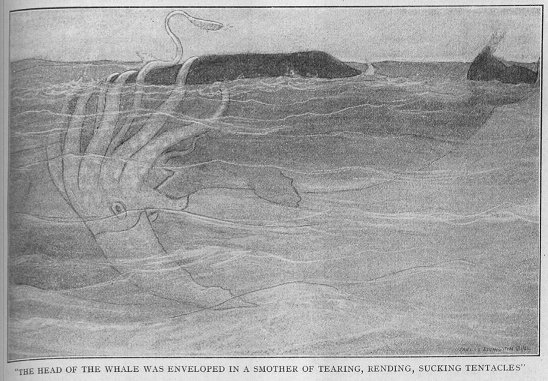
From the roots of inadequacy sown by a man losing his potency and flailing to recover it, The Squid & The Whale makes a compelling, hilarious and ocassionally poigniant case for a cold, hard truth, people are awful, especially when they love each other. The image of the two tangled beasts, which closes the film, is taken from the NY Museum of Natural History’s famous, atrium-filling exhibition, but the taxidermy frozen in three dimensions to represent a struggle to the death is a stiffer, starker, and ultimately more straightforward thing than the nuanced, occasionally hilarious emotional battle that we have just witnessed. It obviously struck a chord with Baumbach, whatever its deeper emotional significance. We should be very glad it did.
Sunday, April 02, 2006

Squatters Rights

First off, full disclosure. I despise musicals in every form and if it weren’t for their occasional return to popular cinema, would never watch one. It’s not the sudden segues into song or the way whole streets of passers-by burst into well-choreographed jazz-hands that gets me. It’s the overwhelming fakeness and insincerity of the genre that I cannot abide; all the Up With People! plastic smiles, the cheesy show tunes and the cardboard backdrops. That ingrained antipathy is not entirely this movies fault, but I can't remember being so unhappy when watching a film (and so desperate to leave) so Chris Columbus’ will-sapping, fairy-story song and dance effort has to shoulder some of the blame.

Directed as if it were on stage, but without the live audience that adds frisson to all that prancing about, Columbus brings the Broadway hit about dodging landlords to the big screen, without ever offering any reason for his having done so. Rent aspires to be an up-tempo movie about AIDS, heroin addiction, sex-workers, drugs, transvestism and bisexuality, bravely tackling such difficult themes by surgically removing any lingering trace of authenticity, danger or truth in order to keep everybody smiling through all the tears.

Inspired, it says here, by Puccini's La Boheme, the film follows a year in the life of the dues-dodging roommates Roger and Mark, a filmmaker (glasses, 16mm camera) and a struggling musician (big Bon Jovi hair, shouts everything) who along with their close-knit group of squatter friends, including Rosario Dawson as Mimi the hooker with the heart of gold, struggle to cope with the difficult life outlined above by fighting authority and remaining true to their bohemian selves. Roger and Mark did have a third roommate, Benjamin (Taye Diggs), but he married a millionaire’s daughter and has now become a property developer and their landlord.

Sound contrived? You bet it does. The soap-opera Rent is clad in rags it tore up itself. In keeping with the early-90s AIDS theme, there’s a lyric about a low T-cell count. I defy you to listen to it without your face scrunching into a wince of agony, your fingernails gripping the cinema seat in a spasm of pure torture. Do you think people dying of AIDS look this pretty, sing and dance this sweetly, hope for the future this blindly? Think on.

Manfully struggling to put my own critical prejudices to one side, I still ended up hating every single frame of this misbegotten film. The songs are awful, the acting performances likewise. The dialogue is laughable, mere shreds of chat stitching the songs together. The staging looks exactly that, staged, flat and bare and empty. When the freezing roommates make a fire with their abandoned screenplays and art brut, for a moment I dreamt that the reels of celluloid had followed them into the flames. I awoke again and the film was still playing and the rent was still due and my stomach was a hot knot of nausea, as if I had been force-fed candyfloss spun from broken bottles.